When in doubt, check exact card costs in the Card Database before you lock in your split.
Why 12 Runes Creates Deck-Building Tension
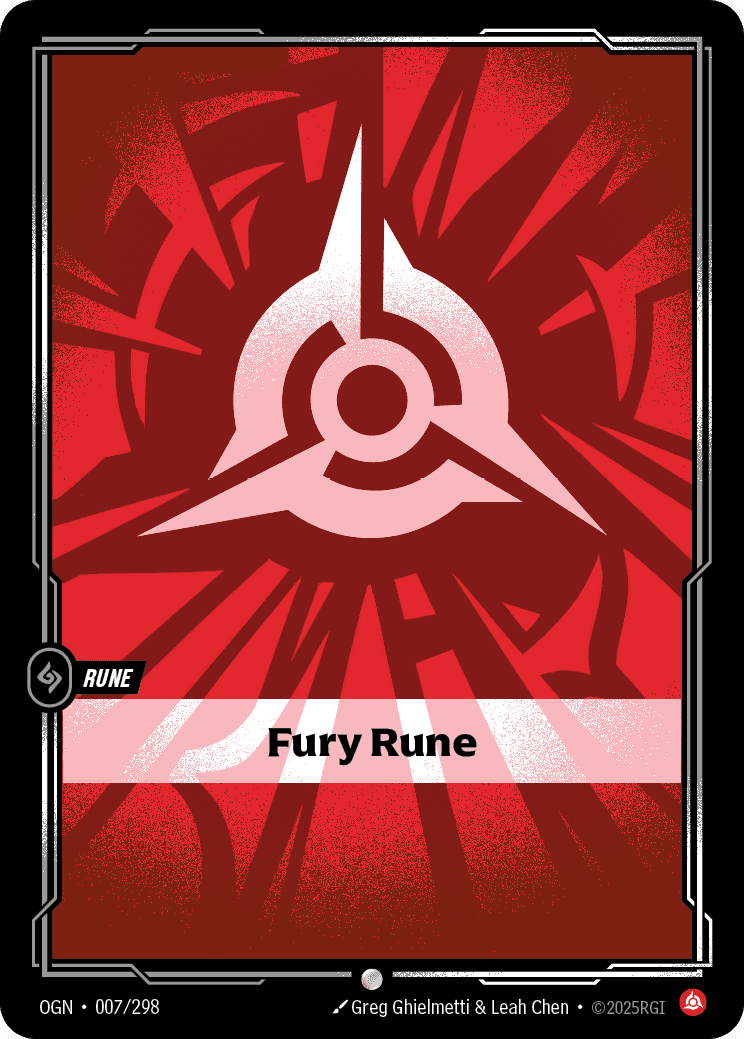
You can draw the perfect hand and still lose because your runes are wrong. Riftbound's rune system requires two domains to match your Legend's Domain Identity. Every spell you cast needs Energy (any rune) and sometimes Power (specific domain). If your 12 runes don't match the domain demands of your 40 cards, you have dead cards in hand.
The 12 runes are not a side detail. They are the engine. Your main deck is what you want to do. Your rune deck is whether you can actually do it. And 12 is a small number. There is no room for error. Every rune that goes to the wrong domain is a rune that fails to cast a card you need.
This is the tension: you have two domains, 12 runes, and 40 cards that all need those 12 runes to function. Get the ratio wrong and your deck works against itself.
Do This: Count Power Costs Before You Pick a Split
The Trap
Players build a 40-card main deck, pick a Legend, then guess at a rune split. They look at the two domains and think "6/6 looks balanced, I'll go with that." Then they wonder why their Fury cards sit dead in hand while they draw Mind runes they do not need.
The Fix
Before you pick a rune split, count the Power costs in your main deck. Not the card domains. The Power costs. A card that costs 2 Fury + 1 Mind needs both domains. A card that costs 3 Fury needs only Fury. A card that costs 2 Energy + 1 Fury needs only Fury for its Power cost.
Go through your 40 cards. Make three piles:
- Cards that need only Domain A
- Cards that need only Domain B
- Cards that need both or neither
The cards that need only one domain are your constraints. They are the cards that will brick if you do not have enough of that domain. The cards that need both are flexible. They cast from either domain pool.
Example: Annie Fury/Chaos
If your Annie main deck has:
- 12 cards that need only Fury Power (Kai'Sa, Darius, Gust)
- 4 cards that need only Chaos Power (Void Seeker, some removal)
- 8 cards that need both or neither (units with dual-domain costs, spells with no Power cost)
Your demand is roughly 12 Fury to 4 Chaos. A 6/6 split gives you equal access to both domains, but your deck is not equal. You will draw Fury cards and fail to cast them. You will draw Chaos runes and have nothing to spend them on. The correct split is 8/4 or 9/3. That gives your Fury cards the consistency they need while still letting you cast your Chaos spells when they matter.
Do This: Run 7/5 or 8/4 for Most Decks. Avoid 6/6.
7/5: The Standard Split
Do this if your deck has a clear primary domain. Most competitive decks do. Annie wants Fury. Master Yi wants Mind. Sivir wants Body. The dominant domain should get 7 or 8 runes because it carries the majority of the Power costs.
A 7/5 split means you channel your primary domain roughly 58% of the time. That is enough for consistency without starving your secondary domain. Your secondary domain cards are usually support: removal, finishers, or situational answers. They do not need to come online every turn. They need to be there when you need them.
8/4: The Skewed Split
Do this if your deck is heavily committed to one domain. If your main deck has 18 cards that need only one domain and 6 that need the other, 8/4 is the right call. The risk is that you occasionally need that fifth rune of your secondary domain and it is not there. The reward is that your primary domain becomes extremely reliable.
Use 8/4 when your secondary domain's cards are late-game or situational. If they are early-game pieces you need to cast on curve, 8/4 might be too greedy. Test it.
6/6: The Trap Split
Avoid this. A 6/6 split looks balanced. It is almost always wrong. The only time 6/6 is correct is when your deck genuinely has equal Power demand across both domains. That means roughly 50% of your cards need Domain A and 50% need Domain B, with no clear primary.
In practice, most decks lean. Even "balanced" decks usually have a primary domain that carries the early game. If you run 6/6 because it looks fair, you are making both domains less reliable than they need to be. You will fail to cast your primary domain cards on curve and you will still not have enough of your secondary domain when you need it.
10/2 and 11/1: The Extreme Splits
Avoid these for almost every competitive deck. If your deck is so skewed that you need 10 runes of one domain, the problem is your main deck, not your rune split. A 10/2 split means your secondary domain is barely present. You will regularly fail to cast its cards. That is not a rune problem. That is a deckbuilding problem.
The only exception is combo decks that only need one or two runes of a secondary domain for a specific finisher. For everything else, 10/2 is a sign you should rebuild the main deck, not push the rune split further.
When Splashing Is Worth It
In Riftbound, you cannot splash a third domain. Your two domains are locked by your Legend. But you can "splash" within your two domains by adding cards that heavily lean into your secondary domain.
Do This: Splash When the Card Wins the Game
If a card is so powerful that it changes your win rate when you cast it, the rune cost is worth it. Example: a Deadbloom Predator in a Sivir deck that is mostly Body but needs Chaos for the finisher. The card is your game plan. You build your rune split to support it, not the other way around.
Avoid This: Splash for Utility
Do not add a secondary domain card just because it is "nice to have." A removal spell that needs 2 Chaos Power is not worth the rune investment if your deck only has 4 Chaos runes. You will draw it, fail to cast it, and wish it was a different card. If a card is utility, keep it in your primary domain or find a version that costs Energy instead of Power.
The 1-Domain Rule
If a card needs only your secondary domain, ask: would I be happy to see this in my opening hand? If the answer is no, do not run it. If the answer is yes, make sure your rune split supports it. A card that needs 3 Chaos and sits in a deck with 4 Chaos runes is a trap. It will show up in your hand and stay there.
Do This: Test Your Split With Real Hands. Avoid Guessing.
The 10-Hand Test
Build your deck in the deck builder. Draw 10 test hands. For each hand, ask:
- Can I cast my turn-one play?
- Can I cast my turn-two play?
- Do I have the right domains for my 3-ofs?
If you fail more than twice in 10 hands, your split is wrong. Do not guess. Do not trust theory. Test it. The difference between 7/5 and 8/4 is real, but it is specific to your exact card list. Two Annie decks with different card choices might need different splits.
The Mulligan Check
If you are regularly shipping hands in the mulligan because of domain issues, the problem is your rune deck. Not your luck. Not your shuffling. Your rune deck. Fix the split, then retest. If the problem goes away, you found it.
The 3-Of Check
Look at the cards you run three copies of. These are your core cards. They are the cards you need to see early and cast reliably. If they are mostly one domain, that domain should dominate your rune split.
Running three copies of a key Fury card with only five Fury runes is a contradiction. You are saying "this card is critical" with your decklist and "this card is optional" with your rune deck. Match your split to your priorities.
Do This: Build Main Deck First, Rune Deck Second. Avoid the Reverse.
The Trap
Players pick a Legend, find a cool rune split online, and build their main deck to fit. They see 7/5 Fury/Mind and think "that looks good, I'll build a Fury deck." Then they end up with a main deck that needs 8 runes of Fury but only has 7.
The Fix
Build your main deck first. Pick your cards. Count your Power costs. Then build your rune deck to match. Your main deck is the demand. Your rune deck is the supply. Do not let the supply dictate the demand.
This is the most common mistake in rune deck building. Players treat the 12 runes like an afterthought. They are not. They are the engine that powers your entire game plan.
Do This: Copy Pro Splits With Understanding. Avoid Blind Copying.
When you copy a tournament list from the decks page, copy the rune split too. But understand why it is that split. A pro list is optimized for a specific metagame with specific sideboard cards. If you change the sideboard without changing the runes, you might break the list.
Example: A pro Annie list runs 8/4 Fury/Chaos because the sideboard adds two Chaos removal spells for a specific matchup. If you copy the list but drop those sideboard cards, your main deck still has the same Fury demand but your split is now 8/4 for a deck that only needs 7/4. That extra Fury rune is wasted.
What to Do Right Now
- Pull your current deck. Count the Power costs by domain. Write the numbers down.
- If your main deck is 60% one domain and your rune split is 6/6, change it to 7/5 or 8/4.
- Run the 10-hand test in the deck builder. If you fail more than twice, adjust the split and retest.
- If you are copying a pro list, copy the rune split exactly. Do not change it unless you change the main deck or sideboard.
- Share your deck to the decks page and ask for feedback on the rune split. The community will catch mistakes you miss.
The 12-rune deck is the smallest deck in Riftbound, but it is the most important. A bad main deck loses slowly. A bad rune deck loses before you play your first card.