Back to Intel

Counter

Advanced

Vex Counter Riftbound: How to Beat Control and Punish Windows

Learn how to counter Vex in Riftbound: deny clean holds, space threats across battlefields, and route around Deflect to punish the Gloomist control engine.

15 minRiftStorm.ggJul 6, 2026

Start here

How to use this Vex counter guide

beat Vex by pressuring multiple battlefields with resilient, staggered threats so she is never allowed to simply hold and draw. Never dump your whole hand into one contested lane where [Deflect], [Stun], and cheap interaction can undo the entire turn. Make her spend cards to keep a battlefield, then reload and force her to spend again before Gloomist can bury you in card advantage.

Vex is not a deck that beats you with power. She beats you with patience. Vex, Gloomist is a Calm/Chaos control legend built around one deceptively quiet idea: whenever you hold a battlefield, she can exhaust to draw a card. That single line turns every turn you fail to break through into free cards for the Vex player, and it is the reason the matchup feels like slowly drowning instead of getting knocked out.

If you attack into Vex the way you attack into a tempo deck, you lose. You over-commit, she Stuns or bounces the key body, holds the battlefield, draws off Gloomist, and you spend the rest of the game reloading into a hand that is bigger and better than yours. The players who beat Vex do not out-value her. They deny her the one thing her engine needs: uncontested holds.

Quick answer

beat Vex by pressuring multiple battlefields with resilient, staggered threats so she is never allowed to simply hold and draw. Never dump your whole hand into one contested lane where [Deflect], [Stun], and cheap interaction can undo the entire turn. Make her spend cards to keep a battlefield, then reload and force her to spend again before Gloomist can bury you in card advantage.

For the wider matchup route map, start with Riftbound Counters. When you are ready to test the plan, open the deck builder, search the support cards in the card database, and compare public shells in decks.

Vex, Gloomist: Why This Control Matchup Is Different

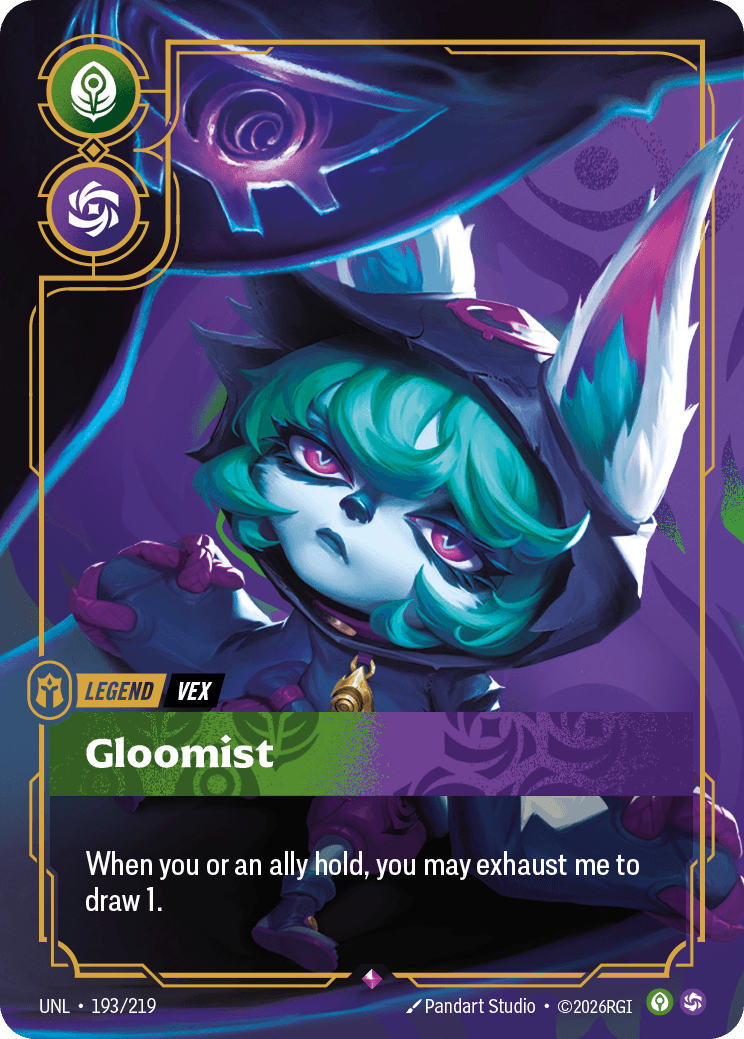
Vex - Gloomist Riftbound legend card art

Calm/Chaos Legend

Vex - Gloomist

Gloomist draws a card every time Vex holds a battlefield, so every uncontested lane is free card advantage you must deny.

Vex - Apathetic Riftbound unit card art

Chaos Unit

Vex - Apathetic

Apathetic Stuns any unit you play onto her battlefield and taxes targeted removal with Deflect, so arrive first or attack from outside the lane.

Vex - Mocking Riftbound unit card art

Calm Unit

Vex - Mocking

Mocking walls a lane with Shield and Tank and can relocate onto any battlefield where a Stun lands, so never funnel a single attacker into her.

Vex - Cheerless Riftbound unit card art

Chaos Unit

Vex - Cheerless

Cheerless makes your spells cost more and hers cost less in combat, so win the fight with board and position, not a spell war.

Most decks you counter want to do something to you. Vex mostly wants you to do nothing productive. Her whole plan is to get set on a battlefield, answer whatever single unit you develop to contest it, and hold. Every held battlefield is a Gloomist trigger, and every Gloomist trigger widens the card gap.

That is why the normal instincts fail here. Against tempo, you race. Against midrange, you trade. Against Vex, both of those play into the engine. Racing into one lane lets her answer once and hold. Trading one-for-one is exactly the game she wants, because she draws an extra card off every hold on top of the trade.

The counter rule is simple to say and hard to execute: do not let Vex hold uncontested. If she is holding a battlefield and drawing off Gloomist every turn, you are losing even when nothing dramatic is happening.

What The Vex Deck Is Trying To Do

Vex, Gloomist lists are patient Calm/Chaos control decks with a draw engine bolted onto battlefield defense. The shell usually wants to:

  • Get one strong defensive unit set on a battlefield it intends to keep.
  • Answer the single unit you send to contest that battlefield.
  • Hold, then exhaust Gloomist to draw and stay ahead on cards.
  • Use cheap interaction and stun effects to make your contest turns inefficient.
  • Grind you out over many turns until your threats run dry and hers do not.
  • The important thing to understand is that Vex is rarely racing the score. She is racing your resources. She is happy to let a game go long because long games favor the deck that draws extra cards for free. If you play a patient, one-threat-at-a-time game, you are volunteering for the exact texture she wants.

    Before every contest, ask: if I commit this unit and she answers it, does she just get to hold and draw? If yes, and you have no follow-up, that is not a contest. That is a donation.

    The Gloomist Draw Engine Is The Real Boss

    Vex, Gloomist reads "When you or an ally hold, you may exhaust me to draw 1." Note the wording. It is not tied to combat, not tied to a specific unit, and it triggers on holding, which is something a control deck wants to do anyway. The Vex player gets paid for their default plan.

    This changes how you read the game. You are not just fighting the cards on the table. You are fighting a deck that adds a card every turn it keeps a battlefield. Two or three uncontested holds and the Vex hand is deep enough to have an answer for everything you draw.

    The counterplay is not to kill Gloomist. As a legend she sits safe. The counterplay is to attack the word "hold." If she cannot comfortably keep a battlefield, the engine stops. Force her to move units to defend, threaten a second lane she also wants, and make every hold cost a card of her own. A hold that costs her more than the draw is worth is a bad hold.

    Vex, Apathetic Is The Anti-Contest Card

    Vex, Apathetic is the card that punishes the obvious way to beat a hold deck. She has [Deflect], so opponents must pay an extra rune to choose her with a spell or ability, taxing your targeted removal. Worse, her real text reads: "When an opponent plays a unit while I'm at a battlefield, [Stun] it. They can't move it this turn. It doesn't deal combat damage this turn."

    Read that carefully, because it defines the matchup. If you try to contest her battlefield by playing a fresh unit onto it, that unit gets Stunned. It cannot move and deals no combat damage this turn. Your contest arrives dead. That is how Vex holds so cheaply: she does not always need to remove your unit, she just needs it to whiff on arrival while she draws off Gloomist.

    The counters that actually work here:

  • Develop before she is set. A unit already at the battlefield does not get Stunned by Apathetic arriving later. Beat her to the lane instead of playing into it.
  • Pull or bounce Apathetic out of the fight. Effects that move Vex to another battlefield or return her to hand shut off the Stun. A repositioning or bounce effect is worth more here than raw removal, which Deflect taxes.
  • Force her into combat. [Deflect] only taxes spells and abilities that choose her. It does nothing against your unit simply attacking her in a showdown. Make her defend with Might, not with tax.
  • Attack a battlefield she is not on. Apathetic can only Stun where she stands. Spread threats and her body only guards one lane.
  • Vex, Mocking Locks Down The Lane It Wants

    Vex, Mocking is the wall. She has [Shield], gaining +1 Might while defending, and [Tank], meaning she must be assigned combat damage first. On top of that: "When you [Stun] an enemy unit at a battlefield, you may move me to that battlefield."

    That last clause is the nasty synergy. When the Vex deck Stuns something, whether through Apathetic or another stun effect, Mocking can teleport onto that exact battlefield to hold it. So the deck Stuns your contest, moves a Shielded, Tank-ing 5-drop into the lane, and now you have to punch through a defender that gets bigger while defending and eats damage first.

    You do not beat Mocking by chipping at her. You beat her by not fighting her on her terms:

  • Do not funnel a single attacker into the lane she reinforces. Tank plus Shield means she trades up against a lone threat.
  • Attack the battlefield before Mocking can relocate, or attack the one she cannot reach because a Stun did not happen there.
  • If you must break her lane, break it with a wide push or a buffed attacker so Tank absorbing the first damage does not save the whole battlefield.
  • Vex, Cheerless Warps The Spell War

    Vex, Cheerless reads: "While I'm in combat, friendly spells cost 1 Energy and a rune less to a minimum of 1 Energy, and enemy spells cost 1 Energy and a rune more." This is the card that quietly wrecks reactive game plans.

    The moment Cheerless is in a combat, the Vex player's spells get cheaper and yours get more expensive. If your plan to beat Vex is "I will hold up my own removal and answer her defensively," Cheerless taxes exactly that plan while subsidizing hers. A spell you were counting on to trade may suddenly cost too much to fire in the turn that mattered.

    The read is straightforward: do not try to out-spell Vex in a showdown where Cheerless is present. Win the fight with board and position instead. If your threats demand answers just by existing on the battlefield, Cheerless has nothing to tax, because you are not the one holding up the reactive spell. Use the card database to look for units that pressure without relying on a spell to seal the exchange.

    The Interaction And Reset Package Vex Brings

    Vex's Calm/Chaos pool is full of cheap, patient interaction that extends holds and blunts your pushes. Expect some mix of these, and plan around them before you commit:

  • Shadow, Vex's signature unit, enters ready when you play it to a battlefield and can exhaust to Stun an enemy unit attacking that lane, so a defender you thought you had gotten past simply erases your combat damage.
  • Existential Dread is a cheap Chaos spell that Stuns an attacking unit, and if that unit is already Stunned it returns it to its owner's hand instead. That is a repeatable blank on your push that can also bounce your contest away.
  • Sinister Poro can pay 1 Energy when it attacks to move an enemy unit back to its base, shoving a threat out of the lane it was holding.
  • Guardian of the Passage returns a unit or gear from the trash to hand when it holds, giving the deck a recursion engine that refills after long grinds.
  • Disarming Rake kills a gear on entry, punishing gear-reliant contest plans.
  • None of these are flashy. All of them are designed to make your good turn slightly less good, over and over, while Gloomist banks a card. Respect the pattern, not any single card.

    Turn By Turn Counter Plan

    Turns 1-2: Get To The Battlefield First

    Your first job is to be set before Vex is. A unit already standing on a battlefield does not eat an Apathetic Stun when she arrives, and it forces Vex to answer you instead of holding for free. Empty early turns are the worst thing you can do in this matchup, because every turn you do not pressure is a turn she gets to set up the hold-and-draw loop.

    You do not need to overcommit. You need to be present. Make Vex spend her first real card answering something.

    Turns 3-4: Open A Second Lane

    This is where the matchup is won or lost. Vex is comfortable holding one battlefield. She is very uncomfortable holding two. Apathetic only Stuns where she stands, Mocking can only relocate to one lane, and Cheerless can only be in one combat.

    Develop a threat on a second battlefield so that answering one leaves the other open. If she splits to cover both, Gloomist stops drawing because she is no longer holding cleanly. If she commits to one, you score or press the other. This is the core of every winning Vex line: make holding cost her more than the Gloomist draw is worth.

    Turns 5-6: Reload Before The Reset

    Vex wants the game to reach the turn where she has answered everything and drawn ahead. Your job is to always have the next threat. Do not empty your hand into one push. Stagger it. Play a threat, make her answer, play the next threat while she is still recovering.

    The rhythm is pressure, reload, pressure again. If you run out of gas first, Gloomist and Guardian of the Passage bury you. If she runs out of answers first, you win, because a control deck with an empty answer pile and a full board against it has no plan.

    Late Game: Deny The Grind

    If the game goes truly long, respect that Vex's recursion and card draw are built for exactly this. Do not slip into a passive trading war. Keep a battlefield contested at all times so Gloomist cannot draw freely, and hold one resilient threat back so a single Sinister Poro shove or Existential Dread Stun does not fully reset you.

    Mulligan Guide Against Vex

    Keep hands that can do at least two of these:

  • Put a unit on a battlefield in the first two turns.
  • Threaten a second lane by turn three or four.
  • Present a threat that demands an answer without needing a spell to finish it.
  • Reload after a bounce or a Stun instead of folding to one reset.
  • Ship hands that are all payoff and no early board. A pile of expensive threats and reactive spells is a trap against Vex, because she gets to set up the hold engine while you develop nothing, and Cheerless taxes the reactive spells you were saving. The ideal keep is not explosive. It is a hand that is never forced to pass a turn doing nothing.

    The Deck Package To Bring

    Against Vex you want proactive, spaced pressure and answers that route around Deflect. Build your eight-card plan around these roles:

  • Two cheap board units that let you reach battlefields before Vex is set, so Apathetic cannot Stun your contest on arrival.
  • Two repositioning or bounce effects to move Vex, Apathetic or Vex, Mocking out of the lane they are holding. Movement beats Deflect where targeted removal gets taxed.
  • Two resilient, self-sufficient threats that pressure a second battlefield and demand an answer without relying on a spell that Cheerless can tax.
  • One recursion or refuel card so a long grind does not end with you empty against Guardian of the Passage.
  • One gear-independent finisher or wide push to break a Mocking-defended lane where Tank and Shield punish a single attacker.
  • The warning: do not board into a slower, more reactive deck to "match" Vex. That is a losing plan. Every card you add that holds up a spell is a card Cheerless taxes and a turn Gloomist draws. You want to become more proactive against Vex, not more patient. Clone your closest shell in the deck builder and cut the cards that only do something on turn six.

    Matchup Plans By Archetype

    Aggro And Pressure Decks

    You are the favorite if you play it right. Vex wants a slow game, and you deny it by contesting two battlefields fast. Do not tunnel one lane, because Apathetic, Mocking, and a Sinister Poro shove can wall a single line all day. Spread the pressure so holding both lanes is impossible, then close before Gloomist and recursion catch up.

    Midrange Decks

    You have the tools but the highest risk of drifting into her game. Resist trading one-for-one, because every trade also feeds a Gloomist draw. Lead with the threat that demands an answer, keep a second wave ready, and force Vex to answer on your schedule rather than holding on hers.

    Control Decks

    Do not try to out-control the control deck. Cheerless taxes your reactive spells and Gloomist out-draws you in a pure grind. Your best plan is to become the beatdown: pick the resilient threats in your list, apply steady pressure, and make Vex be the one holding up answers. The control player who waits usually loses to the deck that draws for free.

    Combo And Engine Decks

    Your priority is protecting a setup turn without letting Vex hold a battlefield in peace the whole game. Keep a body on the board so Gloomist is not drawing freely while you assemble. If your engine can also threaten a lane, the matchup swings hard, because a Vex who has to defend cannot grind.

    Common Mistakes Against Vex

    These are the habits that make Vex feel unbeatable:

  • Playing a unit onto Apathetic's battlefield and eating the Stun instead of arriving first or attacking from outside.
  • Funneling one attacker into Mocking's lane, where Tank and Shield let her trade up.
  • Holding up your own removal into Cheerless, which taxes your spells and cheapens hers.
  • Committing your whole hand to one push and losing it all to a single Existential Dread Stun or Sinister Poro shove.
  • Contesting only one battlefield, which is exactly the hold Gloomist wants to draw off of.
  • Letting a game go long on purpose, handing the free-card engine the grind it is built to win.
  • Spending premium removal on a Deflect body when a bounce or a pull would have cost far less.
  • If you fix only one habit, fix this: stop giving Vex clean holds. Every uncontested battlefield is a card she draws for free, and free cards are the entire deck.

    What To Test On RiftStorm

    Turn this into reps, not just reading. Use Riftbound Counters to map Vex against the rest of your expected room, then build two lists in the deck builder: your real deck and a Vex, Gloomist test list. Goldfish the first three turns, then play only the turns where holding, Apathetic's Stun, and Cheerless actually matter.

    Use the card database to search for cheap early units, unit movement, bounce, and self-sufficient threats that do not need a spell to finish. Then browse community decks to see how other players are spacing their pressure against control.

    Bottom Line

    Vex, Gloomist is a top-tier Riftbound control deck because she gets paid for doing what control wants to do anyway: hold a battlefield and draw. Apathetic Stuns your contest on arrival, Mocking walls the lane it wants, Cheerless taxes your reactive spells, and a patient Calm/Chaos toolbox blunts every push while Gloomist banks card after card.

    You beat Vex by refusing to give her a clean hold. Get to the battlefield first so Apathetic cannot Stun you. Open a second lane so she cannot hold both. Route around Deflect with movement instead of taxed removal. Stagger your threats so one reset never empties you. Pressure, reload, pressure again, until the control deck runs out of answers before you run out of threats.

    That is the difference between losing to the idea of Vex and beating the actual deck across the table.

    Frequently Asked Questions

    What is the best Vex counter plan in Riftbound?

    The best Vex counter plan is proactive, staggered pressure across two battlefields so Vex, Gloomist can never hold cleanly and draw. Arrive at a battlefield before Vex, Apathetic can Stun your contest, route around Deflect with bounce or movement instead of taxed removal, and keep reloading threats so one Existential Dread Stun or Sinister Poro shove cannot reset your whole plan.

    How do I get around Vex, Apathetic's Stun?

    Beat Apathetic to the battlefield. A unit already standing there is not Stunned when she arrives, so develop first instead of playing into her lane. You can also move or bounce Apathetic out of the fight, or attack a battlefield she is not standing on, since her Stun only triggers where she is.

    Should I hold up removal against Vex?

    Usually no. Vex, Cheerless makes your spells cost more and hers cost less while she is in combat, and Vex, Apathetic's Deflect taxes any targeted removal. A reactive game plan plays into both. Pressure with resilient board threats that demand answers on their own, and make Vex be the one holding up spells.

    Why is Vex so hard to grind out?

    Because grinding is her plan. Gloomist draws a card every time she holds a battlefield, and Guardian of the Passage refills her hand from the trash, so long games favor Vex. Do not settle into a trading war. Keep a battlefield contested at all times to shut off the free draws, and force the game to end before her card advantage takes over.

    0 Comments