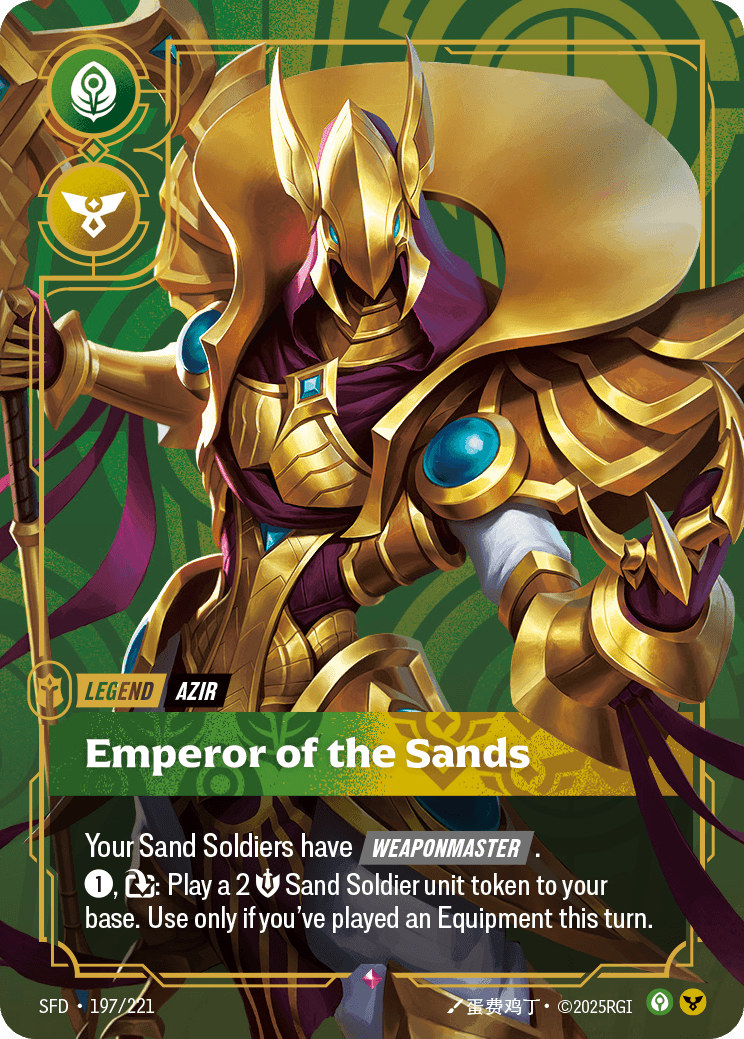
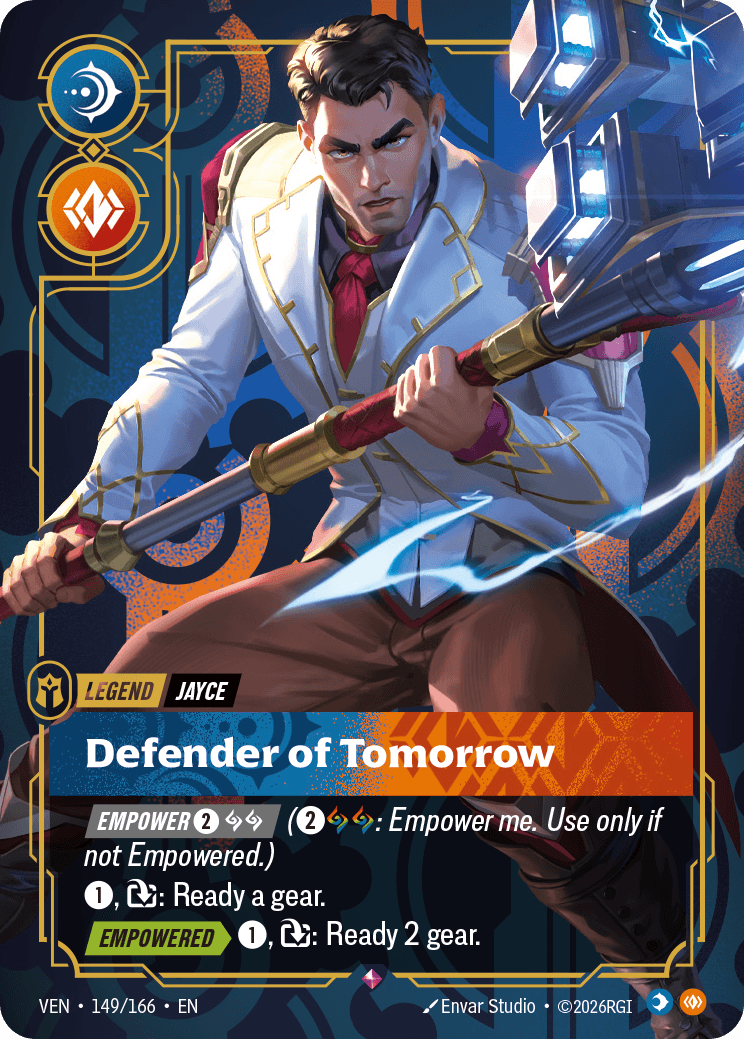
LeBlanc is the clearest engine riser in the first large US post-ban standings signal. The finished public Houston table for September 19–20 places LeBlanc in the first and fifth rows of a 608-player event after Riot's September ban announcement and the Stacked Deck ban. That is enough to move the matchup to the front of the testing queue; it is not a confirmed playoff bracket, field-share claim, or current decklist.
We do not have a verified current first-party Vendetta LeBlanc list. We will not turn a Houston standings snapshot into a 40-card list. Read exact text in the card database, build a testing shell in the builder, compare public shells in Riftbound decks, and map the matchup beside the other post-ban targets on Riftbound Counters.
What We Can And Can't Tell You
Riot’s ban announcement explains that Stacked Deck had become a low-opportunity-cost consistency tool whose interaction with broad Chaos strategies and Kennen was compounding. Houston is the first large US event in the sources reviewed after that change, and LeBlanc appears twice near the front of the published standings. The evidence supports immediate reps, not a claim that every LeBlanc list now looks the same.
This is a RiftStorm testing shell — a starting point built from card roles, not a tournament decklist. The kit cards below explain the engine’s functions. The counter plan is built around denying the value turn, not guessing the missing list.
What LeBlanc Is Trying To Do

Mind/Order Legend
LeBlanc - Deceiver
The identity: when she conquers or holds, she may discard 1 and exhaust to make a Temporary Reflection copy of a unit there. Denying clean battlefield control shuts the whole engine off.
Mind Unit
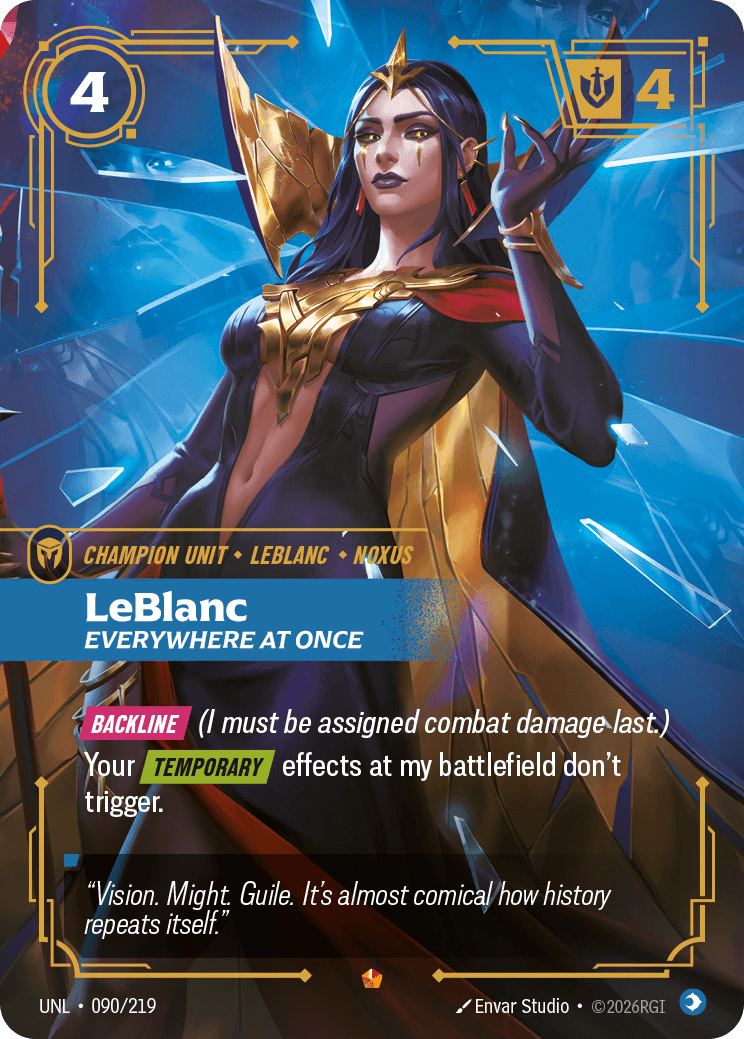
LeBlanc - Everywhere At Once
In LeBlanc's kit: Backline keeps it out of combat and its text switches off her own Temporary effects at that battlefield, so she can stack a lane cleanly. Answer this protected home before the copies compound.
Order Unit
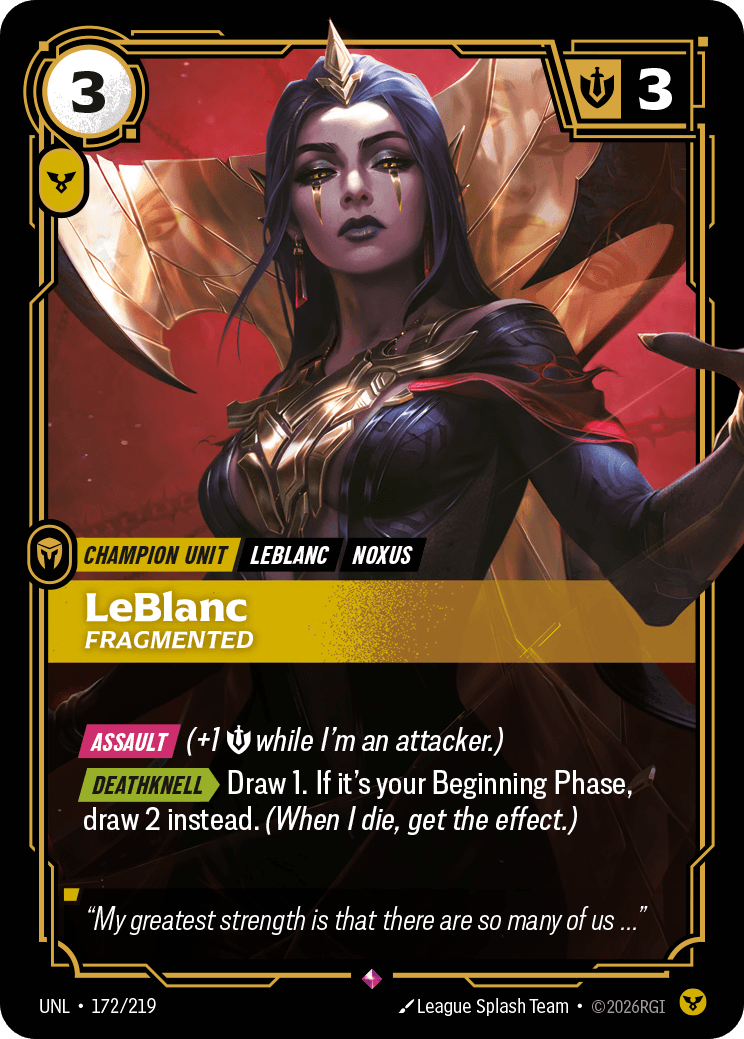
LeBlanc - Fragmented
In LeBlanc's kit: Assault plus Deathknell draw — draw 1 when it dies, or 2 during her Beginning Phase. Removal that simply kills it can be exactly the fuel she wants, so answer it on your clock.
LeBlanc wants one good battlefield to become a repeatable source of cards and bodies. The deck tries to:
- conquer or hold a battlefield with a worthwhile unit present;
- discard a card and exhaust the legend to create a Temporary Reflection;
- copy the unit that produces the best immediate value;
- protect the copy engine in a lane you cannot attack cleanly; and
- use Deathknell or another payoff so a trade makes the next turn stronger.
The important question is not “can I remove every Reflection?” It is “which permanent makes the next Reflection worth a card?”
LeBlanc's Kit — What To Respect
These are cards in LeBlanc’s kit, not a claim about a verified current list. Use the card database for exact wording and treat each as a function:
- **LeBlanc - Deceiver** can turn a conquer or hold into a Temporary Reflection by discarding a card and exhausting the legend. Denying the clean battlefield trigger is the first line of defense.
- **Mirror Image** creates a ready Temporary Reflection at base and does not require the same conquer or hold trigger. It is why denying the legend action does not end every copy line.
- **LeBlanc - Everywhere At Once** uses Backline and can switch off LeBlanc’s own Temporary effects at its battlefield. Treat that lane as a protected engine home until you can pressure it.
- **LeBlanc - Fragmented** has Assault and Deathknell draw. Its death timing matters; a Beginning Phase death can pay more cards than an ordinary trade.
The shared weakness is source dependency. LeBlanc can copy many bodies, but only a few bodies make the copy worth the action.
The LeBlanc Counter Rule
Break one of the three gates every important turn.
LeBlanc needs a battlefield trigger, a worthwhile source unit, and enough resources to turn the trigger into a copy. Contesting the battlefield stops the trigger. Removing the source makes the copy weak. Sustained pressure makes the discard and legend exhaustion defensive. You do not need to stop every copy; you need to stop copies from producing both a board and a resource.
How To Beat LeBlanc
1. Contest Before The First Hold
Develop early. A slow hand lets LeBlanc place a source unit, hold a battlefield, and choose the first Reflection with no cost. Your early unit does not need to answer the legend; it needs to make the first trigger awkward.
Keep a second battlefield relevant without placing every unit in one lane. A single stack gives LeBlanc the easiest source, target, and protected home at once.
2. Remove The Source, Not The Reflection
A Temporary Reflection will expire. The source remains available for the next legend trigger, Mirror Image, or another copy effect. Use premium removal on the source when it is actually generating value, and let a harmless token disappear if it is not changing the score.
If the copy is already the only thing holding a battlefield, kill it. The rule is not “never remove tokens”; it is “do not spend a full answer on the least permanent part of the engine by reflex.”
3. Attack The Protected Lane
Everywhere At Once makes a lane awkward to attack and can turn off Temporary effects at that battlefield. Do not let that lane become a free laboratory. Pressure it with a non-targeted line, a second battlefield, or a threat large enough that LeBlanc must spend the protected body defensively.
A passive plan gives LeBlanc time to copy the best body, wait for the token to expire, and repeat.
4. Sequence Around Deathknell
Check what a death trigger pays before blocking or removing. If Fragmented or another kit unit pays extra cards when it dies in a particular phase, a technically clean trade may be the exact resource exchange LeBlanc wants. Kill it outside the better trigger window when your deck can, or leave it alive while you attack the engine elsewhere.
Do not let a small amount of damage tempt you into a trade that replaces the opponent’s hand.
5. Make Mirror Image Defend
Denying the legend trigger is powerful, but Mirror Image can create a copy without a conquer or hold. Maintain enough pressure that the spell has to make a blocker or preserve a battlefield instead of copying the unit with the best payoff.
Once the copy has defended, take the lane it could not cover. A copy that saves a point but gives up the other battlefield is a resource trade in your favor.
6. Keep A Clock
LeBlanc wins long games by accumulating more cards and bodies until one lane becomes impossible to contest. Removal without pressure buys her the exact time she needs. After answering a source, play a threat or take a battlefield so she cannot replace it for free.
Mulligan Guide Against LeBlanc
Keep hands that do at least two of these:
- play an early unit that contests a battlefield;
- pressure a second lane;
- answer a source unit or protected engine;
- preserve a flexible response after one copy appears;
- continue scoring after the first trade.
Ship hands made only of expensive value cards or only of narrow removal. A single anti-token answer is not a keep if you cannot contest the battlefield that creates the token. The ideal opener has an early body, a follow-up, and one answer that remains useful against either the source or the real scoring threat.
Turn-By-Turn Counter Plan
Turns 1-2: Make The First Trigger Cost Something
Play to contest, not to sit back. If LeBlanc spends an action preserving a battlefield or trading into your first unit, the engine has not converted that turn into clean value. Keep your board distributed enough that one Reflection cannot cover the map.
Turns 3-4: Name The Source
When the first copy appears, identify the unit it copied and the card that made the lane safe. Remove the source if it remains the engine, or attack the protected lane if removing the source would lose the battlefield. Do not automatically spend a premium answer on the temporary body.
Turns 5-6: Break The Copy Chain
By the midgame, LeBlanc wants a hold, a copy, and a payoff in one turn. This is where flexible interaction belongs. Force the copy to defend, deny the source, or reset the lane after the token has committed. Preserve one answer for the next source rather than emptying your hand on the first Reflection.
Late Game: Do Not Grind Fairly
A passive late game favors the deck making temporary bodies. Keep a clock, threaten two lanes, and take the open battlefield after a Reflection expires or retreats. If you cannot close, at least make every new copy trade for position rather than free cards.
What To Build Around
Without a verified current list, build by role:
- Early contest: units that make the first hold or conquer expensive.
- Source removal: answers that cleanly hit the engine unit or LeBlanc’s protected home.
- Flexible reset: bounce, stun, exhaust, movement, or non-targeted interaction that remains useful when the copy is already on board.
- Two-lane pressure: a second threat that prevents one Reflection from defending the whole turn.
- Recovery: a follow-up that scores after your first answer trades.
Search legal options in the card database, test them in the builder, compare the surrounding room in Riftbound decks, and keep the matchup mapped on Riftbound Counters. Do not turn an older list or a public Houston row into exact counts.
Common Mistakes Against LeBlanc
- Killing every Reflection. Temporary copies are often the least permanent target.
- Ignoring the source. If the original body survives, the next copy is already waiting.
- Giving up the protected lane. A safe engine home is still an engine; pressure it or make another lane score.
- Trading into the best Deathknell window. The timing of the death can be the opponent’s payoff.
- Playing only one battlefield. One lane gives the copy engine too much leverage.
- Removing without developing. A clean answer that leaves you unable to score still gives LeBlanc time.
Build And Test On RiftStorm
Use Riftbound Counters to compare LeBlanc with Azir, Jayce, and Kennen. Read the exact kit wording in the card database, build your counter shell in the builder, and compare public testing shells in Riftbound decks. Test three questions: can you contest before the first hold, can you identify the source before removing the copy, and can you score after the answer trades?
For legality and event timing, read Riot’s September ban-list update and Los Angeles preview.
Bottom Line
LeBlanc wins by making one good battlefield produce another body, another card, and another source before you can recover. Beat her by contesting early, removing the source instead of reflexively killing Temporary copies, sequencing around Deathknell, pressuring the protected lane, and keeping a second battlefield live. Houston makes LeBlanc a current post-ban priority, but the exact Vendetta package remains unvalidated, so the plan stays mechanics-first.