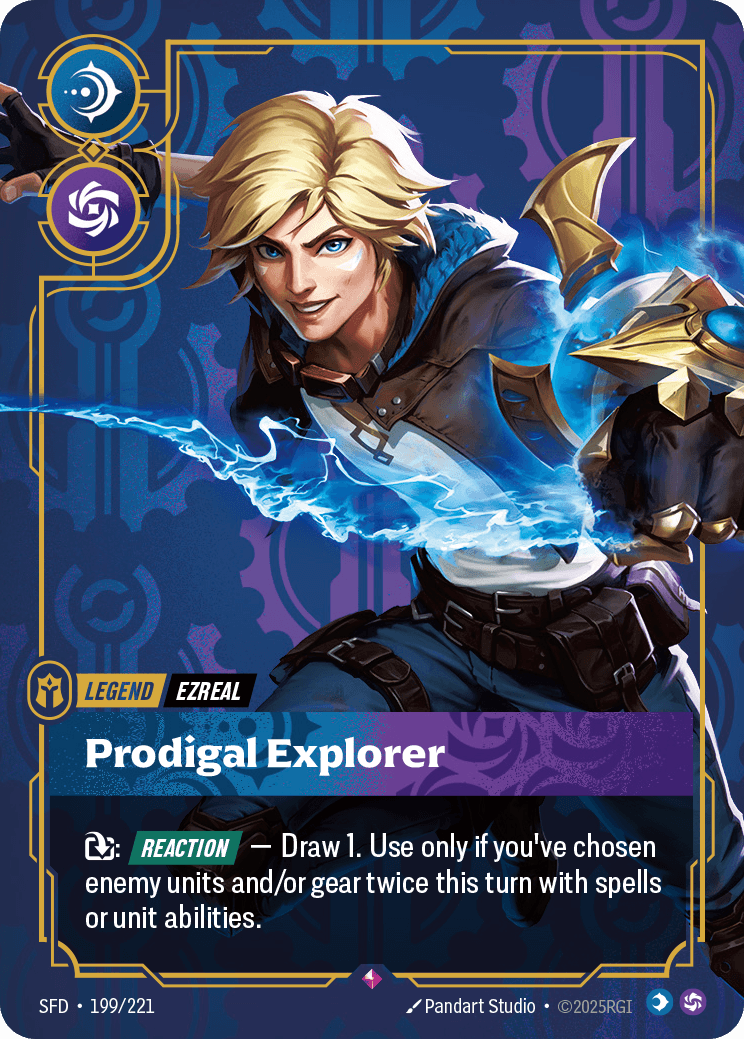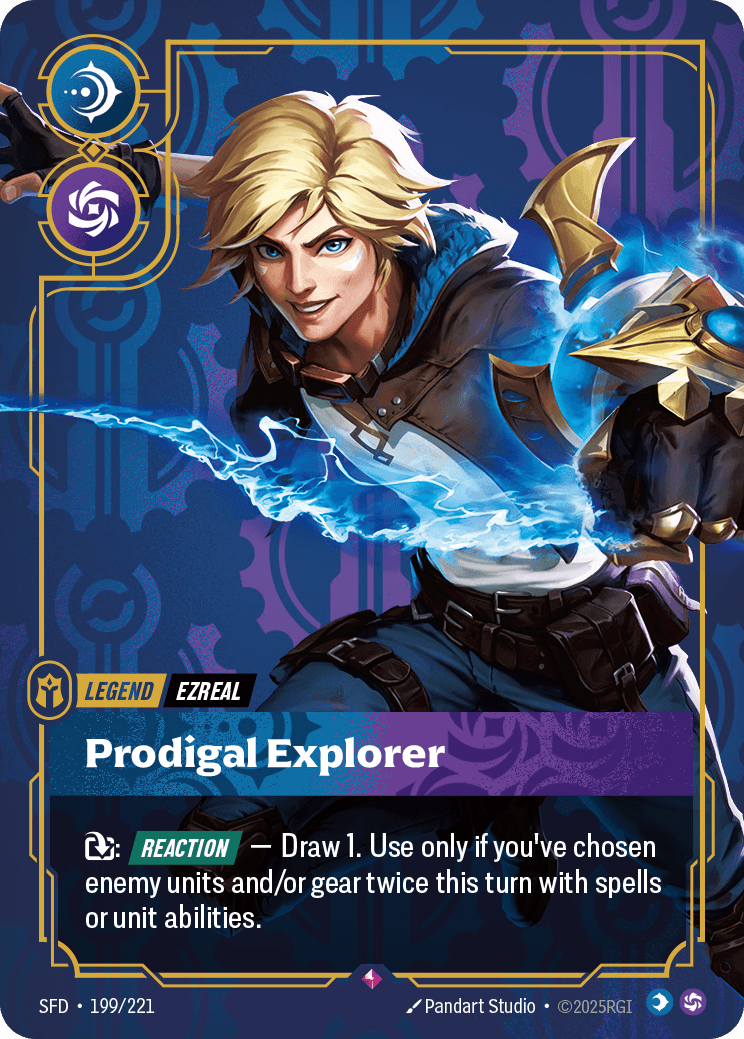
As of July 13, 2026, the most important new US tournament signal is the Pro-Play Summit Dallas $25K on July 4. The published event page lists 491 players and 445 decklists, and Ezreal, Prodigal Explorer finished first with an 11-1-1 record. Annie took both second and third. LeBlanc finished fourth. Azir finished fifth.
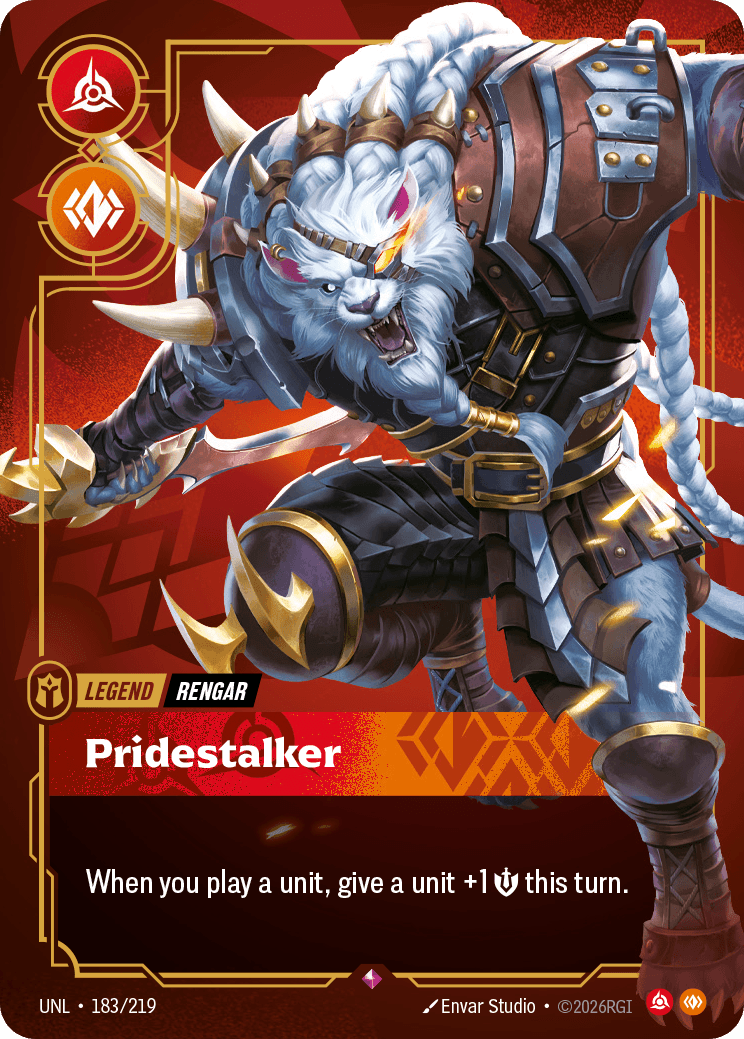
Then Dallas produced a second meta shock one day later. In the 97-player $5K side event, Rengar won, Sett finished second, and Rek'Sai finished third. Those were not the most represented legends in that room. They were the decks that converted limited representation into the top three places.
That gives US players a much sharper July story than last week's Hartford reset:
- Ezreal has crossed from emerging threat to proven large-field winner.
- Annie is back at the center of US tournament preparation after taking two of the top three Dallas $25K spots.
- LeBlanc's Hartford rise was real, and Dallas strengthened it with a fourth-place finish.
- Rengar is the best new low-share trophy signal.
- Sett deserves immediate matchup reps after a runner-up finish.
- Rek'Sai is no longer only a China-side warning; Dallas and Wuhan now point in the same direction.
- China still says Irelia is the benchmark, while Viktor and Kha'Zix deserve more attention before the mid-July Major.
Dallas Changed The US Meta In Two Different Ways
The two Dallas events should not be flattened into one result.
The $25K is the large-field anchor. It had 491 players, a deep published decklist pool, and enough rounds to reward consistency. Ezreal winning that event at 11-1-1 is a structural result. It says the deck can survive a long field, adapt across matchups, and close against the best-performing decks in the room.
The next day's $5K was smaller at 97 players, but it is more useful for discovering the next group of decks. Rengar, Sett, and Rek'Sai finishing first through third does not replace the $25K result. It identifies the decks most likely to punish players who respond to the $25K by testing only Ezreal, Annie, and LeBlanc.
That is the right way to use both events:
- Build the core gauntlet from the $25K.
- Build the surprise package from the $5K.
Ezreal Is A Proven Winner Now
The July 6 meta read treated Ezreal as the quieter Hartford riser. Dallas removed the word "quieter."
The published Dallas result credits Ezreal with first place and an 11-1-1 record in a 491-player field. That is the strongest possible follow-up to Hartford's warning. The deck is no longer a speculative inclusion for teams with extra testing time. It belongs near the front of the room.
Ezreal changes preparation because he does not ask the same questions as Master Yi, Diana, or Irelia. The deck can use cheap spells, selection, and flexible interaction to turn ordinary development into a sequence where the opponent is always reacting half a step late. A list that only prepares for direct battlefield pressure can look excellent against the old core and still lose to Ezreal's spell-driven tempo.
The key US adjustment is not simply "add more removal." It is to test whether your deck can develop while forcing Ezreal to spend flexible cards defensively. If Ezreal gets to select targets, filter the hand, and preserve battlefield position on the same turns, generic answers will not be enough.
For July testing, ask these questions:
- Can your opening pressure force Ezreal to answer instead of sculpting the next turn?
- Can you preserve a second threat after the first bounce, recall, or tempo exchange?
- Do your key units still matter if Ezreal delays them for one turn?
- Can your sideboard improve the matchup without making the rest of the gauntlet worse?
If the answer to those questions is vague, Dallas says your list is not ready.
Annie's Two Top-Three Finishes Are The Second Headline
Ezreal won, but Annie may have delivered the more uncomfortable field-level message.
Annie finished second and third in the Dallas $25K. Two copies at the very top of a 491-player event are too much to dismiss as one elite pilot finding a favorable bracket. Annie remains one of the cleanest punishers of slow openings, awkward rune development, and lists that spend too many slots solving elaborate late-game problems.
This matters because the natural reaction to Ezreal is to add cards for spell-heavy tempo games. That can make a deck slower or more reactive in exactly the way Annie wants. The Dallas result therefore creates a useful deckbuilding tension: prepare for Ezreal without handing free early points to Annie.
The best US gauntlet should now make every new list pass both tests:
- Ezreal tests whether your pressure and interaction stay functional through repeated tempo exchanges.
- Annie tests whether your first three turns affect the battlefield quickly enough.
If a change improves one matchup by making the other collapse, it is not a finished solution.
LeBlanc Was Not A One-Event Spike
Hartford elevated LeBlanc as an emerging US test. Dallas converted that warning into another deep finish.
LeBlanc placed fourth in the $25K, directly behind the two Annie lists. She also placed fifth and sixth in the next day's $5K. That is exactly the kind of repeated weekend signal that should move a deck from the optional section of a gauntlet into the main rotation.
The important point is not that every LeBlanc list will reproduce those finishes. It is that the deck now has multiple recent US results showing it can punish opponents who prepare only for straightforward pressure and one-for-one interaction.
LeBlanc asks whether your deck can identify the real engine piece, pressure setup turns, and avoid spending premium interaction on a replaceable body. Dallas says more teams need to learn that matchup now, not after the next Regional Qualifier.
Rengar Is The Best New US Breakout
The most exciting emerging-legend result belongs to Rengar.
Kyle Shelton's Rengar list won the 97-player Dallas $5K. The event breakdown lists only four Rengar decks, about 4% of the published field. That combination matters: low representation, first place, and a recognizable pressure shell that attacks from a different angle than the weekend's large-field winner.
Rengar is not automatically the best deck in Riftbound because he won a smaller side event. That would be an overreaction. But he is now the best new deck to add when a testing room already covers Ezreal, Annie, LeBlanc, Master Yi, Diana, and Irelia.
The reason is practical. Rengar can punish players who trim early battlefield discipline to gain percentage points in slower spell and engine matchups. After a weekend where Ezreal and LeBlanc demand attention, that is exactly the kind of opening the field may create.
There is also a small cross-region echo. Rengar reached 13th in Shenzhen's July 4 City Challenge. That finish does not equal a win, but it gives the Dallas trophy more context: Rengar was not visible in only one isolated American bracket.
The disciplined conclusion is simple. Do not crown Rengar. Do put him in the room.
Sett And Rek'Sai Make The Side Event More Than A Rengar Story
Rengar did not finish alone. Sett took second and Rek'Sai took third.
The published $5K metagame breakdown lists three Sett decks and only one Rek'Sai deck. That makes both finishes high-value emerging signals. Small samples demand caution, but small samples converting into second and third are exactly what competitive teams are supposed to investigate before those decks become obvious.
Sett is the fresher US question. The deck asks whether opponents can answer buffed bodies and battlefield pressure without losing efficiency. If the July room moves toward lighter interaction to improve against Ezreal or LeBlanc, Sett can exploit that shift.
Rek'Sai has a stronger cross-region case. Andrew Gainey's Dallas list finished third, and China's 74-player Wuhan City Challenge put Rek'Sai second on July 5. That is a US podium and a China runner-up on the same weekend.
This is the convergence signal last month's articles were waiting for. Rek'Sai is no longer merely an interesting Tianjin import. She is producing current results on both sides of the Pacific.
China's July 4-5 Results Keep Irelia On Top
China's latest public city results do not copy Dallas, and that is why they are useful.
Irelia won both the 86-player Shenzhen City Challenge on July 4 and the 74-player Wuhan City Challenge on July 5. While the US weekend elevated Ezreal, Annie, and LeBlanc, China kept the battlefield benchmark exactly where it has been.
That means US players should not rebuild the gauntlet around Dallas and cut Irelia. The better read is that the format now has two simultaneous pressures:
- Dallas says spell-driven tempo and engine decks can take over the top tables.
- China says clean battlefield movement and pressure still win current events.
The strongest decklists will be the ones that can answer both without becoming unfocused.
Wuhan also produced a useful top eight: Rek'Sai second, Master Yi third and fourth, Viktor fifth and eighth, another Irelia sixth, and Diana seventh. Shenzhen added Viktor in second, Draven in third, Darius in fourth, Kha'Zix in fifth, Master Yi in seventh, and Azir in eighth.
That spread does not say China is solved. It says the premium core remains broad, and it highlights two secondary decks US teams should keep watching: Viktor and Kha'Zix.
Viktor And Kha'Zix Are The China-Side Watch List
Viktor had the stronger weekend by placement. He finished second in Shenzhen and put two copies into Wuhan's top eight. That is enough to treat Viktor as more than a fringe engine deck, especially for teams already adding LeBlanc to the room.
Kha'Zix finished fifth in Shenzhen, with additional copies at 16th, 27th, and 31st in the published standings. The Dallas $25K also had Kha'Zix lists reaching the broader top cuts, but not the event's leading places. That profile makes Kha'Zix a watch-list deck rather than a new tier-one claim.
The distinction matters:
- Viktor deserves immediate reps because multiple high finishes show current conversion.
- Kha'Zix deserves monitoring and targeted testing because the deck keeps appearing across regions without yet owning the headline.
Both are more useful July tests than resurrecting a sleeper narrative with no current finish behind it.
The July 13 US Testing Gauntlet
If tournament preparation started today, the first ten decks in the room should be:
- Ezreal as the new large-field winner and spell-tempo test.
- Annie as the early-pressure deck that took second and third in Dallas.
- LeBlanc as the engine deck with repeated US top finishes.
- Master Yi as Hartford's winner and the committed-threat benchmark.
- Irelia as China's current double winner and the battlefield movement benchmark.
- Diana as the premium tempo shell that remains live in both regions.
- Azir as the engine deck that finished fifth in the Dallas $25K and eighth in Shenzhen.
- Rengar as the newest US low-share trophy deck.
- Rek'Sai as the strongest cross-region emerging pressure deck.
- Viktor as the China-side riser with three major placements across Shenzhen and Wuhan.
Sett should be the next add if the room has time for an eleventh matchup. Kha'Zix should remain close behind, especially if local pilots already know the deck.
That gauntlet is larger than the one from early July, but the expansion is evidence-driven. Dallas did not erase the premium core. It added a proven Ezreal deck and supplied three low-share decks that demand investigation.
What To Watch Before The China Unleashed Major
Riot's 2026 roadmap places China's Unleashed Major in mid-July. As of this July 13 source check, the detailed public Major result was not yet available, so the right move is to treat Shenzhen and Wuhan as the final public lead-in rather than inventing a winner.
The Major should answer several questions that matter directly to US preparation:
- Can Rek'Sai turn repeated cross-region finishes into a title?
- Does Viktor's July city-event surge survive a larger field?
- Can Kha'Zix convert presence into a final table?
- Does Irelia remain China's safest benchmark under Major pressure?
- Will Ezreal's Dallas win change Chinese deck selection or sideboards?
Those are the next signals worth following. Until then, Dallas is the strongest new US anchor and the July 4-5 China results are the best supporting check.
Bottom Line
The Riftbound meta on July 13 is wider and more demanding than it was one week ago.
Ezreal won the 491-player Dallas $25K at 11-1-1 and is now a proven US pillar. Annie's second-and-third sweep makes early pressure mandatory again. LeBlanc's fourth-place finish confirms that Hartford was not a one-event spike. The next-day $5K elevated Rengar, Sett, and Rek'Sai from side conversations into real testing priorities.
China keeps the picture honest. Irelia won both Shenzhen and Wuhan, Rek'Sai finished second in Wuhan, and Viktor plus Kha'Zix added the strongest secondary signals.
If you make one change this week, make it this: put Ezreal at the front of the gauntlet, then add Rengar and Rek'Sai before the rest of the room catches up.
Build And Test On RiftStorm
We track these results ourselves and keep the deckbuilding first-party — we do not hand you off to a third-party decklist site. Read any legend's kit in the card database, build the Dallas gauntlet in the deck builder, browse community lists in Riftbound decks, and line up the matchup plans on Riftbound Counters.