Kennen is the most represented Legend in the tracked Vendetta field. Wuhan, the latest large China result, also puts Kennen at the top of its standings by metashare. Yet Kennen did not win the biggest Western event in this window. Barcelona went to Ornn, Milwaukee went to Rengar, and Speyer went to Azir. Master Yi, Irelia, Draven, Akali, and Jayce keep appearing close enough to the top that dismissing them would be a testing mistake.
That is the September 1 Riftbound news story: the field is converging around a shared set of threats, but the best results still come from pilots who understand how to attack the expected game plan. US players have a clear gauntlet to build. China is no longer a distant side note. And Singapore is about to tell us whether the current answers survive another Regional Qualifier.
The Vendetta Meta in One Sentence
Kennen is the deck everyone must respect, while Ornn, Rengar, Azir, and the best tempo shells are proving that representation is not the same thing as conversion.
The tracked Vendetta pool has expanded to roughly 11,700 recorded lists across 49 Legends. Kennen leads at about 9% of the pool with 1,051 lists. Master Yi follows at 8% with 911, and Irelia sits at 7% with 776. Diana, Kai'Sa, Nasus, and Akali occupy the next cluster, while Rengar, Rek'Sai, Azir, Jayce, and Fiora remain meaningful three-percent testing populations.
These shares are a map of what players are registering, not a finished tier list. The conversion question matters more. Barcelona had 270 Kennen decks in a 2,131-deck recorded sample, but Ornn won from only 41 registrations. Milwaukee had 63 Kennen decks in 689 recorded lists, but Rengar took the trophy and another Rengar finished third. A small deck winning is not automatically a new best deck, but repeated small-deck finishes are exactly how a metagame warning begins.
Barcelona: Ornn Just Became a Real Deck
Barcelona was the largest Riftbound Regional Qualifier recorded so far: 2,224 players, with 2,131 decklists recorded. Riot's official Barcelona top decks report confirms the scale of the weekend and highlights the Ornn-versus-Kennen final.
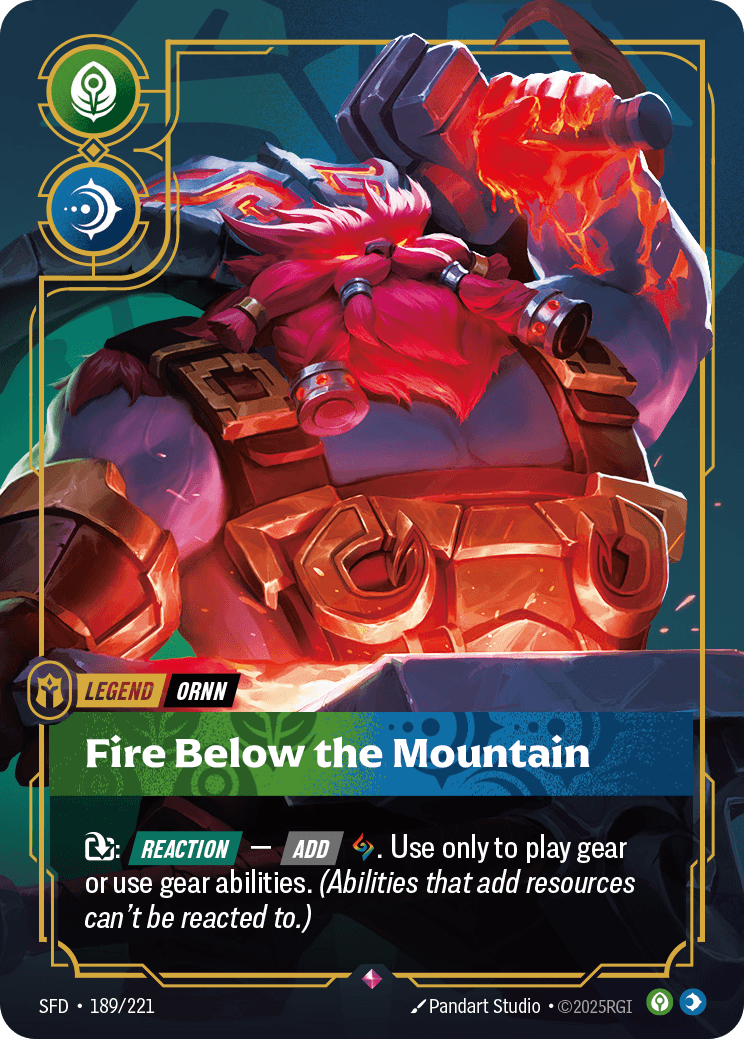
MICE TheManLand won on Ornn, Fire Below the Mountain, finishing 14-1-1. The reported list cost about $122.91, which makes the result even more useful for ordinary US players: this was not only a surprise Legend winning a huge event, but a comparatively accessible gear engine beating a much more expensive Kennen list in the final.
The field was still heavily prepared around Kennen. Kennen represented roughly 12% of the recorded lists, and three Kennen pilots reached the Top 8. Azir finished third, Rengar reached sixth, and Master Yi took seventh or eighth. Ornn, meanwhile, was only about 1.8% of the field. That gap is the story.
Ornn's Barcelona plan rewards players who can turn an early equipment setup into a meaningful board before the opponent's efficient answers take over. The deck does not need to be the most popular choice to matter. It only needs to make the expected Kennen game awkward, force removal at the wrong timing, and convert its gear investment into enough Might or battlefield pressure to close.
For testing, do not copy only the 60-card list and call the matchup solved. Ask three better questions:
- Can your deck pressure Ornn before the first important gear turn?
- Which removal actually trades cleanly once Ornn's equipment is online?
- Can you win a long game after the first board reset, or are you relying on an early race?
Those questions belong in every US gauntlet now. A Barcelona win from 1.8% representation is too large to treat as a curiosity.
Milwaukee: Rengar Is a US Pillar, Not a One-Off
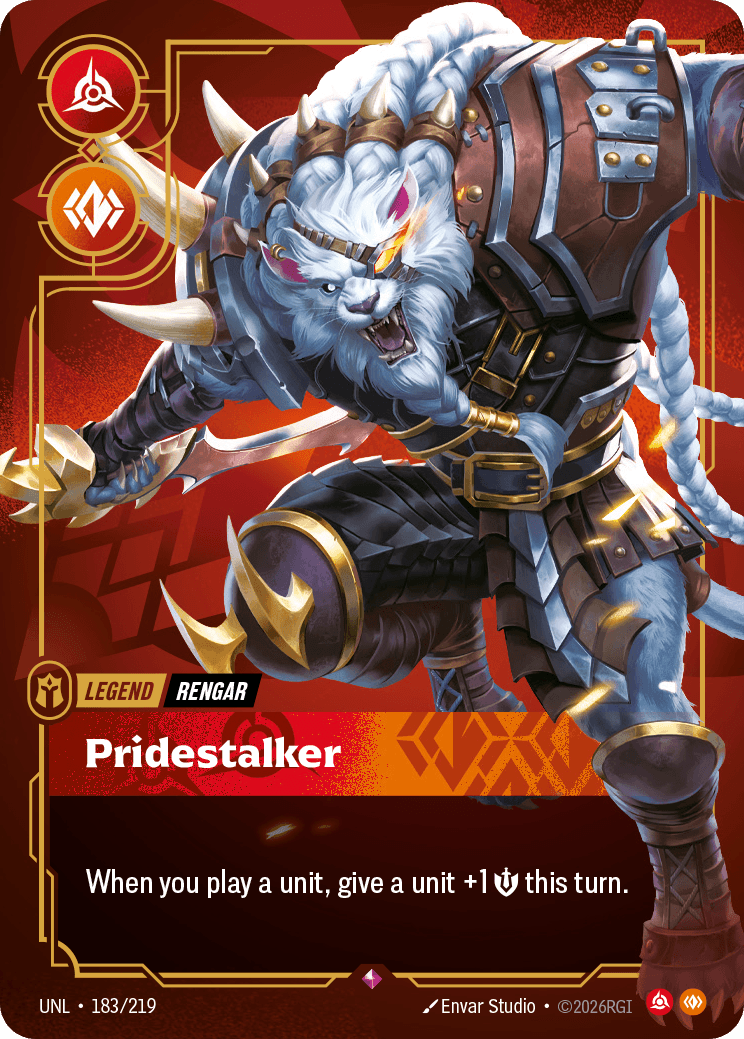
One day before Barcelona finished, the Milwaukee Showdown Series gave US players a different kind of warning. The event recorded 710 players and 689 decks. Jaraoh won on Rengar, Pridestalker, with a 12-1-0 run. R650 Cash also reached third on Rengar.
Rengar was only 32 decks, or about 4% of the field. Kennen was the most-played Legend at 63 decks, about 9%, but its best finish was fourth. Master Yi took second; Kennen, Irelia, Draven, and Ornn filled out the rest of the Top 8.
The important detail is not that Rengar can spike one tournament. It is that the deck keeps showing a credible ceiling in the exact environment where players expect slower engines and highly efficient defensive turns. Rengar asks opponents to respect immediate battlefield pressure, open-rift sequencing, and the cost of spending a removal card before the aggressive deck has run out of meaningful threats.
That makes Rengar a particularly good US testing choice. It is a strong deck to register if you want to punish a room that over-prepares for Kennen's preferred pace. It is also a strong deck to test against if you are tuning Ornn, Master Yi, or a value-oriented Irelia list. If your opening turns do not account for Rengar, your high-end plan may never matter.
Speyer: Azir Keeps the Rogue-Winner Pattern Alive
Speyer's August 15–16 Showdown Series result adds a third angle. Rocklho won the 626-player event on Azir, Emperor of the Sands. Kennen placed fourth, fifth, seventh, and eleventh, while Irelia took eighth and ninth.
Azir is not suddenly the most-played Legend in Vendetta. That is precisely why the finish is valuable. Across Speyer, Milwaukee, and Barcelona, large Western events have now produced a repeated pattern: a low-share or mid-share strategy converts through a field where Kennen is common and heavily tested.
Azir's job in the testing queue is different from Rengar's. Rengar tests whether you can survive immediate pressure. Azir tests whether you can disrupt a resource engine while still presenting a credible battlefield clock. Players building a September gauntlet should include both because a deck that beats one answer may still lose to the other.
Do not read the result as permission to play any untested rogue deck. Read it as permission to examine the parts of Azir that make a low-share registration worthwhile: flexible turns, a plan that scales into a long game, and enough early interaction to avoid conceding the board while setting up.
Wuhan: China and the West Are Converging
The S4 Wuhan Regional Open on August 30 recorded 1,280 players and all 1,280 decklists. Kennen led the field at 135 decks, or 10%. Irelia followed at 100, Master Yi at 97, Akali at 67, Jayce at 61, and Ornn at 60.
That shape is much closer to the current Western field than the earlier China snapshots. Kennen is now a clear part of China's front line. Master Yi and Irelia remain major registrations. Ornn is more represented in Wuhan than it was in Barcelona, which suggests China was already more comfortable testing the Kennen answer before the Western trophy made the deck impossible to ignore.
For US players, this changes how China should be used. The right question is no longer, 'What strange deck is China playing?' The right question is, 'Which matchup did China validate before our local results caught up?' Wuhan gives three immediate checks:
- Test Kennen against the same efficient pressure and removal packages that are already winning in the West.
- Test Ornn into a field where it is not merely a surprise one-percent registration.
- Test Akali and Jayce as flexible tempo options before assuming the Western top tables have exhausted the format.
This is also why raw metashare needs context. A Legend at 10% in a 1,280-player event is a serious environment signal. A Legend at 4% with a win is a conversion signal. You need both to build a good gauntlet.
Kennen Is Still the Deck to Beat
The winners are exciting, but Kennen remains the anchor. It led the Barcelona field, led Milwaukee's registrations, and led Wuhan. Three Kennen decks reached the Barcelona Top 8; four reached the top eleven in Speyer; Milwaukee still placed multiple Kennen pilots in the Top 8 even without winning.
That is what a format-defining deck looks like before the win rate is settled. It forces players to spend sideboard and main-deck space on a matchup. It punishes lazy sequencing. It appears often enough that a tournament deck can face it multiple times. Even when it does not take the trophy, it shapes the decks that do.
The September Kennen checklist is straightforward:
- Identify whether you are trying to race, exhaust, or out-position the deck.
- Keep a real answer for the first high-value battlefield turn instead of saving every interaction for the endgame.
- Test post-board games where Kennen has already seen your central plan.
- Track games by opening hand and turn-five board state, not only by match win.
If a deck loses to Kennen in a way it cannot repair with realistic swaps, it is not ready for a large US event. If it beats Kennen but folds to Rengar pressure or Ornn's gear engine, it is not ready either. The current format demands a three-way test.
The September Testing Queue
The most useful queue for US players is not a single tier list. It is a set of jobs:
1. Kennen: the representation check
Play enough Kennen games to learn the common sequencing patterns, then deliberately change the pressure point. A deck that only wins when Kennen misses a key turn is not actually favored. Record which answers remain useful when the first removal trade happens early.
2. Rengar: the speed check
Rengar should punish slow keeps and expensive setup turns. Test whether your deck can stabilize without abandoning its own win condition. The best answer is rarely 'add more generic defense'; it is usually a cleaner early line that contests the first battlefield before Rengar can choose the fight.
3. Ornn: the gear check
Ornn tests whether your interaction respects equipment timing. Do not wait until the finished threat is already carrying the board. Practice identifying the setup turn, then decide whether to remove the unit, answer the equipment, or force Ornn to spend the turn rebuilding.
4. Master Yi and Irelia: the scale checks
Master Yi and Irelia remain large registration populations in both Western and Chinese results. They are not merely fallback decks. Include them because they punish a narrow anti-Kennen build that has no plan for a longer battlefield exchange.
5. Azir, Akali, and Jayce: the flexibility checks
These are the decks most likely to expose a gauntlet that has become too predictable. Azir has the large Western win. Akali and Jayce have the Wuhan representation. They do not need to become the next dominant deck to matter; they only need to attack the assumptions your current list makes about speed, removal, and resource conversion.
Rules Matter More Than the Headline
Riot's Vendetta Rules FAQ and clarifications should be part of tournament preparation. The FAQ takes precedence over the Core Rules Document until the next update, so this is not optional flavor text for competitive players.
The practical changes include how base Might-setting effects evaluate alongside existing modifications, how countered cards played for Flow are banished, how Empowered stacks and is removed, and how replacement effects apply during damage assignment. The document also includes an Astral Heron erratum and clarifications around restrictions, targeting, equipment timing, and choices on Rebuttal.
Why does that matter for the current meta? Barcelona and Milwaukee both rewarded decks that create exact timing windows. If your testing group is using an old rules shortcut, you may be assigning the wrong value to an answer, misplaying a gear turn, or calling a matchup bad because a sequence is no longer legal. Read the FAQ before changing the list.
Singapore Is the Next Reality Check
RQ Singapore runs September 4–6 at Singapore Expo with a $25,000 prize pool and a $6,000 first-place prize. Riot's All Eyes on Singapore preview also lists the Jayce Regional Qualifier promo, the Winners Playmat, and the Best-Of Legends foil-plated cards.
Singapore arrives at the perfect moment. It can tell us whether Kennen's huge representation is converting, whether Ornn's China and Barcelona signals are repeatable, whether Rengar remains a US pressure specialist, and whether Azir's Speyer result was the beginning of a trend or simply a great tournament.
The weekend also overlaps with PAX West, where Riot is running demos and sealed events from September 4–7. That means the competitive spotlight will be split, but the testing lesson is unified: Vendetta is producing enough new information that copying last weekend's Top 8 is already too slow.
How to Use RiftStorm's Tools for This Meta
Start with the Riftbound card database to verify the current text before changing a list. Use the deck builder to save separate Kennen, Rengar, Ornn, and China-inspired shells instead of replacing one working list every time a new result appears. Then use Riftbound counters to turn the tournament headlines into matchup plans.
For a practical weekly routine, save one primary deck and four gauntlet decks. Play a small block against Kennen, then the same number against Rengar, Ornn, and Master Yi or Irelia. Keep a fifth slot for Azir, Akali, or Jayce. After each block, record the first turn where the game became structurally difficult. That produces better tuning information than a single combined win rate.
The Riftbound decks library is also useful for comparing shells without treating every published list as a recommendation. The goal is to identify the common engine, the flexible slots, and the cards that change when the field shifts. Barcelona's Ornn result is a starting point for that work, not the end of it.
Bottom Line
Kennen is the metagame's most important deck because it is everywhere. Ornn is the most important new result because it won the largest Western event from a tiny slice of the field. Rengar is the clearest US pressure signal after Milwaukee. Azir proves flexible rogue shells can still convert. Wuhan shows China is now testing the same central questions, with more Ornn and a Kennen-led field.
Build your September preparation around those facts. Do not abandon Kennen because it lost a final. Do not call Ornn solved because it won one. Do not register Rengar without testing the decks that learned from Milwaukee. And do not use China as a novelty deck source when Wuhan is giving us a direct cross-region comparison.
The next week should be about repeatability. Singapore is the checkpoint. Until then, the best Riftbound Vendetta deck is the one that can answer Kennen, survive Rengar's speed, and still function when Ornn or a flexible China-tested shell takes the game somewhere unexpected.