SCG CON Baltimore’s Riftbound Showdown Series runs September 12–13, 2026. That makes this a preparation article, not a recap: no Baltimore standings, Top 8, decklists, or winner exist to report as of September 7.
The useful question is narrower and more practical: what should a US player test before the next sanctioned event when the freshest evidence points in several directions at once?
Our answer is to build around four confirmed signals—Rengar’s US conversion, Ornn’s Barcelona trophy, Kennen’s repeated deep finishes, and Master Yi’s high-end floor—then use Wuhan’s Fiora, Akali, and Azir results as the China-supported stress test. The priority order below is RiftStorm strategy inference from those results. It is not an official tier list, a field-share table, or a claim that any matchup has a proven win rate.
Baltimore Is a Showdown Series Event, Not a Regional Qualifier
That distinction changes how you should read the weekend. Riot describes the Showdown Series as officially sanctioned tournaments run by partnered organizers, with events sized for hundreds rather than the thousands expected at a Regional Qualifier. Top finishers can earn Regional Championship invitations and future Regional Qualifier passes, with the exact number tied to the event’s attendance tier.
The published Star City Games schedule lists Baltimore as Standard. Saturday begins with seven Swiss rounds, and players reaching at least 15 match points advance to Day 2. Sunday adds four more Swiss rounds before a Top 8 single-elimination playoff. The organizer lists $6,000 for first, $3,000 for second, $2,000 for Top 4, and $1,000 for Top 8, plus Regional Championship invitation language for top finishers.
No official Baltimore attendance tier had been published in the sources reviewed for this article. Do not turn preliminary registration numbers from a public tracker into a guaranteed invite count. That is a future event detail, not a current result.
The format still rewards the same preparation discipline as a Regional Qualifier, but the practical goal is different. You need a deck that can navigate a long first day, convert a good record into Day 2, and win a short playoff without depending on one narrow surprise.
The Confirmed US Signal: Rengar Can Convert
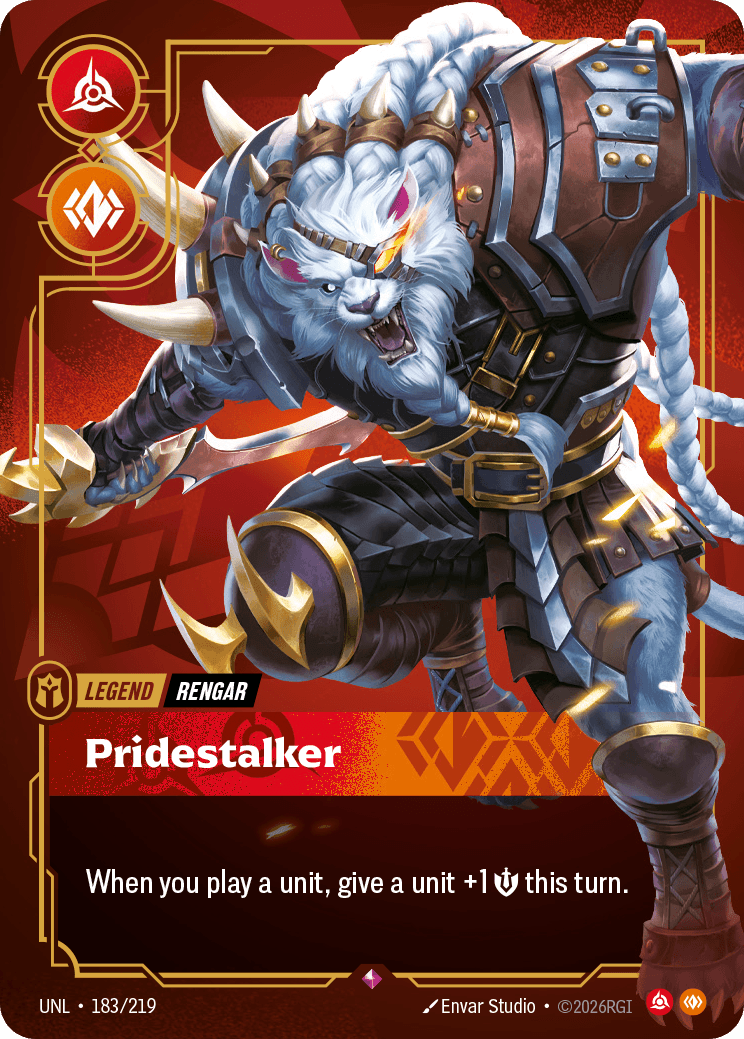
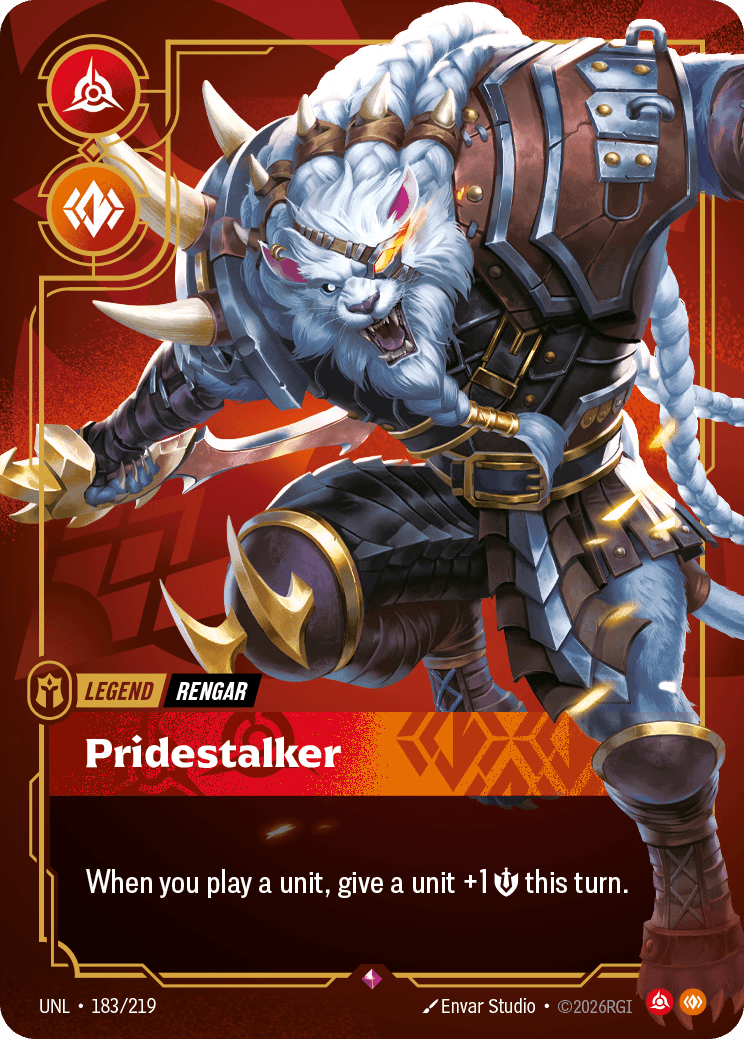
The strongest new US-specific deck signal is Rengar. Public Milwaukee standings list Jaraoh first on Rengar with a 12-1-0 record, ASC D1agram second on Master Yi at 11-2-0, and R650 Cash third on Rengar at 10-2-0. Riot’s later Barcelona recap also confirms that the Milwaukee Showdown was a large, important stop in the new Vendetta event cycle.
Two Rengar finishes in the public Top 3 are more useful than a single champion headline. They show that the deck can produce a high-end result in a US room while a familiar benchmark deck remains directly behind it. That is enough to make Rengar a mandatory test. It is not enough to declare every Rengar list the format’s best deck.
The Rengar test for Baltimore is about pressure quality. Can your deck contest the first meaningful battlefield without spending every flexible answer? Can it recover when Rengar chooses a different battlefield than the one you prepared to defend? Can your defensive turn leave a board that still scores, or did you merely survive while giving up the game?
Those are strategic questions, not claims about a single public decklist. If you need exact card text, use the card database; if you need to compare a testing shell with your registered list, use the deck builder.
Ornn Is Still the Best Low-Share Winner to Re-Test
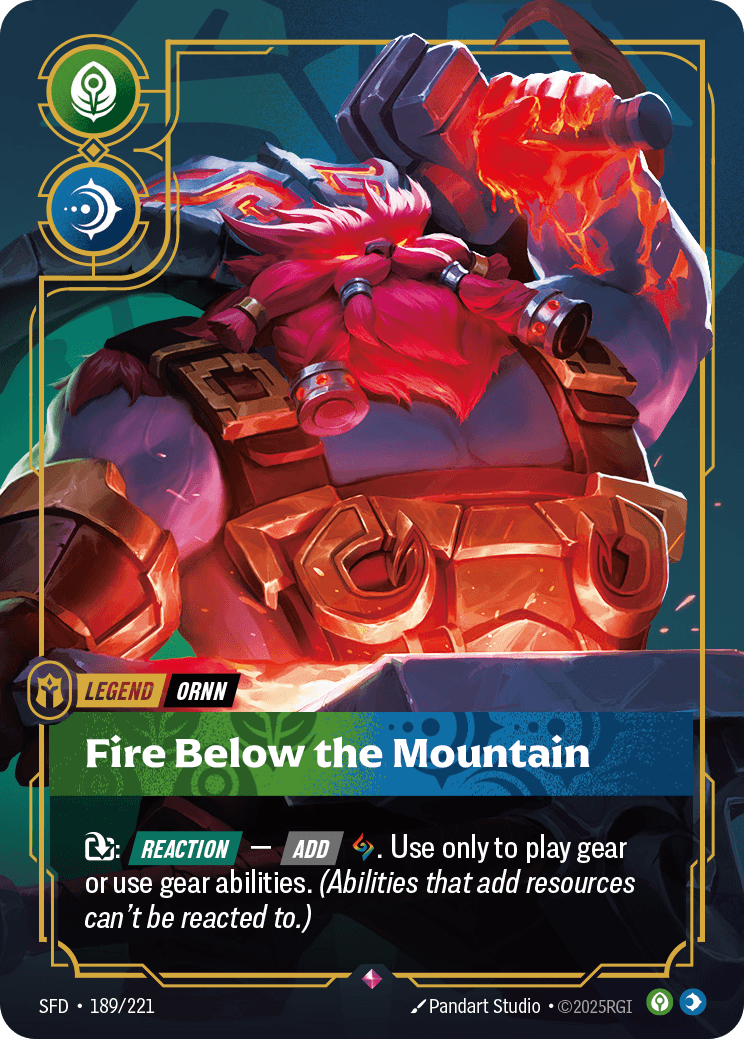
Barcelona is the cleanest official Western comparison point. Riot’s report says more than 2,130 players competed on Saturday, 379 continued on Sunday, Ornn won the event, Kennen occupied three Top 8 seats, Master Yi occupied two, and Azir and Rengar filled the remaining places.
That result makes Ornn a different kind of Baltimore test from Rengar. Rengar asks whether you can stabilize against immediate pressure. Ornn asks whether your interaction can interrupt a gear-and-board investment before it becomes too expensive to answer.
The important inference is not that Ornn must win again. It is that a deck which spends all of its preparation on the Kennen matchup can lose to a strategy that turns a small setup window into a large battlefield problem. Test the turn before the finished threat matters. Decide whether your answer should target the unit, the equipment, the battlefield, or your own tempo.
If you only test Ornn after it has already assembled its best position, you are testing a losing snapshot rather than the matchup.
For a broader comparison, our Barcelona and Milwaukee results breakdown covers the earlier US and European signals, while this article focuses on the Baltimore decision point.
Kennen Still Sets the Minimum Standard
A preparation article that talks only about emerging Legends is not useful if it forgets the deck the field keeps having to answer. Kennen reached three of the Barcelona Top 8 seats, and the public Singapore result report lists four Kennen decks in that event’s Top 8.
The conclusion is not that Kennen must win Baltimore. The conclusion is that a deck is not ready for a long US tournament if its plan against Kennen is “hope to dodge it.”
Treat Kennen as the minimum standard for your list:
- Can you contest the first battlefield without trading away your entire hand?
- Can you answer the opponent’s first high-value engine turn and still develop?
- Can you recover if the first exchange is even instead of favorable?
- Does your sideboard improve the matchup without becoming dead against Rengar or Ornn?
The fourth question is the important Baltimore adjustment. A narrow anti-Kennen package can look excellent in a two-deck practice room and become a liability when the event contains pressure, gear, combat, movement, and value shells together.
We do not publish a card package as a current tournament list unless our own first-party data supports it. Build the matchup plan around roles, then verify every card in the Riftbound card database.
Master Yi Is the Cleanest High-Floor Check
Master Yi finished second in the public Milwaukee standings. Riot’s Barcelona report also places two Master Yi lists in the Top 8. That makes the Wuju Bladesman less of an “old deck that still appears” and more of a direct test of whether your list can answer a committed threat without losing the next scoring turn.
This is the practical Master Yi question: what happens after your answer resolves? If removing or shrinking the important unit leaves you with no board, no resources, and no way to contest the next battlefield, the exchange may have been technically correct and strategically too slow.
Master Yi belongs in the first four Baltimore practice seats because it tests a different failure mode from Rengar. Rengar punishes slow starts and weak battlefield discipline. Master Yi punishes answers that do not account for the threat that arrives next.
That is an inference from the event record, not a claim that Master Yi is secretly the best deck. The results justify the test. The games decide whether your build can pass it.
China’s Wuhan Top 8 Adds the Missing Middle
Wuhan is useful because it fills in the space between “fast US pressure” and “Kennen preparation.” The public result pages record a 1,280-player China Regional Open with this Top 8 order:
- Irelia first.
- Kennen second and third.
- Fiora fourth.
- Akali fifth.
- Azir sixth.
- Diana seventh and eighth.
The result is supporting context, not a replacement for US data. It does not tell us what Baltimore players will register, and it does not create an official global tier list. It does show that the current Vendetta testing problem is broader than a single US-versus-China stereotype.
Fiora is the most useful emerging China signal for Baltimore because it adds a combat-centered test to a queue already crowded with engines and pressure. Akali is the movement-and-tempo check that later converted all the way in Singapore. Azir remains the flexible value test that can punish a gauntlet built around only the most obvious threats.
The safest reading is structural: prepare for a game where the opponent can win through early pressure, a committed battlefield threat, equipment investment, movement, or a longer value sequence. Do not copy a public list you have not tested simply because the Legend name appeared in a Top 8.
Our Wuhan and Singapore news report covers the regional results in more detail. Here, Wuhan’s role is to stop your Baltimore gauntlet from becoming too linear.
The Baltimore Testing Queue
The following is our strategic testing order, not a published ranking:
1. Rengar: the US pressure test
Start here if your deck loses before its expensive cards matter. Practice the first two battlefield decisions, then replay the games with the Rengar player changing which lane receives the commitment. Your goal is to learn whether your deck can defend without becoming passive.
2. Kennen: the conversion benchmark
Play Kennen against the exact list you plan to take, not against a convenient goldfish version. After each game, name the first turn where you gave up initiative. If the answer is always “the final turn,” your real problem may have started several turns earlier.
3. Ornn: the setup-window check
Do not wait for the largest equipped threat. Identify the turn where Ornn invests in becoming difficult to answer, then test multiple responses. A matchup plan that has only one expensive answer is not a complete plan.
4. Master Yi: the committed-threat check
Practice answering the threat while preserving a way to score next. If your line trades one card for the unit but concedes every battlefield afterward, record that as a loss of tempo rather than a successful removal.
5. Irelia and Fiora: the combat-and-movement check
Wuhan put Irelia and Fiora in the first four places. Use them to test whether your list understands the board as a sequence rather than a single combat. Track which battlefields you are willing to abandon, when a trade opens a better score, and whether your interaction remains useful after the opponent changes lanes.
6. Akali and Azir: the off-axis check
These are the decks to add once your list can pass the obvious tests. Akali asks whether your answers still work when movement changes the map. Azir asks whether you can pressure a flexible value plan without wasting every resource on the first exchange.
Use the Riftbound Counters page to organize matchup jobs, then keep the actual deck choices in the deck builder. A testing shell is a practice instrument, not a claim about what a tournament winner played.
What Baltimore Can and Cannot Tell Us
Baltimore can tell us whether the US Showdown Series keeps rewarding the same emerging decks that appeared in Milwaukee and Barcelona. It can also show whether the Singapore and Wuhan signals survive another Standard field.
Baltimore cannot, by itself, prove a permanent tier list. It is one event with an attendance-dependent qualification structure, a finite Top 8, and an evolving public decklist record. A champion photo is a result. It is not a population estimate.
That distinction matters especially because public tournament data is incomplete. The Milwaukee standings are available through a third-party results page, while Riot’s public Barcelona recap gives the event summary and Top 8 shape. Wuhan’s public result pages agree on the Top 8 order, but no Riot Wuhan Top Decks recap was available in the sources reviewed. Singapore’s official event record confirms the event and player count, but its public page does not provide a complete official standings table.
We are therefore treating placements as confirmed when independent public result pages agree, official Riot event summaries as the source for their own published counts, and strategic conclusions as inference. We are not converting the gaps into invented win rates, field shares, standings, decklists, or quotes.
Bottom Line
The next US Vendetta event is Baltimore, and the correct preparation is not another generic tier list. It is a short, honest gauntlet:
- Rengar because Milwaukee produced a first-and-third public finish.
- Kennen because Barcelona and Singapore keep putting it deep.
- Ornn because Barcelona proved a low-share gear strategy can win a huge event.
- Master Yi because Milwaukee and Barcelona keep making it a high-floor threat.
- Irelia and Fiora because Wuhan reached the combat-and-movement part of the format before Baltimore.
- Akali and Azir because the current field is too flexible for a single-axis anti-Kennen build.
If your deck cannot pass Rengar, Kennen, Ornn, and Master Yi, it is not ready. If it passes those four but collapses when Irelia, Fiora, Akali, or Azir changes the map or the pace, it is also not ready. That is not a tier list. It is a better way to spend the last days before the next result exists.
Build and Test on RiftStorm
Read the exact current card wording in the card database, clone a Baltimore practice shell in the deck builder, compare public-facing deck ideas on Riftbound decks, and organize the matchup queue in Riftbound Counters. The meta snapshot is useful for orientation, but tournament placement is still evidence—not a substitute for testing.
Official Sources and Methodology
- Riot: Announcing the Showdown Series — official Showdown Series purpose, attendance tiers, qualification language, and prize structure.
- Riot: Barcelona’s Top Decks — official Barcelona result, Milwaukee event context, Top 8 shape, and published event table.
- Riot: 2026 Roadmap — official 2026 Regional Qualifier schedule and the September Los Angeles checkpoint.
The Baltimore schedule and event-specific prizes were checked against the organizer’s published SCG CON page. Milwaukee placements were checked against the public standings page. Wuhan’s Top 8 order was cross-checked across two public result pages. Those third-party URLs are retained in the publication report rather than embedded here because RiftStorm’s content policy does not send readers to external decklist and tournament aggregators.