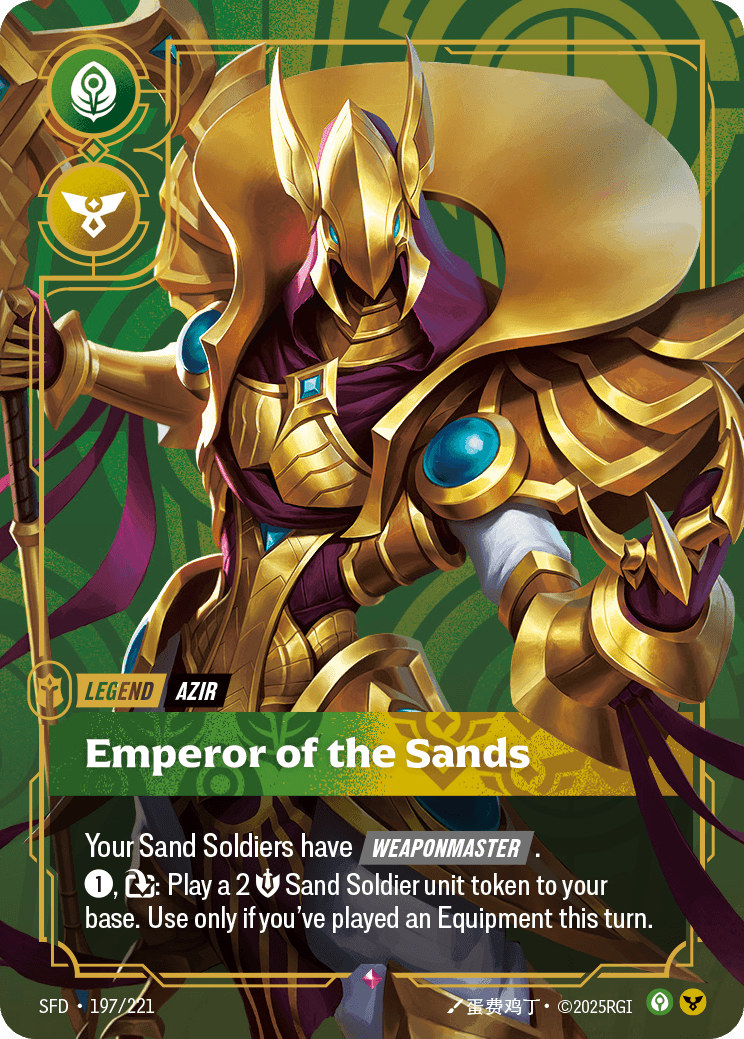
Tempo Ezreal is one of the more interesting Riftbound deck searches because the intent is specific: players are not just asking for any Ezreal pile. They want a spell-tempo shell that can interact, score, and keep the opponent from taking a clean battlefield turn.
Use the Riftbound card database to search Ezreal, spell, Action, Reaction, draw, stun, recall, and damage effects, then move the shell into the deck builder.
Tempo Ezreal Core Jobs
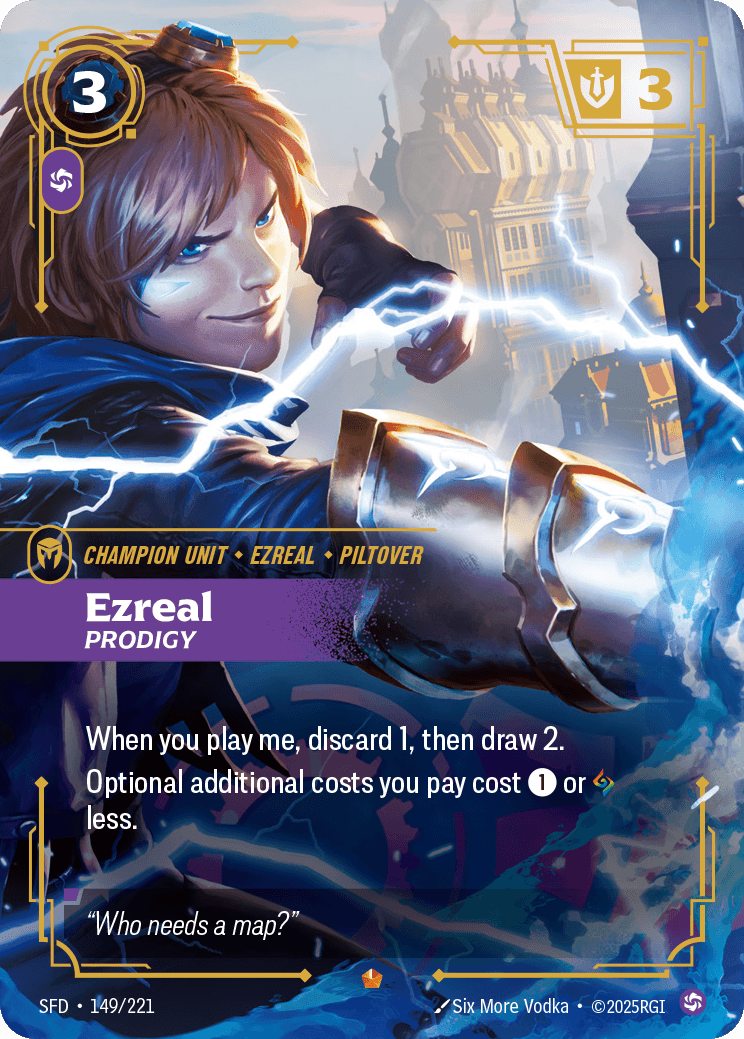
Chaos Legend
Ezreal - Prodigy
Tempo Ezreal shells need enough spell density to punish commits without giving up the battlefield.
A good Tempo Ezreal list needs five jobs covered.
- Early units that can contest the first battlefield.
- Cheap spells that answer combat or movement without spending the whole turn.
- Payoff cards that reward spell sequencing.
- Card flow so the deck does not run out after trading resources.
- A closing plan that turns a tempo lead into points.
If the list has only spells and no board, it becomes a control deck that may lose to early pressure. If it has too many units and no spell density, it stops being Ezreal.
Suggested Shell
Start with this structure before choosing exact card names.
- 8 to 10 early contest units.
- 10 to 14 cheap spells or reactions.
- 4 to 6 payoff units or champion cards.
- 4 to 6 card-flow or selection effects.
- 4 to 6 flexible interaction pieces for local matchups.
- Runes and battlefields that let the spell turns happen on time.
That shell gives you enough density to play a tempo game without leaving battlefields empty.
Mulligan Plan
Keep hands that do something in the first two turns and still represent interaction. A hand with only expensive payoff cards is usually a trap.
Against pressure decks, prioritize early units and cheap answers. Against slower decks, prioritize card flow and a payoff. Against battlefield tempo decks, keep hands that can fight over position before the opponent gets a free score.
Common Mistakes
The biggest mistake is spending every spell as soon as it is legal. Tempo decks win by choosing the turn that matters.
Do not answer a small unit if the opponent has not committed to the battlefield yet. Do not save every answer forever and lose the first score for free. The sweet spot is forcing the opponent to move first, then using a cheap spell to break the combat math.
What To Test First
Run this deck into three matchups first.
- Irelia, to test whether you can stop movement pressure.
- Annie, to test whether you can survive fast damage and wide boards.
- Master Yi, to test whether your answers line up with one large threat.
If the deck cannot explain those three matchups, the shell is not ready for a public list.
Bottom Line
Tempo Ezreal should feel like a deck that is always asking the opponent to play one turn behind. Build enough board to score, enough spells to punish their commit, and enough payoff to make the spell turns matter.