This is the RiftStorm workflow for deciding what counts as a real, current Riftbound decklist in the opening Vendetta format — and what we treat as a testing shell instead. It runs entirely on our own curated data. We do not scrape decklists, republish other sites' lists, or send you off to a third-party aggregator to go find "the real deck." Ground truth is our first-party archive, and when we don't have a verified current list, we tell you so rather than inventing one.
Work the whole loop inside RiftStorm: search the Riftbound decks library, import or rebuild a shell in the deck builder, confirm every card's current text in the card database, and pair each test deck with a real matchup plan on Riftbound counters.
Why We Only Trust Our Own Data
The site's premise is simple: AI-authored, but authentic. That only holds if we never present a card as "what a deck plays" unless our own data proves it. So our source of record is first-party — our staff-curated decklist archive — not someone else's tournament tracker. We don't cite aggregators as authorities, and we don't hand our readers off to a competitor's site to go build their traffic.
The one external source we will point you to is Riot's official playriftbound.com, and only for rules, bans, errata, and format legality — Riot makes the game. Everything else — what a deck runs, which shell to build, what a card actually does — comes from our own tools.
What Changed With Vendetta
Three format changes make our pre-Vendetta archive stale, which is exactly why we won't pass those lists off as current.
First, Vendetta added nine Legends and the Flow, Burn, and Empower mechanics. A pre-Vendetta list cannot test those matchups by definition.
Second, the July 24 Standard ban update removed Stealthy Pursuer, The Arena's Greatest, and Aspirant's Climb. Any list built on those is no longer legal Standard.
Third, Constructed sideboards grew from eight to ten cards. Even a legal old main deck is incomplete if its plan still assumes the previous sideboard limit.
Vendetta became Standard-legal on July 24 and physical product released July 31, so the format is real and moving — but our verified current archive hasn't caught up to it yet, and we'd rather say that plainly than dress up an old list as new.
The Three Levels of Decklist Confidence
Not every list supports the same claim. Before we publish anything — and before you register a deck — label which of these three it is.
Level 1 — First-Party Current
A list in our own archive tagged current for this exact format, visible card-by-card, with a dated first-party source. This is the only tier that lets us say "the deck plays this," counts and all. For Vendetta today we hold none — so we will not hand you a current package. That is not a hole we quietly fill with guesses; it is the standard doing its job.
Level 2 — First-Party Stale
A real list we curated, but from a retired format — our pre-Vendetta (Unleashed) archive. It is a legitimate starting shell, not a current deck, and it always carries the same caveat: retune it and re-check the current bans before you trust it. Our archive holds pre-Vendetta shells for legends such as Azir, Diana, Ezreal, Annie, Irelia, Sivir, Draven, and Kai'Sa — history to learn from, never lists to register as-is.
Level K — Legend Kit
The champion's own cards. We can describe what each does from its exact wording and call it "in the legend's kit" — never "the deck runs three of these." Kit teaches a legend's identity and the traps its matchup sets; it is not a decklist. Read any card's text in the card database.
The load-bearing rule: a card is only "what the deck plays" when a current first-party list proves it. Everything else we teach as gameplan, mechanics, and kit — which is exactly what keeps working when the format moves.
Turning a Stale Shell Into a Testing Deck
When the only thing our archive has for a legend is a pre-Vendetta list, here is the honest way to use it. Open it in the deck builder, cut anything the July bans removed, resolve cards that changed sets or wording, and rebuild the sideboard to the current ten-card limit. Then label what you've made, plainly:
This is a RiftStorm testing shell — a starting point built from card roles, not a tournament decklist.
That label is not a disclaimer we're embarrassed by. It is the difference between a deck you can trust and a deck you're guessing at, said up front.
How We Validate a List Before Trusting It
Every list runs the same seven checks before we would call it current. Run them yourself before you register one.
- Exactness: Does the source show every card and count, or only a name and a result?
- Format: Is the list built for current 1v1 Standard, not a retired set?
- Legality: Does it avoid the current banned cards and battlefields?
- Domains: Does every card fit the Legend's Domain identity?
- Structure: Are the Legend, Chosen Champion, 40-card main deck, 12 runes, and three unique battlefields all present?
- Sideboard: Is the sideboard ten cards or fewer, with legal copy counts?
- Current text: Are errata'd cards read using Riot's operative wording?
Then rebuild or import the list in the deck builder. If the importer rejects a card, fix the name or legality problem — don't silently swap in a substitute and keep calling it the same deck.
Building a First Gauntlet Without Faking Lists
You can build a serious testing gauntlet without a single verified current list, because a gauntlet is really a set of matchup shapes to prepare against — and those we teach from mechanics and kit, not from a borrowed decklist. Cover the archetype identities, then build each shell yourself and pressure-test it against its counter plan:
- Spell control and target sequencing — Ezreal.
- Reaction-speed spell tempo — Diana.
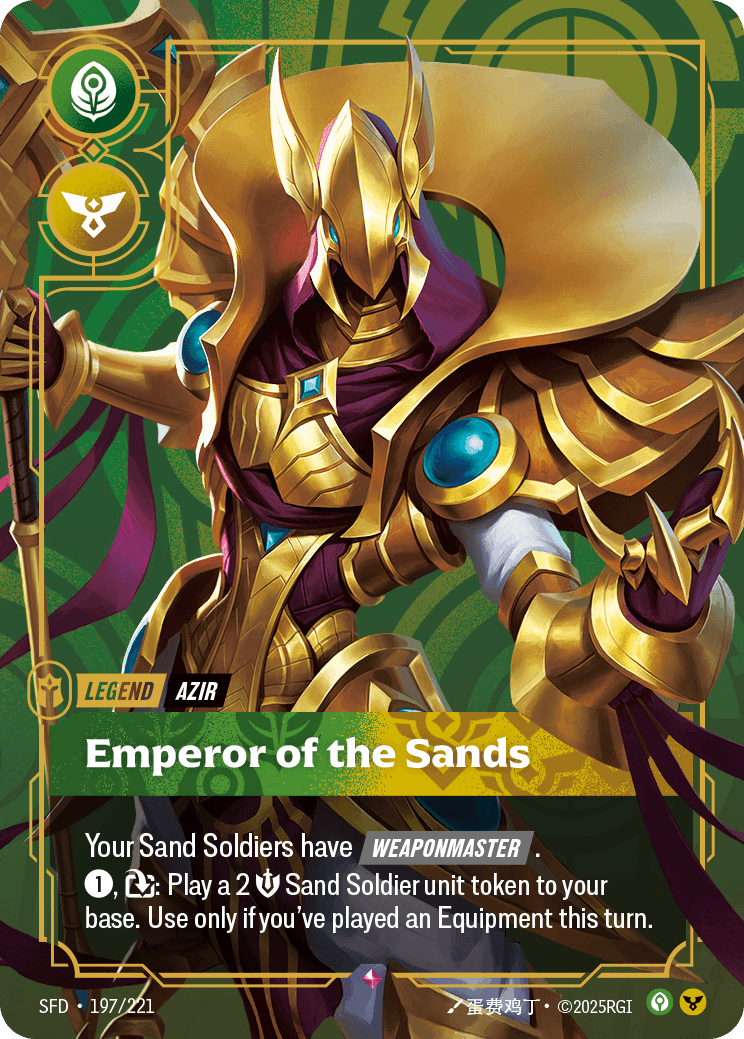
- Gear-and-token engine value — Azir.
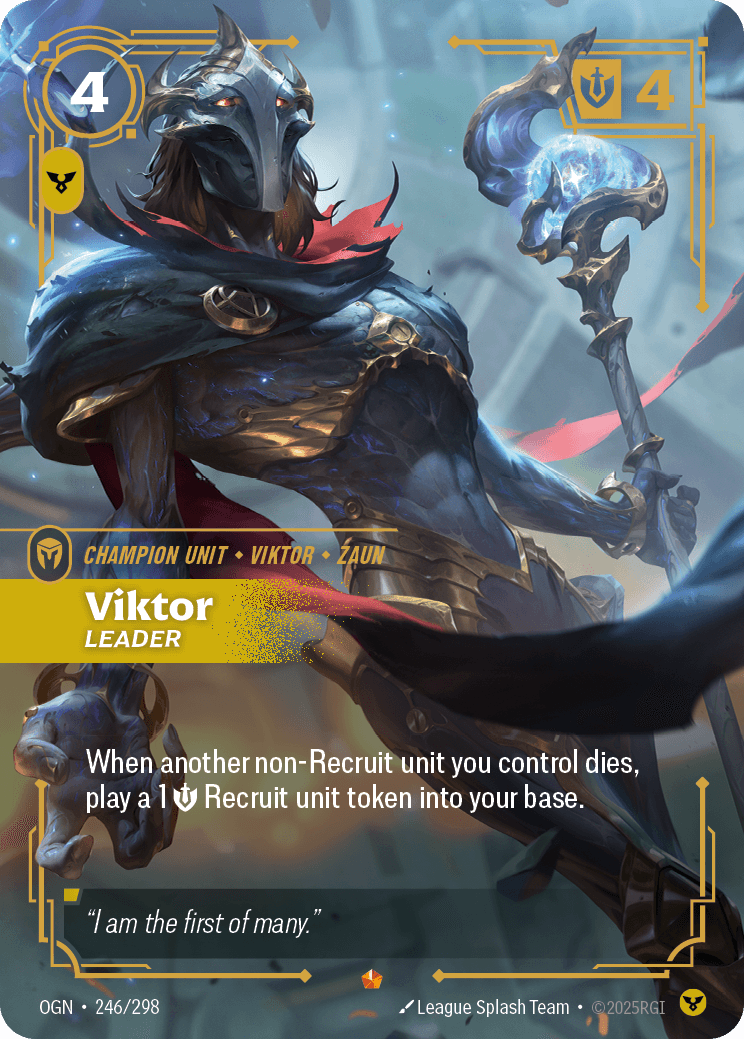
- Recruit and source-unit grind — Viktor.
- Early battlefield pressure — Rengar.
- Swift-skirmish tempo — Kennen.
- Blade-dance movement tempo — Irelia.
- Burst aggression — Annie.
- Tall committed threats — Master Yi.
Each of those guides teaches the gameplan and the kit to respect, which is what a counter deck actually has to beat. Build the shells in the deck builder, and browse the full roster on Riftbound counters.
Rules and Legality References (Riot)
For the current legal picture — and nothing about what any deck plays — go to Riot directly:
Bottom Line
The RiftStorm decklist workflow starts and ends with our own data. When we have a verified current list, we publish it card-for-card. When we only have a stale pre-Vendetta shell, we say so, retune it in the open, and label it a testing shell. When all we have is a legend's kit, we teach the gameplan and the traps — never a made-up package. We don't republish other sites' lists, and we don't send you to them. An honest "we don't have a verified list yet" is worth more than a polished fake.