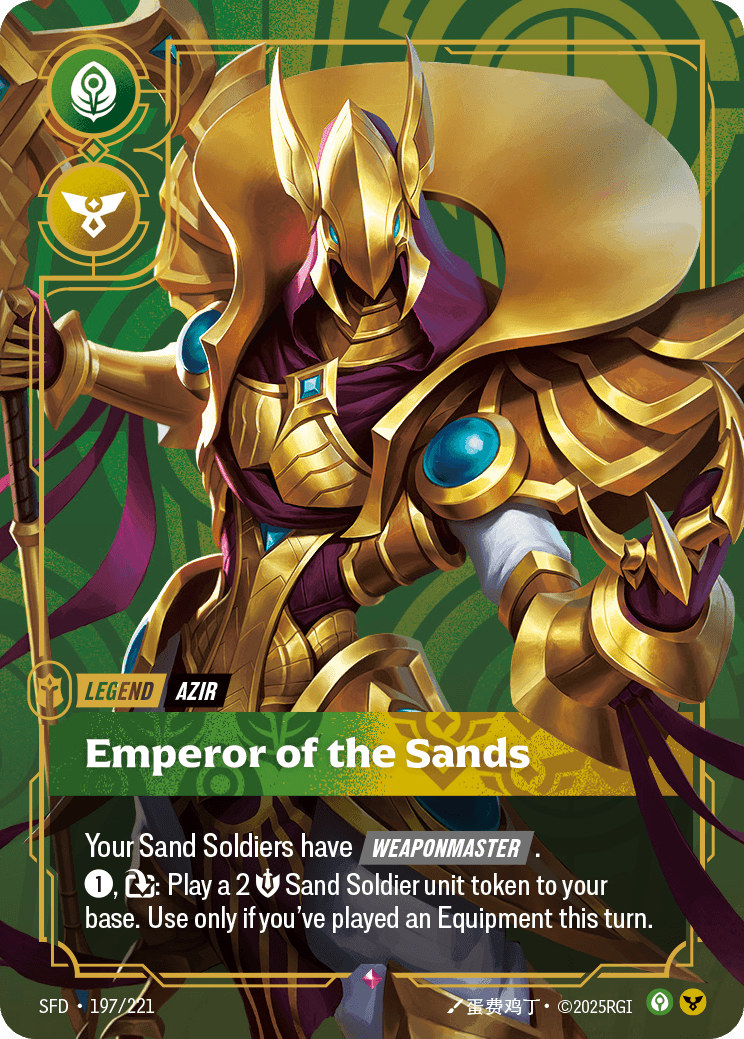
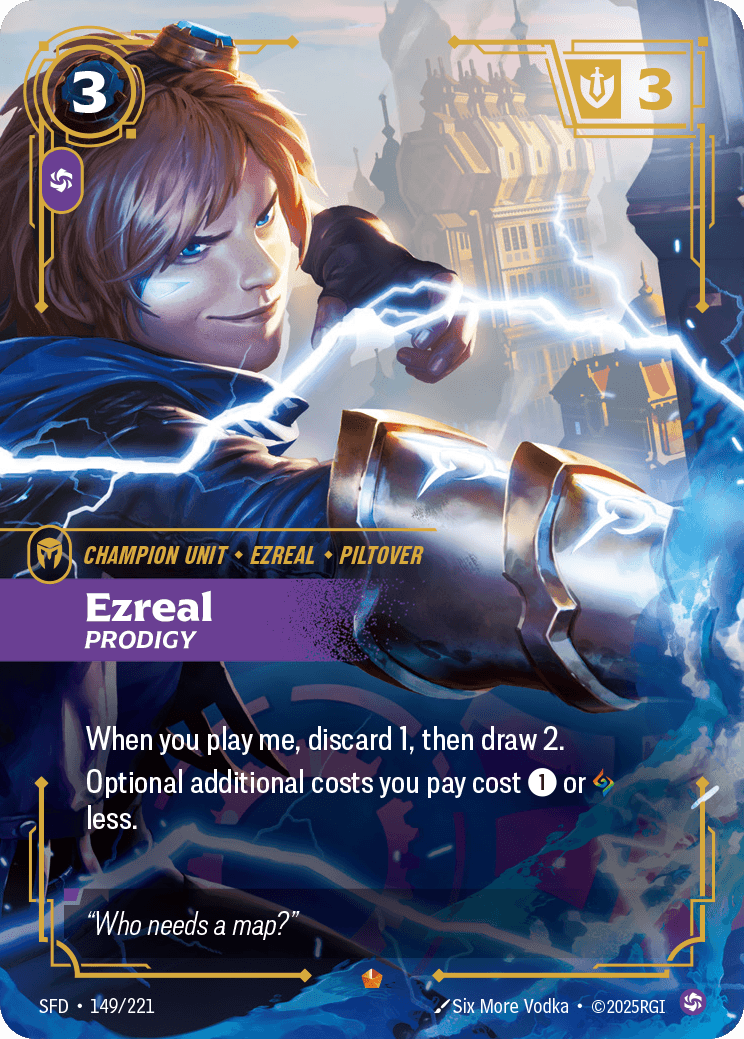
A current Riftbound Piltover deck is no longer just a theme pile built by searching "Piltover" in the card database. Vendetta added Jayce as a dedicated Mind/Body gear Legend, Viktor is repeatedly converting with inexpensive Recruit-value shells, and Ezreal carried its late-Unleashed spell-control success into early Vendetta Top 8s.
Do not combine all three packages because the art and region match. Piltover is a region and theme tag, not a Domain. Viktor is Mind/Order, Jayce is Mind/Body, and Ezreal is Mind/Chaos. The Legend you choose determines which cards are legal.
Start with the Riftbound card database, build or import the list in the deck builder, compare current public decks, and pair the final shell with the relevant counter guide.
Why This Guide Changed for Vendetta
The previous version treated Viktor, Caitlyn, Jinx, and Ezreal as equal theme directions and offered only a generic card-ratio shell. That was useful before current event data existed. It is too vague now.
The first Vendetta week gave Piltover players three concrete competitive signals:
- Viktor won the 36-player Columbus main event, then reached Top 8 at both Nightcup and Mardi.
- Jayce finished second at the fully recorded 47-player Nightcup, the best first-week result from a dedicated new Piltover Legend.
- Ezreal reached Top 8 at the 109-player NovaRiftbound event and Top 4 at Nightcup after winning Dallas and Pittsburgh in July.
Those results do not solve the format. They do tell you which three shells deserve real testing before a broader theme brew.
Piltover Is a Theme, Not a Deckbuilding Rule
Riftbound deck legality is determined by the Legend's Domain identity. A card can be tagged Piltover and still be illegal in the deck you selected.
That produces three current Domain routes:
- Viktor, Herald of the Arcane — Mind/Order: Recruit engines, source-unit value, card flow, and board stabilization.
- Jayce, Defender of Tomorrow — Mind/Body: gear, Empower, ready effects, combo lines, and sturdy interaction.
- Ezreal, Prodigal Explorer — Mind/Chaos: targeted spells, selection, bounce, damage, and tempo-control sequencing.
Pick the route before picking the cards. If the list begins as "every Piltover card I own," the rune requirements and game plan will pull in different directions.
Route 1: Viktor Recruit Value
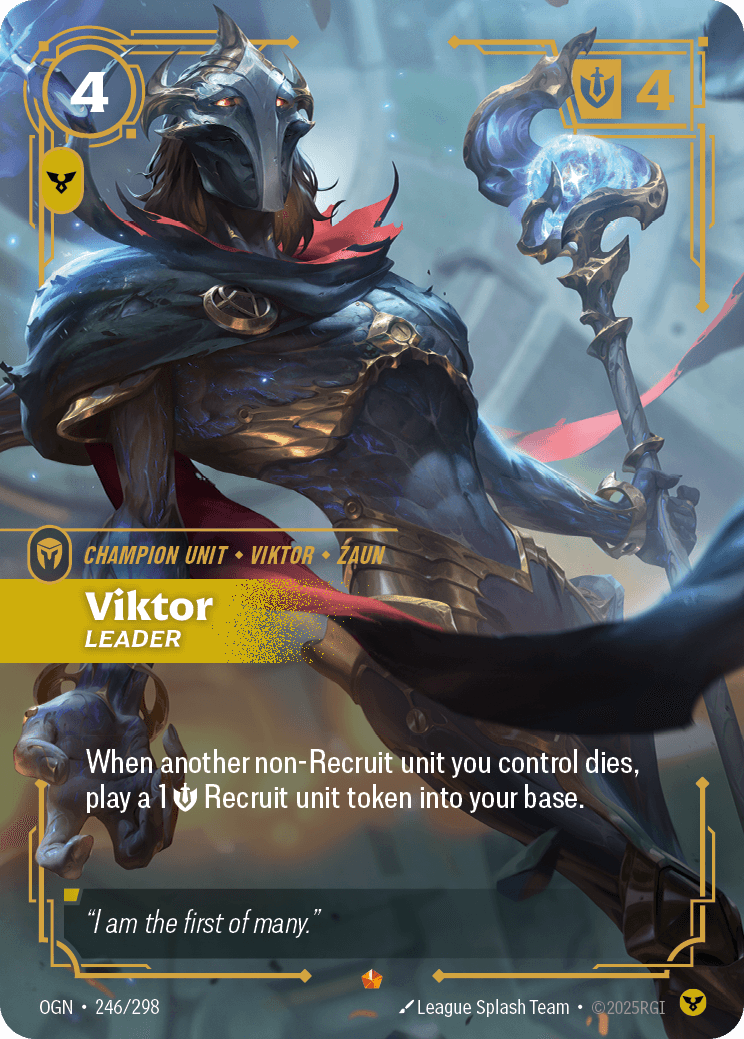
Order Legend
Viktor - Leader
Viktor is the repeat-converting Piltover value route, with a current win and consecutive Vendetta Top 8s.
Viktor has the best repeat-conversion evidence of the three. Won Hyuk Do won Columbus on Viktor, and OC Mystegune reached Top 8 at both Nightcup and Mardi. Those events are not identical—Columbus was listed under Unleashed while Nightcup and Mardi were Vendetta-legal—but the core Recruit engine clearly survived the transition.
Viktor's plan is source-first value. The deck wants one card to create or improve repeated Recruit bodies, then uses those bodies to contest more battlefield space than the opponent's answers can cover.
A functional Viktor build needs:
- early bodies that keep the first battlefield from being free;
- Recruit or token sources that produce more than one useful object over time;
- protection or interaction for the source card;
- card flow so the deck can rebuild after a reset; and
- a closing turn that converts width into points instead of creating tokens forever.
The most common building mistake is overloading on payoffs without enough source density. The second is the opposite: filling the list with Recruit makers and no way to turn a wide board into a score.
Use the Viktor counter guide from the other side of the table. If your build loses to the counter plan described there—source removal, anti-wide stabilization, and pressure across two battlefields—the list needs either more resilience or a faster clock.
Build the Viktor Recruit shell in our deck builder, read each source unit's exact text in the card database, and compare it against current public decks. Until repeated results back your exact 40, treat what you assemble as a RiftStorm testing shell — a starting point built from card roles, not a tournament decklist.
Route 2: Jayce Gear Tempo
Jayce is the route Vendetta made possible. Defender of Tomorrow uses Mind/Body and can ready gear, with a stronger ready effect after it becomes Empowered. The legend therefore rewards gear that does something meaningful when exhausted and becomes valuable again when readied.
Nightcup supplied the first tournament reason to take the shell seriously: Jayce finished second in a 47-player field where every list was recorded. One runner-up does not establish a tier, but it is enough to replace preview-season guesses with a live list.
A functional Jayce build needs:
- gear worth readying rather than gear included only to increase the count;
- enough ordinary units to contest while the engine is assembled;
- a clean Empower sequence that does not consume the entire scoring turn;
- Body interaction or durable threats that keep the deck alive under pressure; and
- a win condition when the perfect gear loop does not appear.
The main trap is building a combo deck whose individual cards do nothing. Test every gear with this question: if Jayce never readies it, is the card still acceptable? The best tournament build may use the legend as a value multiplier inside a solid Mind/Body shell rather than chasing an elaborate infinite-looking sequence.
Build the Jayce gear shell in our deck builder and read each gear card's exact text in the card database before you commit to a loop. Keep it separate from preview-season Jayce brews posted before the physical release; those can inspire changes, but treat any list you assemble as a RiftStorm testing shell — a starting point built from card roles, not a tournament decklist — until repeated results back it.
Route 3: Ezreal Spell Control
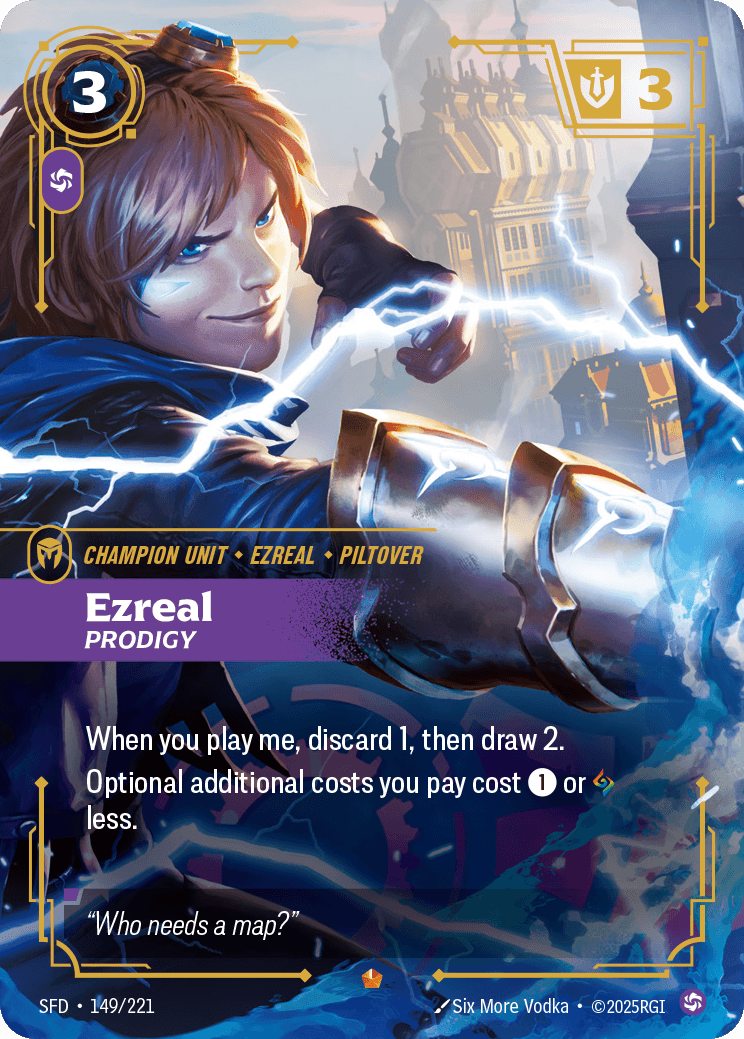
Chaos Legend
Ezreal - Prodigy
Ezreal remains the most proven Piltover spell-control route after continuing to convert in early Vendetta events.
Ezreal remains the most proven Piltover-style Legend over a longer timeline. The deck won Dallas and Pittsburgh in consecutive July weekends, reached the Nova Top 8 in the first sizable Vendetta-format event, and finished in the Nightcup Top 4.
The shell uses Mind/Chaos selection and targeted interaction to make the opponent's important turn awkward. It still needs units. A spell deck that never occupies a battlefield gives the opponent points while holding answers.
A functional Ezreal build needs:
- early units that contest without demanding full protection;
- enough targeted spells or abilities to make Prodigal Explorer matter;
- selection and card flow that do not consume every development turn;
- flexible interaction for both pressure and engines; and
- a resilient second threat after the first bounce or removal exchange.
The build test is simple: play against Rengar or Annie first. If Ezreal cannot affect the board before the pressure deck scores, the list is too clever. Then play against Azir or Viktor. If every answer hits a token while the engine survives, the interaction suite is too shallow.
Build and goldfish the Ezreal control shell in our deck builder, read Prodigal Explorer's kit in the card database, and study the matchup from the other side with our Ezreal counter guide.
What About Caitlyn and Jinx?
Caitlyn and Jinx remain valuable Piltover and Zaun card-search directions, but the current evidence does not put a dedicated Caitlyn or Jinx Legend shell beside Viktor, Jayce, and Ezreal. Search their cards when they support the chosen Domains and actual plan. Do not force them into the list to satisfy the region theme.
A strong themed deck still has to be a legal, functional deck. If a Caitlyn card improves Viktor's interaction or a Jinx card belongs in Ezreal's Chaos package, test it. If the card strains the runes or does not support the scoring plan, the tag is not a reason to keep it.
Current Piltover Build Framework
Use jobs instead of fixed percentages. Exact ratios change by Legend and event.
Board Package
Play enough early units to contest the first two turns. Viktor needs bodies that preserve source value. Jayce needs units that make gear relevant. Ezreal needs units that turn spells into tempo instead of pure defense.
Engine Package
Viktor wants Recruit or repeat-value sources. Jayce wants gear with useful exhaust or Empower text. Ezreal wants targeted spells, selection, and champion cards that convert spell sequencing into cards or points.
Interaction Package
Choose flexible answers that work against at least two current problems:
- pressure from Rengar, Annie, Renekton, or Irelia;
- tall threats from Nasus or Master Yi;
- gear and engines from Azir, Viktor, or Jayce; and
- reaction-speed tempo from Diana, Ezreal, or Kennen.
Closing Package
Name the turn the deck expects to win. Viktor should turn board width into multiple scoring threats. Jayce should convert repeated gear use into a battlefield the opponent cannot contest efficiently. Ezreal should transform one protected tempo lead into the final points.
If the list only generates value, it is not finished.
Mulligan by Route
Viktor: keep an early unit plus a source or card-flow line. Ship hands containing only expensive token payoffs.
Jayce: keep a body, playable gear, and believable rune sequence. Ship hands where every card depends on an Empowered legend before doing anything.
Ezreal: keep early board presence and one cheap interaction spell. Ship hands with selection but no unit or answer to early pressure.
All three routes need a first battlefield. Piltover flavor does not score points by itself.
Ten-Card Sideboard Priorities
A practical first board uses:
- two early interaction cards for Rengar, Annie, Renekton, and Irelia;
- two engine or gear answers for Azir and the mirror family;
- two tall-threat answers for Nasus and Master Yi;
- two tempo or anti-spell cards for Diana, Kennen, and Ezreal; and
- two flex slots for the local room.
Viktor can devote more flex space to engine mirrors. Jayce may need protection against gear removal. Ezreal may need more resilient threats so sideboarding does not leave the deck with twenty answers and no way to score.
Exact List Checklist
Before publishing or buying a current Piltover deck, confirm:
- the source shows every card and count;
- the event date and format are visible;
- all cards fit the selected Legend's Domains;
- the list uses the current ban list;
- the Main Deck, runes, battlefields, and sideboard are separated correctly;
- the sideboard is ten cards or fewer; and
- errata'd cards use Riot's current text.
Import the source into the deck builder, then compare it with current decks. If a source only proves the Legend and finish, label your reconstruction a testing shell.
How We Sourced This Update
The Columbus, Nightcup, Mardi, and NovaRiftbound finishes cited above are the public tournament record we used to decide which three shells deserve testing — we don't republish other sites' decklists or send you off to find them. Build and verify everything in our own tools: the deck builder, the card database, and current public decks. For legality, go straight to Riot's official pages — the Vendetta overview, the July tournament-rules changelog, and the July ban-list update.
Bottom Line
The best current Riftbound Piltover deck starts by choosing a Legend, not a region tag. Viktor is the repeat-converting Recruit-value route. Jayce is the new Vendetta gear-tempo route with a Nightcup runner-up result. Ezreal is the proven spell-control route that continued reaching Top 8 after the format changed.
Pick one Domain pair, import the relevant current list, and test the matchup job that beats it. Theme finds the cards. The Legend, Domains, and scoring plan make the deck.