That distinction matters. Baltimore is still valuable for US preparation, but the responsible headline is not “Lux won Baltimore” or “Lucian made the Top 8.” The confirmed story is that a large Showdown field is producing more high-table names around Kennen, while the confirmed regional record still points to Akali, Ornn, Rengar, Azir, and Master Yi as the decks most worth testing.
Here is the clean split between confirmed results, preliminary data, and RiftStorm strategy inference before the final Los Angeles Regional Qualifier.
Baltimore Is a Major US Signal, Not a Verified Final Result
Riot defines the Showdown Series as officially sanctioned third-party tournaments built for hundreds of players rather than the thousands expected at a Regional Qualifier. Baltimore fits that lane. Star City Games scheduled a Standard event with seven Swiss rounds on Saturday, four more on Sunday, and a Top 8 playoff. Its advertised first-place prize was $6,000, with Regional Championship invitation language for top finishers.
The official UVS event record lists 943 players. It also currently says that no standings are available. A separate public tracker labels the event finished at 977 players, while another snapshot continues to show different live-event metadata. Because those public records conflict, this article uses the official 943-player figure and does not promote any Baltimore player, final, Top 8, or decklist as confirmed.
That is not a reason to ignore the weekend. It is a reason to use the data for the question it can answer: which Legends are appearing in the high-table conversation before the final bracket is independently published?
The Early Baltimore Table Is Wider Than Kennen
One public tracker snapshot taken after the first seven-round stage showed Kennen, Sivir, Kennen, Lux, Kennen, Master Yi, Azir, and Kennen in its first eight overall positions. That is not a final Top 8. It is a preliminary standings snapshot, and it should be read as such.
A later public snapshot from a different tracker places Lux, Lucian, Kennen, Rengar, LeBlanc, Master Yi, and Sivir among the leading positions, but it uses a different attendance total and does not provide a verified final playoff bracket. The overlap is the useful part: Kennen remains unavoidable, while Lux, Sivir, Azir, Lucian, and LeBlanc are all showing enough presence to earn testing time.
The practical conclusion is narrower than a tier list. Baltimore has not proved that any of those emerging Legends is the new best deck. It has shown that a US room of this size is not collapsing into a single Legend story.
Lux is the most interesting early US check
Lux appearing near the top of the preliminary Baltimore table is worth attention because it changes the preparation question. Players who have only tested against immediate pressure and tall-threat decks may not be ready for a longer resource game. That is a strategic inference from the observed Legend mix, not a claim about the exact Baltimore list.
Treat Lux as a stress test for patience and sequencing. Can your deck create progress while the opponent is setting up? Can you preserve enough interaction for the turn that matters instead of trading away every answer early? Those questions survive even if the public list changes.
Sivir and Azir test a different kind of flexibility
Sivir and Azir appearing in the early Baltimore leaders is not enough to call either deck a breakout winner. It is enough to add them to the gauntlet. They represent a wider-board and flexible-value problem that narrow anti-Kennen preparation can miss.
Azir already has stronger confirmed context than the Baltimore snapshot alone. Riot’s Singapore recap says Azir was one of the Legends whose presence increased from Day 1 to Day 2, and Riot’s Barcelona report places an Azir player in the Top 8. That makes Azir a repeat test rather than a one-week curiosity.
Sivir is less proven in the current regional record, which is exactly why the Baltimore appearance should remain a watch signal. Test it, but do not build a tournament thesis around a preliminary position.
Lucian and LeBlanc are exploratory, not established Baltimore winners
The later public tracker view puts Lucian and LeBlanc near the top of the event data. That is useful for finding the next decks to investigate, but the source disagreement makes stronger language unsafe. There is no official final standings page available to confirm a Lucian or LeBlanc Top 8, final, or victory.
Use both as exploratory opponents. If one keeps appearing in later confirmed events, the current Baltimore snapshot will look like an early warning. If the signal disappears when the official bracket is published, it was still useful as a testing question—but not as a result claim.
Confirmed Regional Results Keep Kennen in the First Seat
The verified regional record is more stable than the Baltimore snapshot. Riot’s Singapore’s Top Decks recap lists five Kennen decks, two Master Yi decks, and one Akali in the Top 8. Gorica won Singapore with Akali, while Riot says Kennen was the most populous Legend on Day 1, Day 2, and the Top 8.
That is the right way to interpret Kennen now. It is the first matchup to test because it keeps reaching the late rounds. It is not an automatic trophy pick, because Akali converted in Singapore and the event did not end with a Kennen champion.
Barcelona adds a second confirmed conversion pattern. Riot’s Barcelona Top Decks report records more than 2,130 Saturday competitors and 379 players continuing on Sunday. Ornn won, Kennen held three Top 8 seats, Master Yi held two, and the remaining places went to Ornn, Azir, and Rengar.
Those results give US players a better preparation framework than a single “best deck” label:
- Kennen is the representation and late-table benchmark.
- Akali is the newest confirmed Regional winner.
- Ornn is the clearest low-share conversion result from a huge event.
- Rengar is the clearest established US pressure signal from the public Milwaukee standings.
- Azir and Master Yi have repeated late-stage evidence across regional events.
The Baltimore tracker data fits that picture without replacing it. It adds Lux, Sivir, Lucian, and LeBlanc to the watch queue; it does not erase the confirmed results.
China’s Shenyang Open Makes the Field Look Wider
China’s latest result adds useful context because Shenyang appears to be asking a broader question than “can Kennen dominate the room?” A reported Day 1 chart attributed to Riot Games China lists 1,191 players. Kennen led with 118 players, followed by Irelia with 74, Akali with 72, Master Yi and Jayce with 65 each, Fiora with 59, and Ornn with 46.
The count distribution matters more than a calculated ranking. The room had a clear leader, but it was not a runaway registration block. Irelia, Akali, Master Yi, Jayce, Fiora, and Ornn all sat close enough to the front that US players should recognize the same answer families from their own testing: movement, combat, pressure, equipment, and flexible value.
The final Shenyang read is not fully official yet. Community reports posted after the event say Akali defeated Irelia in the final and that Vex reached the Top 8. Those are useful preliminary reports, especially because Akali had already won Singapore, but they should not be presented as an official final standings table until the organizer or Riot publishes one.
Shenyang therefore supports two conclusions. First, Akali’s Singapore victory was not an isolated reason to learn the matchup. Second, China is not supplying one mysterious “different meta”; it is surfacing the same Legends and strategic questions in a room with a very broad spread.
The Pre-Los Angeles Riftbound Testing Queue
Riot’s Los Angeles preview confirms September 25–27 as the final Vendetta Regional Qualifier of 2026. That gives players a short, clear testing window. The queue below is RiftStorm strategy inference from confirmed regional results plus preliminary Baltimore and Shenyang signals, not an official tier list.
1. Kennen: pass the minimum test
Start here. Build enough games to answer the first battlefield, the first major engine turn, and the recovery turn after an even exchange. If the deck only wins when it dodges Kennen, the list is not ready for a large US event.
2. Akali: test the newest confirmed conversion
Akali now has a Regional trophy in Singapore and a reported Shenyang final win. Test movement and scoring pressure without assuming that every Akali list is the same. The important question is whether your deck can keep a second scoring route available after the first battlefield changes.
3. Ornn and Rengar: test two proven pressure shapes
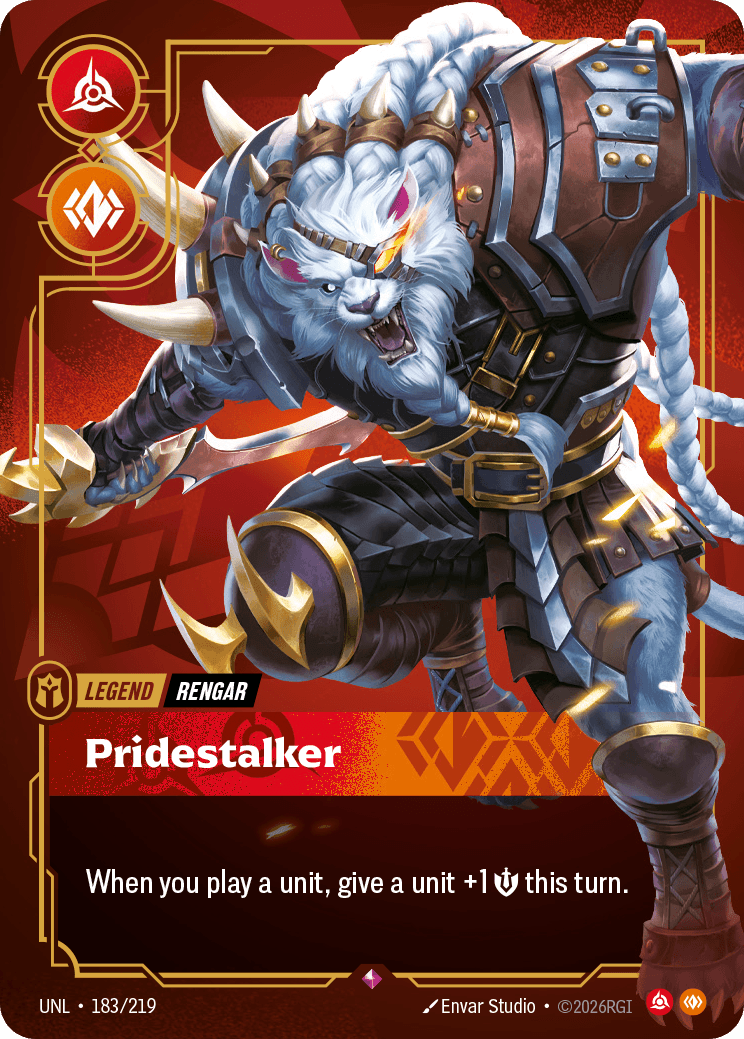
Ornn asks whether you can interrupt an equipment-driven setup before the board becomes expensive to answer. Rengar asks whether your opening turns can contest immediate pressure without spending every flexible answer. They are different jobs, and a list that passes one can still fail the other.
4. Lux, Sivir, and Azir: test the Baltimore early signal
These names appeared in the preliminary Baltimore leaders and connect to different confirmed regional patterns. Use them to find out whether your deck has a plan for a longer resource game, a wider board, and flexible value turns. Do not copy an unverified Baltimore list. Test the strategic problems first.
5. Irelia, Fiora, Jayce, Lucian, and LeBlanc: test the breadth
Shenyang puts Irelia, Jayce, and Fiora near the front of a large Chinese field. Baltimore’s later tracker view adds Lucian and LeBlanc to the exploratory list. These are the opponents most likely to expose a gauntlet that has become too narrow around Kennen and Master Yi.
A practical three-session routine is enough to start:
- Session one: Kennen, Master Yi, and Akali. Record the first turn where your deck loses battlefield control.
- Session two: Ornn, Rengar, Lux, and Sivir. Check whether your answers leave you able to score afterward.
- Session three: Azir, Irelia, Fiora, Jayce, Lucian, and LeBlanc. Use these games to find dead sideboard cards and overly specific assumptions.
That is a test plan, not a claim that every listed Legend belongs in a final tournament lineup. The goal is to learn which structural problem causes the loss before the Los Angeles field makes the answer more expensive.
What Is Confirmed, What Is Preliminary, and What Is Inferred
Confirmed: the official Baltimore record lists 943 players but no current standings; Riot confirms Singapore’s Akali win and five-Kennen Top 8, Barcelona’s Ornn win and its Kennen/Master Yi-heavy Top 8, and the Los Angeles Regional Qualifier dates.
Preliminary: public Baltimore tracker snapshots that disagree on attendance and event status; the later Baltimore Legend order; the reported Shenyang Akali win and Vex Top 8.
Inference: Lux, Sivir, Azir, Lucian, and LeBlanc deserve testing because they appear in preliminary or confirmed cross-regional signals. Testing priority is not a published field share, win rate, or final tier placement.
For exact card text, use the Riftbound card database. Save matchup versions in the deck builder, compare public shells in the Riftbound decks library, and turn the result headlines into role-based preparation with Riftbound Counters. The meta snapshot is also useful for keeping this queue separate from a final registration decision.
Bottom Line: Prepare for a Wide Room, Not a Single Winner
Baltimore is not yet a trustworthy final standings story, but it is already a useful US meta story. Kennen remains the first deck to pass. Lux, Sivir, and Azir are the clearest early Baltimore names to investigate, while Lucian and LeBlanc are exploratory signals rather than confirmed Baltimore finishers.
Singapore and Barcelona provide the reliable competitive spine: Akali and Ornn can win large regional events, Kennen keeps placing deep, Master Yi remains a repeat late-table check, and Rengar and Azir continue to matter outside the headline. Shenyang adds a broad China field in which Irelia, Akali, Master Yi, Jayce, Fiora, and Ornn remain close enough to demand preparation.
The next follow-up should replace the preliminary Baltimore section with the official final bracket if it is published, verify the Shenyang final standings, and track whether Lux, Lucian, Sivir, or LeBlanc repeats at Los Angeles. Until then, the strongest preparation is simple: learn the benchmark, test the converters, and keep enough flexibility for the emerging decks the room has not fully named yet.
Official Sources and Method
- Riot: Announcing the Showdown Series — sanctioned event structure and tier context.
- Riot: Singapore’s Top Decks — confirmed Akali win and Top 8 composition.
- Riot: Barcelona’s Top Decks — confirmed Ornn win and regional comparison.
- Riot: All Eyes on Los Angeles — final 2026 Regional Qualifier dates and stakes.
Baltimore tracker snapshots and Shenyang reporting are treated as preliminary where official final standings are unavailable. No third-party tracker is used as a linked source of record for a decklist, win rate, or final placement.