It is "which decks earned the right to be tested before Vendetta creates the first real post-ban Constructed metagame?"
That distinction matters this week because the calendar is between formats. The July 24 Standard changes are now live. Vendetta is legal in the rules window, but the physical release is July 31. Local Pre-Rifts are giving players sealed cards and first impressions, not clean Constructed conversion data. The first serious Vendetta results are still ahead.
So the latest reliable Constructed evidence deserves a careful read instead of a fake post-ban tier list.
The strongest US signal is the 160-player CCS $25K Invitational Qualifier #4 from July 18. Lux, Lady of Luminosity won the event. Azir finished second. Viktor finished third. LeBlanc finished fourth. Meanwhile, Master Yi was the most-played Legend at 19% of the field and did not make the Top 4.
China gives the supporting context. Irelia occupied both finals slots at the 2,048-player Beijing S3 National Open, Diana took third and fourth, and Master Yi represented 15% of that field but only reached seventh and eighth. Diana also won the 256-player Łódź Showdown Series, with Azir in the final.
That creates a much more interesting pre-Vendetta picture than "Master Yi is still everywhere."
- Lux is the clearest new US breakout.
- Azir is converting in both North American and European top tables.
- Viktor and LeBlanc are no longer optional specialist tests after the CCS Top 4.
- Irelia and Diana remain the most trustworthy cross-region battlefield and tempo benchmarks.
- Master Yi is still mandatory to test, but his recent field share is stronger than his recent Top 4 conversion.
- There is not enough post-ban Constructed data to crown a new deck yet.
That is the July 27 Riftbound News read.
Lux Is the US Breakout That Earned Immediate Reps
Lux winning the CCS $25K is the cleanest reason to change your testing order this week.
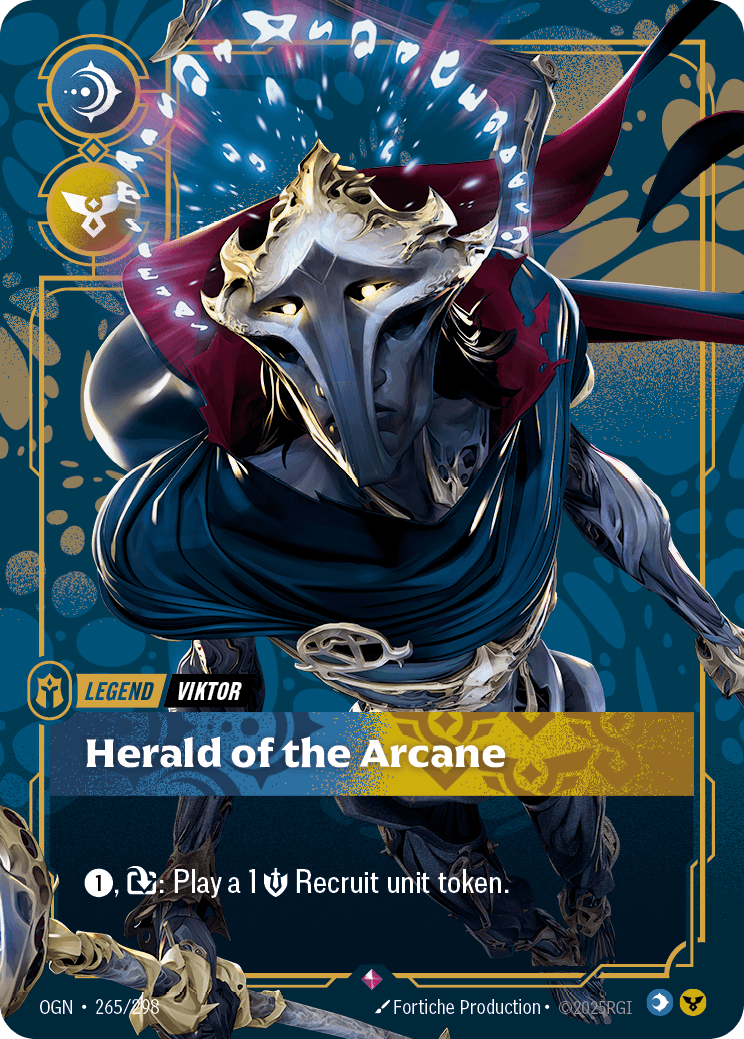
The event had 160 players, and the Top 4 was not a normal list of the most-registered Legends. Conor Panuccio won on Lux, Lady of Luminosity. Shane Moschillo finished second on Azir, Calvin Jin placed third on Viktor, Herald of the Arcane, and Tristan Panarelli finished fourth on LeBlanc, Deceiver.
That is a meaningful cluster because it does not point to one narrow matchup spike. It points to four different ways to win a serious North American field.
Lux is the headline because she took the trophy from a low-share position. Master Yi made up 19% of the CCS field, Diana 14%, and Irelia 8%; none of those three reached the Top 4. Lux's win therefore supplies exactly the kind of result that should change a gauntlet without making a player declare the whole format solved.
The first testing question is not whether Lux is suddenly unbeatable. It is whether your deck can interact with a big-spell control shell while still contesting the battlefield. A Lux pilot wants time, card access, and turns where one high-impact spell does more than one job. If your plan only pressures one lane and then runs out of material, the matchup will feel unwinnable even when Lux has not actually locked the game.
Test Lux for three specific failure points:
- Can you force Lux to spend her best spell on defense before she has converted it into a scoring turn?
- Can you preserve a second threat after the first control exchange instead of treating one answered unit as your entire turn?
- Can you punish a slow hand without overcommitting into the exact reset or removal window Lux is holding?
Those questions make Lux a valuable deck even if she does not repeat the CCS trophy immediately. A new winner is useful when she exposes a weakness in the current room.
Azir Is the Cross-Region Deck People Keep Underestimating
Azir is no longer just a fifth-place name from an older US result or a deck that appears whenever the format gets diverse. He is now a repeated conversion signal.
Azir finished second in the CCS $25K. He also reached the final of the 256-player Łódź Showdown Series, where Diana won. China’s larger National Open did not put Azir in the Top 8, but that absence is less important than the pattern around him: Azir is still finding deep tables across large events even as players know the deck exists.
That matters for US gauntlets because Azir attacks the field from a different angle than Lux. Lux asks whether your deck can survive large spell turns and repeated control exchanges. Azir asks whether you can stop incremental battlefield value from becoming a permanent board advantage.
Azir is especially dangerous after players overreact to the CCS headline. If the room adds narrow anti-Lux cards and trims flexible answers for ordinary units, Azir can win the games where his battlefield is allowed to compound. If the room instead loads up on clean unit interaction, Lux can ask a different question by converting resources through spells.
The practical read is simple: put Azir in the first wave of testing, not in the optional section. He is a real bridge between the US result and the broader international picture.
Viktor and LeBlanc Turn the CCS Top 4 Into a Deckbuilding Warning
The CCS result would be notable if Lux alone won. The rest of the Top 4 makes it more useful.
Viktor’s third-place finish confirms that engine decks are still finding room to breathe. LeBlanc’s fourth-place finish says copy turns and source-unit pressure remain relevant even while players are preparing for big spell control, battlefield tempo, and the July rules reset.
These are not the same deck, and they should not be collapsed into a single "control" category.
Viktor rewards players who can protect a value engine long enough for repeated small advantages to matter. He is the kind of deck that becomes better when opponents spend their sideboard slots only on the most visible winner.
LeBlanc is more punishing about sequencing. She asks whether you know which source unit actually matters, whether you can identify the turn where a copied effect changes the game, and whether your removal is being spent on the real engine instead of a replaceable body.
The US testing consequence is that Lux, Viktor, and LeBlanc should be tested as separate matchups. A list that beats Lux may still lose to LeBlanc because it cannot stop the copy turn. A list that beats LeBlanc may still fail to Viktor because it cannot keep up with repeated value. A list that beats Viktor may still fold to Lux’s larger swing turns.
That is why the CCS Top 4 is more informative than a simple winner announcement. It shows a room where several engine families are converting at the same time.
China Says Irelia and Diana Are Still the Core Benchmarks
The US result is not a reason to cut Irelia and Diana. China’s most recent major evidence says the opposite.
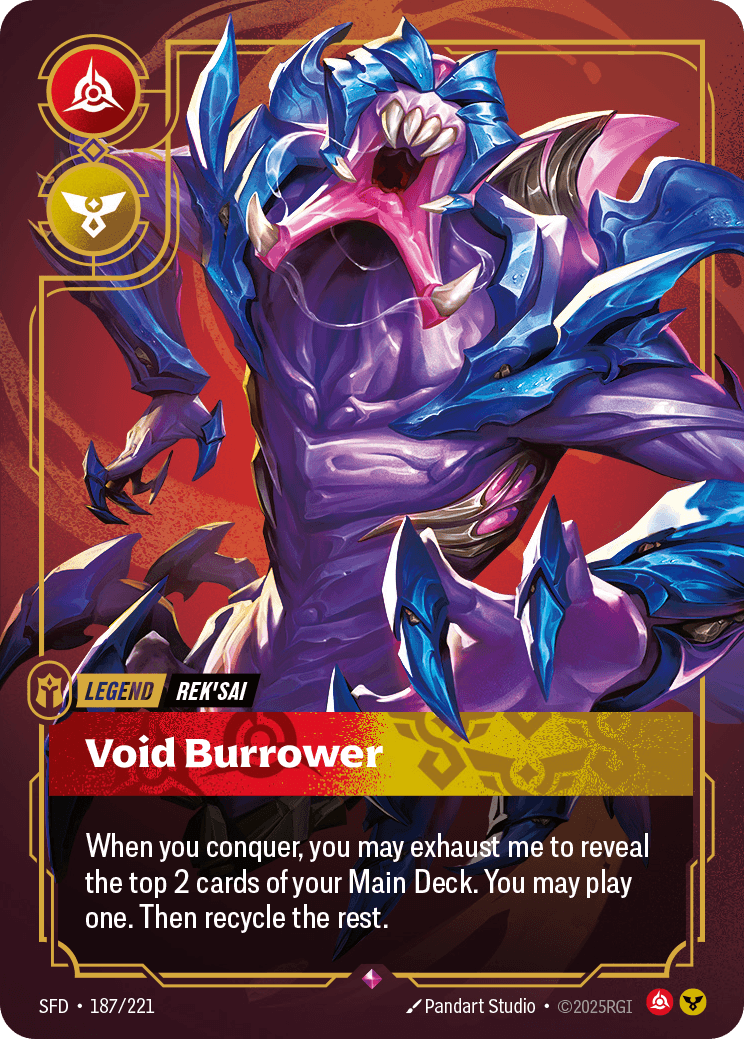
The Beijing S3 National Open drew 2,048 players and recorded 2,032 decklists. Irelia, Blade Dancer took both first and second. Diana, Scorn of the Moon took third and fourth. Rek’Sai finished fifth, Annie sixth, and Master Yi occupied seventh and eighth.
That Top 8 is valuable because it shows both stability and breadth. Irelia remains the cleanest battlefield movement benchmark. Diana remains the premium tempo and reaction-speed benchmark. Annie is still capable of surviving a huge field. Rek’Sai is still relevant as an off-axis pressure deck.
For US players, the lesson is not to copy China’s entire event. It is to keep the battlefield questions in the gauntlet while adding the new US engine questions.
Irelia tests whether your list can contest movement and conquer math without losing the map. Diana tests whether you can make decisions while the opponent holds cheap reactions and extra Energy. Lux tests whether your interaction package can survive spell-heavy control. Viktor tests whether you can keep an engine from compounding. LeBlanc tests whether you can recognize the real source of value.
A deck that only beats one of those families is not ready for the first Vendetta-legal Constructed weekend.
Diana Is the Safest Cross-Region Riser
Diana deserves a separate callout because her evidence is not limited to one Top 8.
She finished third and fourth at the Beijing National Open, and CTG Alanzq won the 256-player Łódź Showdown Series on Diana at an 11-1-0 record. A second Diana finished third in Łódź, while Irelia finished fourth.
That is a strong conversion pattern. Diana is not merely appearing because the format is large. She is putting multiple pilots into the highest rounds and converting one of those events into a trophy.
The reason Diana remains so good is structural. She can develop early, represent reaction-speed interaction, and use a single good showdown to turn a close battlefield into a lasting lead. That kind of deck gains value when players spend too many slots on headline-specific hate and forget to respect ordinary tempo.
Diana is also an important test for the new ten-card sideboards. More sideboard space should help players respect her, but it also gives Diana pilots more room to tune for the answers they expect. The first Vendetta-legal results will show which side of that exchange benefits more.
Until then, Diana belongs beside Irelia in every honest US testing room.
Master Yi Is Still Mandatory, but His Share Is Doing More Work Than His Conversion
Master Yi is the hardest part of this week’s article to summarize because two statements are true at once.
He is still one of the most important Legends in the format. He is also not converting his enormous field share into the same level of Top 4 presence.
At CCS, Master Yi was the most-played Legend at 19% of the 160-player field and did not make the Top 4. At the Beijing National Open, he represented 15% of the field, or 307 decks, and only reached seventh and eighth. At Łódź, he was the most-played Legend at 6% and did not reach the Top 4. Pittsburgh also had Master Yi around 8% of the field with a best finish of 15th.
That is four straight public events where the most-registered Legend underperformed its share. It is not proof that Master Yi is bad. It is evidence that the field may be better at preparing for him than the registration numbers suggest.
The July 24 changes make the interpretation even more important. The Standard bans removed Stealthy Pursuer and the battlefields The Arena’s Greatest and Aspirant’s Climb. Master Yi itself remains legal in Standard; Riot’s separate Master Yi ban applies to Constructed 2v2. So US Standard players should not remove Yi from the gauntlet. They should stop treating his field share as automatic proof that he is the best deck.
Test Master Yi for the matchup questions that still matter:
- Can your deck survive the one commit turn where Yi turns a normal board into a must-answer threat?
- Can you deny the battlefield without spending your cleanest answer on a low-value exchange?
- Can your deck keep functioning if the Yi pilot is forced to play a longer game after the banned battlefields leave the format?
Master Yi remains a benchmark. He is simply a benchmark that deserves analysis instead of reverence.
The July 24 Reset Is Real, but the Data Is Not Here Yet
Riot’s July changes are live, but the public tournament calendar has a gap.
Effective July 24, Stealthy Pursuer, The Arena’s Greatest, and Aspirant’s Climb left Standard. Constructed sideboards increased from eight cards to ten. Vendetta became legal in the rules window. Riot also published eight Vendetta-related text clarifications on July 23; those clarifications tighten wording but do not change how the cards function.
The events currently running are Pre-Rifts. They are casual Sealed events, not the kind of Constructed tournaments that can support a new tier list. Riot’s official guide says players receive five Vendetta booster packs plus a seeded Champion pack, build at least 25 cards from the pool, and may use up to three domains. That makes Pre-Rifts excellent for learning the set and terrible for pretending we have a stable post-ban metagame.
The physical Vendetta release is July 31. That is when the next useful competitive clock starts. Until then, the correct article is a bridge: use the last Constructed results to decide what deserves reps, then use Pre-Rifts to learn the new mechanics without mistaking sealed variance for tournament conversion.
The Best US Testing Order on July 27
If I were rebuilding a US gauntlet before the first Vendetta-legal Constructed results, I would use this order:
- Lux as the newest North American trophy deck and the big-spell control test.
- Azir as the cross-region engine deck that keeps making finals.
- Irelia as China’s double-finalist and the battlefield movement benchmark.
- Diana as the safest cross-region tempo conversion deck.
- Viktor as the CCS engine riser that punishes narrow anti-Lux plans.
- LeBlanc as the sequencing and copy-turn test.
- Master Yi as the mandatory committed-threat benchmark, not an automatic number one.
- Annie as the early-pressure punishment check from the previous US results and Beijing’s sixth-place finish.
- Rek’Sai as the off-axis deck that keeps appearing in deep international fields.
That is a testing order, not a claim that Lux is already the best deck in post-ban Standard. The data cannot support that claim yet.
The order is designed to cover the questions the latest evidence actually raises. It starts with the newest US winner, keeps the strongest Chinese benchmarks, preserves the large-field threat everyone still has to beat, and adds the engine decks most likely to punish a narrow response.
What to Watch After Vendetta Releases
The first Vendetta-legal Constructed events should answer five questions quickly.
- Does Lux retain her CCS conversion when Vendetta mechanics and new enemy-color Legends enter the room?
- Does Azir remain strong when players gain more sideboard space and new ways to pressure engines?
- Can Irelia and Diana carry their Set 3 conversion into a format with Flow, Burn, and Empower?
- Does Master Yi lose more ground when the banned battlefields disappear, or does he adapt cleanly?
- Which of the seeded Pre-Rift Legends—Jayce, Kennen, Akali, Ambessa, Nasus, Zed, Shen, Renekton, and Mel—moves first from sealed novelty into Constructed results?
That last question is the real Vendetta opportunity. The set adds nine new Legends and three new mechanics, so the first week will be noisy. The best signal will not be the most spectacular local brew. It will be a Legend that converts across multiple events and remains functional after opponents learn the matchup.
Bottom Line
As of July 27, 2026, Lux is the clearest new US deck to test after winning the 160-player CCS $25K. Azir finished second, Viktor third, and LeBlanc fourth, turning one North American result into a broad warning that engine decks are still converting even when Master Yi, Diana, and Irelia take up the most registration space.
China keeps the read honest. Irelia took both finals slots in the 2,048-player National Open. Diana took third and fourth there, then won the 256-player Łódź Showdown Series. Master Yi was the most-registered Legend in all three events but did not reach the Top 4 in any of them.
The practical conclusion is not to declare Lux the new tier-one deck before the evidence exists. It is to change your gauntlet now: start with Lux, Azir, Irelia, Diana, Viktor, LeBlanc, and Master Yi, then add Annie and Rek’Sai. Use Pre-Rifts to learn Vendetta’s sealed cards and mechanics, and wait for the first post-July-31 Constructed results before calling the reset solved.
Build And Test On RiftStorm
We keep the deckbuilding first-party — no hand-offs to third-party decklist sites. Read each legend’s kit in the card database, build the pre-Vendetta gauntlet in the deck builder, browse community lists in Riftbound decks, and plan the matchups on Riftbound Counters. For the official rules picture, Riot publishes the July ban list, the tournament-rules changelog, and the Vendetta errata.