As of August 3, 2026, four different tournament winners have come from decks that were barely represented in their fields. Azir won the first sizable Vendetta Constructed event with the only Azir list in a 93-deck sample. Rengar won a smaller open. Nasus won the best-documented paper Vendetta event of the week, with Renekton taking third. Annie then won the next event as the only Annie in the room.
That is a remarkable opening pattern, but the US takeaway needs some discipline. There was no new North American Regional result during the launch weekend, and Gen Con's official Riftbound schedule centered on sealed play, demos, and Super Nexus Night rather than a published Constructed tournament. The strongest US-specific result remains Columbus, where Viktor won a 36-player Unleashed main event on a list priced at about $59. The strongest large-field signal available to US players is the 109-player online NovaRiftbound event, where Azir won.
China makes the picture more useful, not less. The 2,048-player Beijing S3 National Open still had Irelia and Diana at the top before Vendetta, while the early CN-vs-World Vendetta event put Diana first and Lux second. The new set is open, but it is not random. The decks winning are asking three consistent questions: can you create pressure, can you convert flexible resources, and can you punish a field that is too busy copying the last result?
The First Vendetta Week Is A Rogue-Winner Race
The easiest mistake is to call the first winner the new best deck. The better approach is to track conversion against field share.
The opening Vendetta events gave us four clean examples:
- Azir won the 109-player TCGArena Online $2K Showdown #3 as one of one Azir decks in 93 recorded lists.
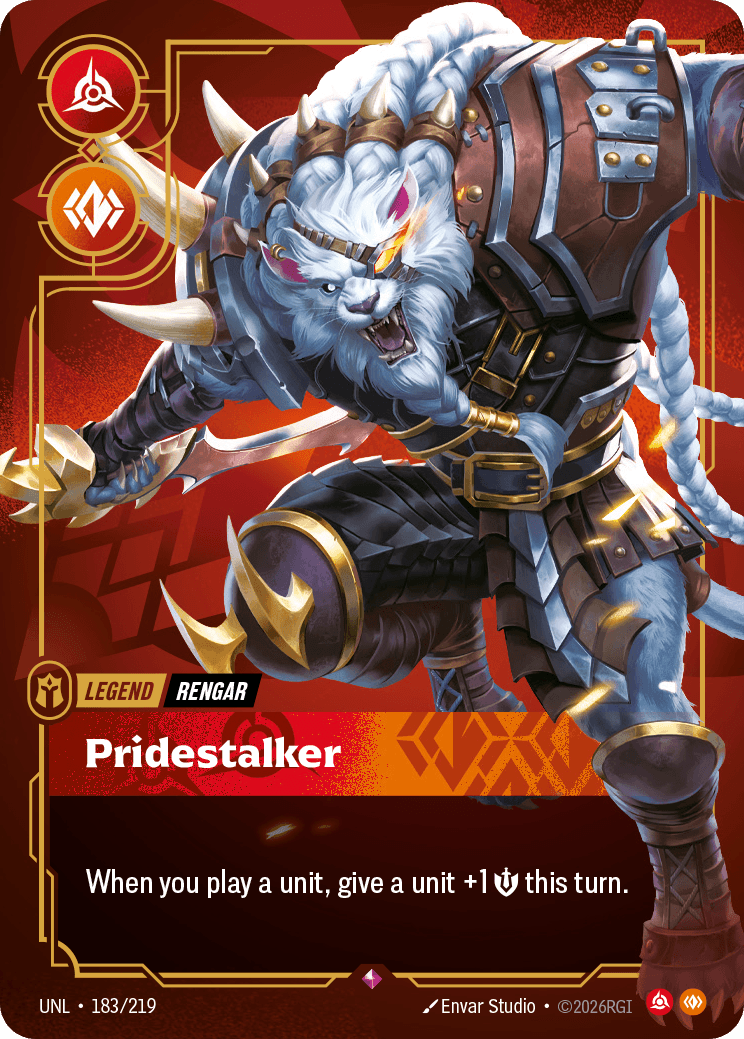
- Rengar won Runes & Rift Open 19 from a 28-player field where the deck was represented once.
- Nasus won Nightcup League Cup #1 from two recorded Nasus decks in a 47-player field, and Renekton took third.
- Annie won Mardi Championship #1 as the only Annie in 28 recorded lists.
A rogue winner can mean several things. The deck may be genuinely underplayed. The pilot may have found a strong list before the field adapted. The bracket may have lined up favorably. The event may simply be too small to carry much predictive weight. In a brand-new set, all four explanations can be true at once.
The actionable conclusion for a US player is not to abandon Irelia, Kennen, or Master Yi. It is to stop treating them as the only decks worth testing. If a launch-week gauntlet contains only the most-registered Legends, it is testing the room's assumptions rather than the format's actual attack surface.
Azir Is The First Large-Field Vendetta Breakout
Azir is the headline result because his win came in the largest early Vendetta Constructed event available: NovaRiftbound's TCGArena Online $2K Showdown #3 drew 109 players and had 93 recorded decklists. YBE piorro won the event with Azir, Emperor of the Sands. The important detail is that Azir was the only Azir deck in the field.
That makes the result stronger than a high finish from a popular deck, but it does not make the list automatically tier one. The field was still learning Vendetta, and online events can reward a pilot who understands a new engine before paper players have access to complete collections. Azir is best read as the first large-field proof that the format can be won by a deck outside the expected opening cluster.
The shape of the list is the useful part for US brewers: a Calm/Order build that leans almost entirely on gears and spells, runs only a single maindeck unit beyond Azir's own Legend package, and fills out the full new ten-card sideboard. If you clone that shape, treat it as a RiftStorm testing shell — a starting point built from card roles, not a tournament decklist — and confirm every card's exact Vendetta wording in our card database.
That shell changes what Azir tests. Opponents cannot assume that an engine deck will fill the battlefield with units and fight on ordinary terms. Azir can convert gear, spells, and battlefield access into pressure while asking the opponent to spend interaction on a very small number of meaningful bodies. A deck that is excellent against wide unit boards may be poorly prepared for a list that wins by making every answer point awkward.
For US testing, put Azir against three kinds of opponents:
- Fast pressure decks that can force the Azir pilot to spend setup cards defensively.
- Flexible midrange decks that can answer both a gear engine and a battlefield push.
- Disruption-heavy lists that can make the one-unit structure spend its key resources before the final turn.
If Azir keeps converting after those tests, the result will move from early breakout to established pillar. For now, it is the first deck that deserves the phrase large-field Vendetta winner.
Viktor Is The Best US Budget Signal
Azir is the strongest large-field breakout. Viktor is the cleanest US-specific practical result.
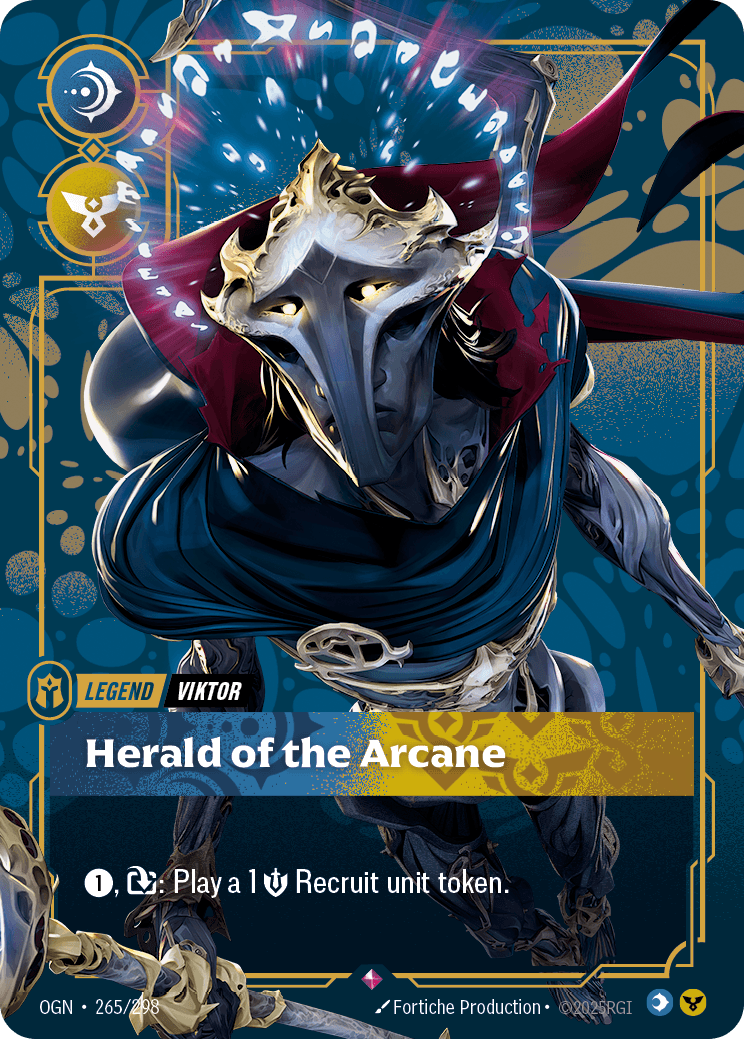
Won Hyuk Do won the 36-player Columbus 2026 Riftbound Main Event on Viktor, Herald of the Arcane. The event was Unleashed Constructed rather than a full Vendetta paper tournament, so it should not be presented as a direct post-release tier result. It is still valuable because the event ran during the transition window and Viktor's list cost about $59.49, making it the cheapest deck in the Top 8.
That budget signal becomes more interesting when combined with Viktor's early Vendetta finishes in Europe. OC Mystegune put Viktor into the Top 8 at both Nightcup and Mardi on lists priced around $47. The same Legend is showing up as a low-cost way to play an engine game while the expensive first-week decks attract attention.
Viktor's value is not only financial. He gives the US gauntlet a clean test of whether a deck can pressure a long-game engine without overcommitting into efficient interaction. A list that spends its first turns preparing for Irelia or Kennen may find that Viktor has already created enough value to make every later trade unfavorable.
The practical shopping advice is simple: do not confuse price with power, but do not ignore a low-cost Legend that keeps making top tables. Viktor is one of the first Vendetta decks worth proxying before buying into the $400-plus end of the format.
Nasus And Renekton Made Vendetta's Rivalry Theme Competitive
The most exciting new-set story belongs to the sand rivals.
ErosXyz won Nightcup League Cup #1 — Cycle 1 at Circle TCG in France on Nasus, Curator of the Sands. The event had 47 players and all 47 lists recorded, making it the best-documented paper Vendetta event in the opening week. Hoshi finished third on Renekton, Butcher of the Sands. Only two Renekton decks were recorded in the entire early Vendetta data, so a podium finish from one of them is a real signal even with the small sample.
The result matters beyond flavor. Nasus and Renekton are not simply two new Legends that happened to reach the same Top 8. They show that the new rivalry pairs can compete while the field is still learning how to sequence Vendetta's new mechanics and battlefield patterns. Nasus won, and Renekton immediately demonstrated that the other side of the pairing is not a novelty-only deck.
US players should test the pair differently. Nasus asks whether the opponent can stop a value curve from becoming an oversized late-game threat. Renekton asks whether the opponent can stabilize after taking early combat damage and being forced to respect a deck that converts combat into a larger second wave. They may share a card pool, but the matchup questions are not identical.
Do not buy both blindly because they shared a podium. Build a proxy shell for each, identify which cards are doing the real work, and see whether your local room is prepared for the rivalry mechanics. If the pair continues to place after the field adds more early interaction, Vendetta's signature Legends will have earned a more permanent place in the metagame.
Annie Is The Fourth Rogue Winner, Not A Free Tier-One Claim
BARBA Axelo won Mardi Championship #1 on Annie, Dark Child. Annie was the only Annie in the 28-deck field.
That makes her the fourth near-unrepresented Legend to win an early Vendetta event after Azir, Rengar, and Nasus. It is a great result for players who enjoy attacking from a different angle, and it is a terrible reason to declare the next format solved.
Annie's result is most useful as a stress test. The deck can punish opponents who spend too much of their opening hand on complicated engines, keep too few early battlefield plays, or assume the new set will slow the format down. If the US launch room reacts to Azir by adding more expensive answers and more setup cards, Annie is exactly the kind of pressure deck that can collect free wins.
At the same time, Annie has only one recorded list in the event that produced the headline. That is a small sample. The right response is to proxy the matchup, not to reshape a collection around one result. Keep Annie in the room until the deck proves that its early pressure still matters after players adjust their first three turns.
Kennen Was Overdrafted, Then Immediately Recovered
Kennen is the best example of why first-week metashare is not enough.
In the 32-player Sideways Showdown: CN vs World, Kennen was the most-registered Legend with seven decks, or 21% of the field. None made the Top 8. The event instead went to Diana, with Lux second and Master Yi plus Nasus in the Top 4. Kennen also carried the highest average price among the opening marquee decks, around $452.
Three days later, Kennen reversed the story at Nightcup. Two Kennen decks reached the Top 8, while the deck remained one of the most visible names in the room. That does not erase the earlier miss, and the earlier miss does not erase the later conversion. It tells us Kennen is powerful enough to attract serious players and volatile enough to punish anyone who mistakes hype for a matchup plan.
For US players, Kennen is a mandatory test but a poor blind purchase. Ask whether your list can handle its pressure without spending premium interaction on every threat. Ask whether your sideboard can improve the matchup and still cover Azir, Viktor, and the rogue field. If the answer is no, the price of the cards will not solve the deckbuilding problem.
Irelia Is Volatile, Not Dead
Irelia began Vendetta as the most-played Legend in the aggregate, with about 14% of the first 135 recorded decklists. Her best finish that opening weekend was sixth. Then Nightcup recorded only two Irelia decks, and both finished in the bottom bracket.
That looked like a collapse until Mardi the next day. Irelia placed second and Top 4 from three registered decks in the same organizer's player pool. The exact opposite result arrived immediately.
This is not a contradiction to explain away. It is the lesson. A single 47-player event can make a popular deck look unplayable, and a three-deck sample can make it look unbeatable. Irelia is still credible because it has the pre-Vendetta scale result behind it and the new-set flexibility to punish sloppy battlefield management. She is also a poor deck to label solved from one weekend's table.
Keep Irelia in the US gauntlet, but make her earn the slot through matchup performance. If she beats Azir, Viktor, Annie, and one of the sand rivals consistently, the player base will have a better answer than either panic or hype.
China Keeps The Battlefield Core In The Conversation
China's results are important because they provide a scale and structure check against the small first-week Vendetta samples.
The S3 National Open in Beijing drew 2,048 players and was the last major before Vendetta. Irelia won, a second Irelia reached the other side of the final, Diana occupied both third and fourth, Rek'Sai finished fifth, Annie sixth, and Master Yi took seventh and eighth. That is not a Vendetta result, but it establishes what the old competitive core looked like immediately before the set changed the card pool.
The opening Vendetta CN-vs-World event then carried forward the most useful part of that story. Diana won, Lux finished second, and Master Yi plus Nasus reached the Top 4. Viktor, Lillia, Draven, and Annie filled the rest of the Top 8. The event was only 32 players, but it directly shows that the format's first pressure and engine winners are not limited to one region or one deckbuilding philosophy.
China's supporting message for US players is therefore narrower than a new tier list:
- Irelia remains a benchmark because she won the last large Set 3 major and immediately returned to the top tables in the early Vendetta week.
- Diana is the cleanest cross-event pressure signal, winning both the CN-vs-World Vendetta event and the 256-player Łódź Showdown Series in the same launch window.
- Rek'Sai remains a watch-list deck after taking fifth at the Beijing National Open and appearing in the first Vendetta Top 8 at Nova.
- Nasus, Annie, and Viktor have now shown early conversion across different event environments, but each still needs a larger sample.
The result is a wider US gauntlet, not a reason to copy China's last major wholesale.
What US Players Should Test This Week
A strong August 3 testing room should include the decks that won, the decks that were over-registered, and the decks that crossed regional lines. Here is the order I would use:
- Azir for the large-field gear-and-spell engine. Test whether your pressure can force real units onto the battlefield before the Azir pilot is ready.
- Viktor for the budget engine benchmark. Test how quickly you can attack the value plan without losing the long game.
- Diana for the proven early Vendetta winner and the strongest cross-event pressure check.
- Irelia for the pre-Vendetta major winner that immediately returned to the top tables after a dramatic one-event miss.
- Kennen because players will bring it, even if the list is expensive and its first-week results swing hard.
- Annie because one cheap early-pressure package can punish a room full of greedy launch-week builds.
- Nasus and Renekton as the new-set rivalry test. Do not assume the two decks ask the same questions.
- Rek'Sai because China and the early Nova Top 8 keep pointing in the same direction.
- Lux because she finished second in the CN-vs-World Vendetta event and already won a 160-player US CCS event before the set reset.
- Master Yi because players will still register him, even after repeated recent events where his field share converted below expectation.
This list is intentionally larger than a normal tier list. The first week has not earned a short one.
The Deckbuilding Lesson From The New Ten-Card Sideboard
Vendetta's rules update expanded Constructed sideboards from eight cards to ten, and the winning Azir list used all ten. That is more than a technical footnote. It is a signal that early preparation should be built around a broad matchup room rather than a single expected mirror.
The current results reward flexible sideboards because the format has at least three competing shapes:
- Engine decks such as Azir and Viktor want to survive into turns where their card quality compounds.
- Pressure decks such as Annie, Diana, Irelia, and Rengar want to make the early battlefield matter before the engine is assembled.
- New-set rivalry and midrange shells such as Nasus and Renekton punish lists that answer only one kind of threat.
A ten-card sideboard does not mean every deck gets to cover everything. It means the best lists can separate their primary plan from the matchups that require specialized tools. For an August event, start with four or five cards for the decks you expect, reserve two or three for the rogue pressure field, and keep the last slots for the matchup your local testing keeps losing.
The best early Vendetta players will not be the ones who guess the exact final tier list. They will be the ones who build a list that can change its posture after game one.
What We Know — And What We Do Not
The public tournament index currently has no new US Regional result after the July 25 Columbus event, and Gen Con's official schedule lists sealed and casual formats rather than a published Vendetta Constructed championship. That matters for the headline. The first week of Vendetta is a data-rich launch window, not a complete North American metagame.
What we know:
- Four different underplayed Legends won the opening Vendetta events.
- Azir has the strongest large-field win.
- Viktor has the clearest US budget signal.
- Nasus and Renekton gave the rivalry theme an immediate podium.
- Annie, Diana, Irelia, and Lux show that proactive decks remain live.
- China and the first CN-vs-World result support a broad battlefield-and-engine gauntlet.
What we do not know yet:
- Which Legends will convert after US paper players have full access to Vendetta.
- Whether Azir's one-unit gear shell survives targeted disruption.
- Whether Kennen's price and popularity will translate into stable results.
- Whether Nasus and Renekton remain distinct competitive decks after the field learns the rivalry matchups.
- Whether a true US Regional event will produce a short, reliable tier list.
That uncertainty is good news for players who enjoy brewing. It is also a reason to keep proxies nearby.
Bottom Line
The first Vendetta week belongs to the decks the field did not respect yet. Azir won the largest early Constructed event as a one-of-one. Viktor won the clearest US-specific paper result and keeps appearing as the budget engine. Nasus and Renekton made the set's rivalry theme real, while Annie delivered another one-copy tournament win.
The popular decks are not gone. Kennen recovered after an early zero-conversion event. Irelia collapsed in one room and immediately returned to second and Top 4 in the next. Diana won the early CN-vs-World event and the larger Łódź event. China still says Irelia and Diana belong in the room, and Rek'Sai remains a credible cross-region watch.
If you are preparing for the next US event, do not ask which one Legend is tier one yet. Ask whether your list can beat Azir, pressure Viktor, survive Diana and Irelia, and still respect a one-of Annie or Nasus deck. That is the first real Vendetta gauntlet.
Build And Test On RiftStorm
We keep the deckbuilding first-party — no hand-offs to third-party decklist or tournament-tracker sites. Read each legend's kit in the card database, proxy and goldfish the first Vendetta gauntlet in the deck builder, browse community lists in Riftbound decks, and plan the matchups on Riftbound Counters. For the official rules and errata picture, Riot publishes the July tournament-rules changelog and the Vendetta errata updates.