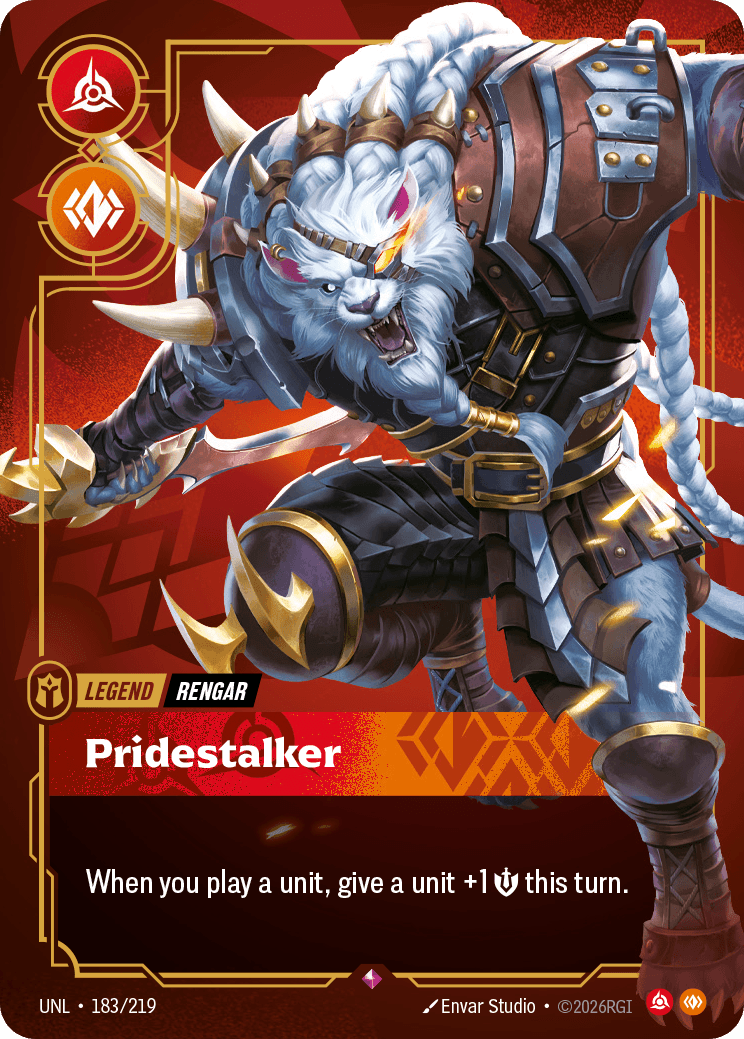
The Ottawa Showdown drew 594 players for Constructed play on August 8, making it the biggest western Vendetta event available as of August 10. Kennen was the registration story, appearing at nearly twice the play rate of the next most popular Legend, Irelia. But the early performance read pointed somewhere else. Master Yi led the win-rate table, while Rek'Sai, Rengar, Draven, and Mel were the only Legends reported as undefeated after the first seven rounds of best-of-three play.
That is the current US headline: Kennen is the deck the room expected to play, Master Yi is the deck the room still has to prove it can beat, and Rek'Sai, Rengar, Draven, and Mel are the names that can turn a predictable Vendetta gauntlet into a bad one.
China adds a useful second lens. The latest S4 City Challenges in Wuhan, Shenzhen, and Shanghai split their trophies between Master Yi, Kai'Sa, and Draven. Their reported Top 8s also put Volibear, Rek'Sai, and Lillia back in the conversation alongside the familiar Kennen, Ezreal, and Master Yi shells. China is not handing US players a new universal tier list. It is showing that the format is already wider than one headline Legend.
Ottawa Is The First Real Vendetta Stress Test
The public Ottawa event listing records the Showdown as a 594-player Constructed tournament with Swiss rounds and a Top 8 phase. Riot's Showdown Series announcement describes these events as the bridge between local play and larger premier competition, which makes Ottawa exactly the kind of result US players should watch when a new set needs its first large-field reality check.
The important context is timing. Vendetta released on July 31. Ottawa arrived after the first week of players opening product, rebuilding familiar Unleashed shells, and trying to decide which of the new Legends deserved immediate investment. This was not sealed noise from a Pre-Rift. It was a large Constructed room with enough pilots to expose the difference between social-media hype and actual tournament performance.
The public data still has limits. The official page confirms the field and format, but it does not currently provide a complete public standings breakdown. The early field analysis reports seven rounds of best-of-three play, Legend representation, and win-rate signals. That is enough to identify what deserves testing now. It is not enough to pretend we have a finished post-Ottawa Top 8 tier list.
That distinction should shape every serious Vendetta article this week. The most useful question is not "which Legend won the final?" before the complete result is verifiable. It is "which decks survived a large western room, and which assumptions did the room overpay for?"
Kennen Won The Registration Race
Kennen was the clear popularity winner in Ottawa. The early analysis describes Kennen as almost twice as popular as Irelia, the second-most registered Legend. That is a huge share of attention for a deck from the new set, especially when players are still learning what Empower, new enemy-color pairings, and Vendetta's broader card pool do to established battlefield patterns.
Popularity matters. A deck that large becomes part of the format whether or not it wins the event. US players will face it in local Constructed events, in Showdown preparation, and in the first wave of Summoner Skirmish testing. A deck with that much registration also gives us a useful stress test for common answers: can your list fight Kennen without becoming so narrow that it loses to the rest of the field?
But Kennen's popularity is not the same as a proven conversion rate. The Ottawa data points to an early gap between how often players registered Kennen and how efficiently the field converted with Master Yi, Rek'Sai, Rengar, and Draven. The simplest explanation is that many players wanted to try the newest obvious deck before they fully understood its sequencing. Another possibility is that the room overprepared for Kennen and left older threats under-respected. Both can be true.
The practical takeaway is to put Kennen first in the matchup queue, not automatically first in the tier list. Test the deck against lists that can contest early battlefields, lists that can punish expensive setup turns, and lists that can keep interaction available after Kennen starts generating value. If Kennen still converts after those tests, the popularity signal will turn into a power signal.
Master Yi Is Still The Benchmark To Beat
Master Yi was the most important performance signal from the early Ottawa read. The deck led the event's win-rate table even though Kennen drew most of the registration attention. That matters because Master Yi is not a random new-set spike. He was already one of the defining Unleashed threats, and the format's first large Vendetta room did not make him disappear.
There is a recurring pattern in Riftbound tournament results: the newest set creates excitement around new Legends, but the first players to succeed are often the ones who understand how to update a proven shell without discarding its structural strengths. Master Yi benefits from exactly that kind of transition. He already asks opponents to respect a committed battlefield threat, a high-impact combat turn, and the possibility that a normal-looking board becomes decisive faster than expected. Vendetta gives pilots new options without requiring them to relearn every fundamental matchup.
That is why Master Yi should be the first deck in a US testing room this week. Do not use him as a ceremonial benchmark that appears for one match. Run a real set of games against him and ask three questions:
- Can your deck contest the battlefield before Yi's conversion turn without spending every premium answer?
- Can you identify which unit or combat exchange actually matters instead of reacting to every visible threat?
- Can your plan still function when the Yi pilot plays patiently and makes you commit first?
The China result reinforces the same signal. Master Yi won the Wuhan S4 City Challenge, so the Legend has now produced the strongest early western performance read and a fresh Chinese trophy. That is not conclusive proof of a tier-zero deck. It is more than enough proof that cutting Yi from a Vendetta gauntlet would be irresponsible.
Rek'Sai Is The Breakout That Punishes Narrow Prep
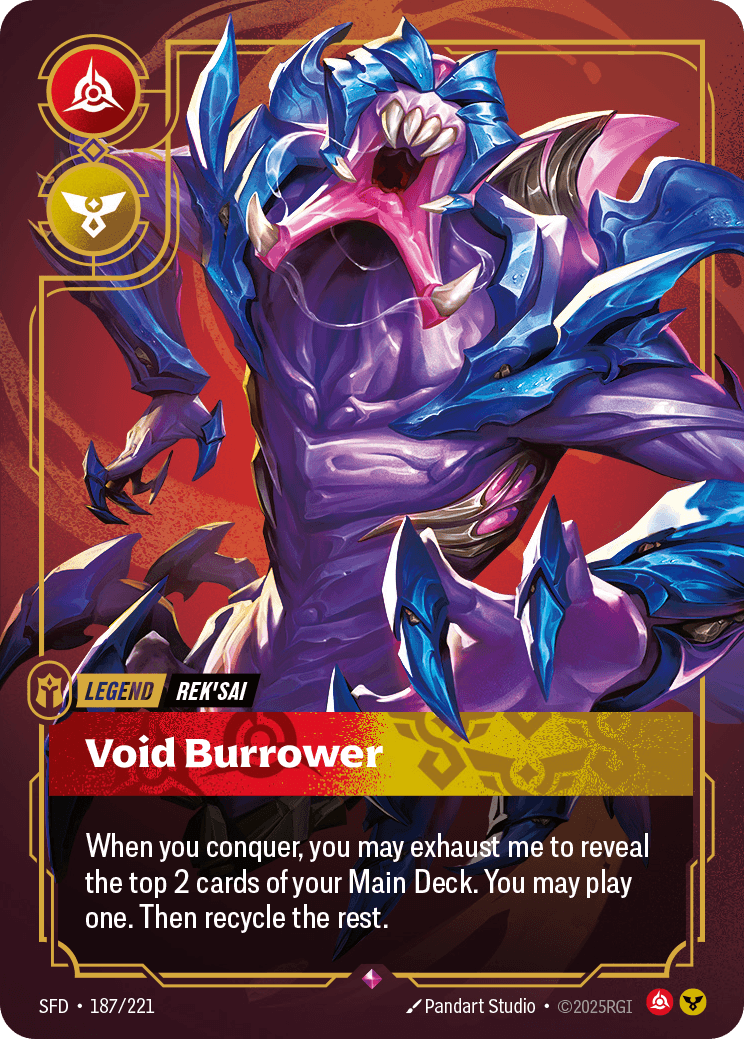
Rek'Sai is the most exciting US-side riser because she showed up in the undefeated group at Ottawa and also appeared in China's latest reported Top 8 mix. That is the kind of cross-region overlap that turns an interesting local result into a deck worth learning.
Rek'Sai's value is not just that she can win. It is that she asks a different question from Kennen and Master Yi. A room built around those two decks can easily become too focused on answering a high-profile Legend's signature turn or handling a familiar committed threat. Rek'Sai pressures the battlefield from another angle and can make ordinary sequencing look inefficient.
The early Ottawa discussion also surfaced a useful deckbuilding clue: players are finding room for Vendetta sideboard tools such as Decrees and Forge of the Will, while Noxian Emissary is one of the new cards that can add value without forcing the deck into an entirely new identity. Those are not a finished list recommendation, and a public conversation is not a substitute for card-by-card testing. They do explain why Rek'Sai can move quickly from "old deck people forgot" to "new set deck everyone has to respect."
The US test for Rek'Sai is simple. Do not only test whether your deck can remove her. Test whether it can keep its normal battlefield plan after Rek'Sai changes the math. If answering her requires your deck to stop developing, lose a turn, or hold interaction for a narrower window than usual, that is the real matchup cost.
Rek'Sai is the right article thumbnail for this week for the same reason she is the right early gauntlet assignment: she sits at the intersection of old-format knowledge and new-format pressure.
Rengar And Draven Are The Punishment Pair
Rengar and Draven were also reported among Ottawa's undefeated Legends after the first seven rounds. Their exact full-event conversion still needs a complete public report, but the shared signal is immediately useful for US players. Both decks punish a testing room that spends too much time goldfishing its new Vendetta engine and not enough time respecting early battlefield decisions.
Rengar is the sharper off-angle pressure check. The deck can make players pay for leaving a battlefield uncontested, misjudging a combat trade, or assuming that a narrow removal plan will cover every threat. When players spend the first week preparing for Kennen mirrors, a Rengar pilot can win games before the opponent's expensive answers become relevant.
Draven is the more familiar punishment floor, but that familiarity makes him easy to overlook. The latest China results put Draven on top in Shanghai, while the Ottawa data placed him close to the top of the early win-rate read. The deck's Vendetta relevance is a reminder that a new set does not erase the fundamentals of early pressure, combat math, and efficient conversion.
Test Rengar and Draven as a pair, but do not collapse them into one matchup. Rengar asks whether you can maintain a stable battlefield against a deck that can create sudden combat problems. Draven asks whether your first turns are efficient enough to avoid getting buried by a deck that turns ordinary wins into recurring resources. If your list beats Kennen but loses to both of these, it is probably prepared for the conversation rather than the tournament.
Mel Is The Newcomer Worth Watching
Mel was one of the four Legends reported as undefeated after Ottawa's first seven rounds. That makes her the most interesting newcomer in the early western sample, even though the data is not yet large enough to call her a finished tier-one deck.
The important distinction is between a new Legend with a compelling kit and a new Legend with repeatable tournament conversion. Mel has earned the first label. Ottawa gives her a reason to pursue the second.
The best way to test Mel is not to copy one early list and decide whether the deck is solved. Treat her as a strategic question. What does the Mel pilot get to reflect, preserve, or convert when the opponent gives her time? Which of your normal answers become awkward because they interact with the board but not the resource pattern? Can your pressure force Mel to spend her key turns defensively?
Those questions make Mel a valuable addition to the US room even if she does not remain one of the format's highest-win-rate Legends. New-set decks earn their slot in the gauntlet by creating unfamiliar decisions, not only by winning the first public tournament.
China Splits The Trophies Three Ways
China's latest S4 City Challenge results give us the best supporting context for the Ottawa read. The reported events covered more than 300 players across three cities:
- Wuhan: 114 players, with Master Yi taking first.
- Shenzhen: 128 players, with Kai'Sa taking first.
- Shanghai: 128 players, with Draven taking first.
Three cities, three winners, and three different versions of the early Vendetta story. Master Yi reinforces the western benchmark. Draven confirms that old pressure fundamentals still convert. Kai'Sa is the most useful reminder that a wider engine or combo shell can still win while the community is busy debating Kennen and Yi.
The reported Top 8s also included Volibear, Rek'Sai, and Lillia, alongside the more familiar Master Yi, Kennen, and Ezreal names. That makes China particularly useful as a supporting region this week. The US data tells us what a large western room registered and what early win rates looked like. China shows what happens when multiple local environments keep putting different Legend packages into the elimination conversation.
There is one important format caveat. City Challenges are often best-of-one for much of the event, so their deckbuilding incentives are not identical to a long best-of-three Showdown. A list tuned to maximize a single-game opening or exploit battlefield information can look stronger in China than it would in a North American Top 8. That does not make the results irrelevant. It means we should use them as direction and matchup discovery, not as a direct ranking of US tournament power.
The clean China-side testing order is therefore Kai'Sa, Draven, Rek'Sai, and Lillia, with Volibear as the rogue check. If those decks keep appearing across more than one event type, their status will move from supporting context to global metagame pillar.
What The Ottawa And China Results Agree On
The two regions are not producing identical decklists, but they are pointing at the same structural lessons.
First, old Set 3 winners are not automatically obsolete. Master Yi remains excellent in both regions, and Draven can still win when the room respects new-set novelty more than early pressure.
Second, popularity is not enough. Kennen led the Ottawa registration race, but Master Yi led the early win-rate read. A deck with enormous play rate can be the format's central matchup without being its best conversion deck.
Third, the emerging decks are not all doing the same job. Rek'Sai and Rengar punish battlefield complacency. Draven punishes weak early sequencing. Mel challenges resource evaluation. Kai'Sa tests whether the room can close games before a flexible engine takes over. Lillia and Volibear widen the list of unfamiliar patterns a tournament player might face.
Fourth, the early Vendetta format rewards players who build a room instead of a ranking. The most useful preparation is a group of matchups that cover the format's actual attack surface: the popular new deck, the proven high-conversion threat, the rogue pressure deck, the resource engine, and the Chinese off-angle imports.
That is a much stronger testing philosophy than declaring every winner the new best deck.
The US Vendetta Gauntlet For August 10
If I were preparing for the next North American event, I would load the room in this order:
- Master Yi as the leading Ottawa win-rate signal and Wuhan winner.
- Kennen as the most popular Ottawa deck and the matchup every US player will face.
- Rek'Sai as the cross-region breakout that punishes narrow preparation.
- Draven as the Shanghai winner and early-pressure floor.
- Rengar as the undefeated Ottawa pressure deck that can punish expensive setup plans.
- Mel as the most important new Legend from the Ottawa undefeated group.
- Kai'Sa as the Shenzhen winner and China-supported flexible engine test.
- Irelia because she was still the second-most registered Legend in Ottawa and remains a familiar battlefield benchmark.
- Lillia and Volibear as the China-backed rogue pair most likely to expose missing reps.
- Ezreal because China continues to register and place him while US players focus on the newest headlines.
That list is deliberately broader than a tier list. It is a testing queue. The first four tell you whether your deck can survive the biggest current structural questions. The next six protect you from losing a tournament to a matchup you dismissed because it was not trending in your feed.
How To Use The Ten-Card Sideboard
Vendetta's ten-card sideboard makes this wider gauntlet more realistic, but it does not make every matchup free. The key is to assign sideboard jobs before you start filling slots.
Reserve the first group for the popular threats: Kennen and Master Yi. Those are the decks your local room is most likely to bring, and the decks where a narrow answer can earn repeated value.
Use the next group for pressure and battlefield recovery: Rek'Sai, Rengar, Draven, and Irelia. These decks punish slow hands, expensive setup, and removal that only works after the opponent has already scored.
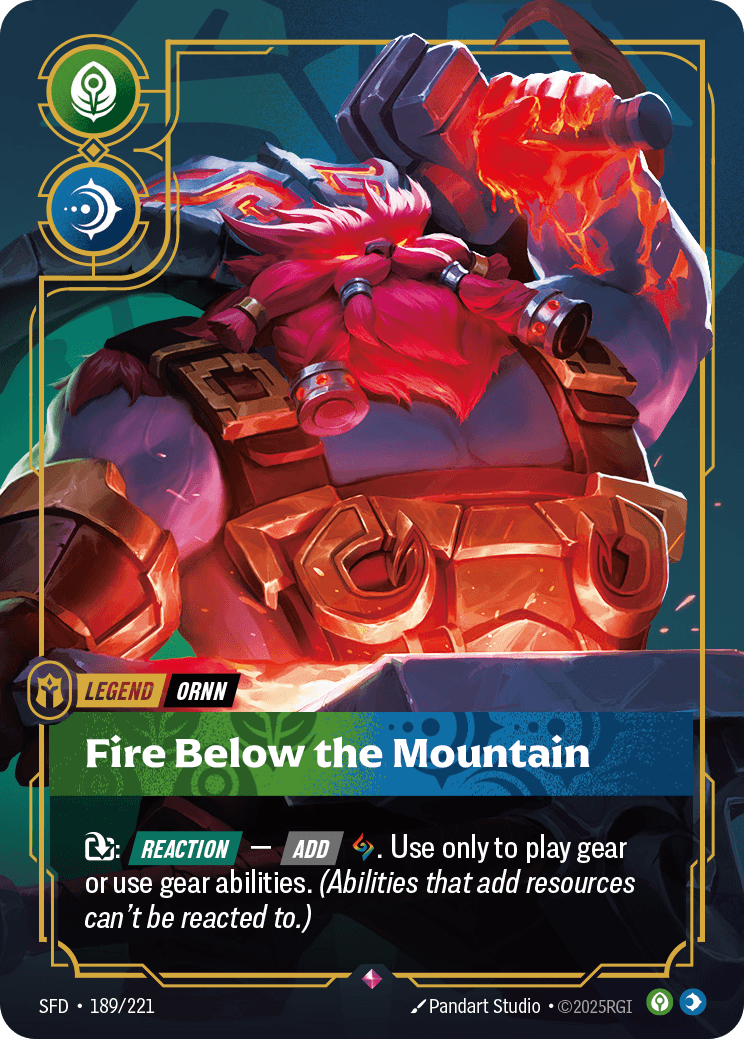
Keep a flexible group for engines and awkward off-angle matchups: Mel, Kai'Sa, Lillia, Volibear, and Ezreal. You do not need ten cards that each target one Legend. You need enough cards to change your posture after game one without damaging the main deck's core plan.
The most common early-Vendetta sideboard mistake will be spending every slot on Kennen because Kennen was the most visible Ottawa deck. That can leave a list unable to answer the decks that converted better or the China-supported brews that attack from a different angle. Build for the room's pressure map, not just its loudest registration number.
What We Know And What We Still Need
We know Ottawa was a 594-player Constructed Showdown and the first major western Vendetta sample after release. We know Kennen was the most popular Legend, nearly twice as popular as Irelia in the early field read. We know Master Yi led that early win-rate read, and Rek'Sai, Rengar, Draven, and Mel were undefeated after seven rounds. We know China's newest Wuhan, Shenzhen, and Shanghai City Challenges split trophies between Master Yi, Kai'Sa, and Draven, with more emerging Legends appearing in the reported Top 8s.
We do not yet have a complete, official, publicly verified Ottawa Top 8 breakdown in the event page. We do not know whether every undefeated day-one deck converted through the final rounds. We do not have enough post-release events to distinguish a genuinely new tier-one deck from a strong pilot, a favorable bracket, or a list that was simply ahead of the first week's preparation.
That uncertainty is not a reason to write a vague article. It is a reason to write a better one. The right current answer is to define testing priorities and name the evidence that would change them.
Master Yi moves up if he keeps converting in another large best-of-three event. Kennen moves from popularity leader to power leader if his win rate remains strong after the room adjusts. Rek'Sai, Rengar, and Draven become established pillars if they repeat across different field sizes. Mel needs another deep finish before we can separate her promise from Ottawa's first-week volatility. Kai'Sa, Lillia, and Volibear need cross-region or cross-event conversion beyond City Challenge samples.
That is the next data to watch.
Bottom Line
As of August 10, 2026, the first big Riftbound Vendetta story is not "Kennen is tier zero." It is that Kennen became the most popular deck while Master Yi led the early performance read in a 594-player Ottawa field. Rek'Sai, Rengar, Draven, and Mel were undefeated after seven rounds, giving US players four urgent reasons to test outside the obvious new-set headline.
China keeps the conclusion broad. Wuhan's winner was Master Yi, Shenzhen's was Kai'Sa, and Shanghai's was Draven, with Volibear, Rek'Sai, and Lillia also appearing in the reported Top 8 conversation. The regions are not converging on one deck yet. They are converging on a format where proven threats, new Legends, and off-axis pressure all deserve real reps.
If you want one practical conclusion, use this one: put Master Yi and Kennen at the front of your gauntlet, then add Rek'Sai, Draven, Rengar, Mel, and Kai'Sa before you call your Vendetta testing current.
Build And Test On RiftStorm
Keep the testing loop first-party on RiftStorm: inspect Legend and card text in the card database, build and tune lists in the deck builder, browse the current Riftbound decks, and map problem matchups with Riftbound Counters. For tournament context, read Riot's Showdown Series announcement and the August 2026 State of Play. Riot's current Organized Play update confirms that Showdown events are expanding in 2027, while the 2026 season still has Regionals, Championships, and Worlds invitations to play for.